What Makes a Great Podcast in 2026
So, what separates the podcasts that fizzle out from the ones that become genuine brand assets?
It's not just about hitting "record." A great podcast is a powerful mix of a sharp concept, authentic hosting, professional-grade production, and a smart distribution plan. You have to stop thinking of it as just an audio file you upload and start treating it like a full-fledged media channel for your brand.
The Blueprint for a Great Podcast
In today's crowded market, a standout show has to perform everywhere—not just on Apple Podcasts or Spotify, but on video-first platforms like YouTube and LinkedIn. It’s not enough to have a good chat anymore. You need to build a powerful asset that establishes your authority and drives real business goals.
This guide breaks down the essential pillars for any brand or leader serious about launching a show that doesn’t just add to the noise but actually cuts through it.
The 7 Pillars of a Great Podcast
Before we dive deep, here’s a high-level look at the core building blocks of a successful podcast. Think of this as your framework for building a show with intention.
The most successful podcasts are rarely just a hobby; they are strategic assets built with intention, consistency, and a deep understanding of their audience's needs. Creating a strong connection is what separates good content from a great show.
This table summarizes the core components that define a successful and engaging podcast in today's competitive landscape. Each pillar represents a critical area of focus, from initial strategy to long-term growth.
Mastering these seven pillars is the difference between launching a podcast and launching a media property that builds your brand for years to come. Now, let's explore each one in more detail.
Building Your Foundation with Content and Audience
A great podcast is built long before you ever hit the record button. It's like building a house—you wouldn't start putting up walls on a patch of soft mud. The real work begins with strategy, and that foundation is built on two things: your core concept and your ideal audience.
Too many podcasts fail because they try to be for everyone, and end up being for no one. You have to get specific. A vague idea like "a podcast about marketing" is a recipe for getting lost in the noise.
Instead, find a unique, defensible niche. For example, instead of a general marketing show, what about "a podcast for CMOs at early-stage SaaS companies navigating their first $10 million in ARR"? That specificity is your superpower.
Define Your Ideal Listener
Once you've carved out your niche, you need to get an almost uncomfortably specific picture of who you're talking to. This is where a listener persona comes in—a detailed profile of your one perfect listener.
Forget basic demographics. This is about understanding their world. What are their biggest career frustrations? What questions are bouncing around their head at 2 a.m.? What are they already reading or listening to, and where are the gaps?
Actionable Insight: Create a one-page document for your listener persona. Give them a name, job title, and list their top 3 goals and top 3 challenges. Before you plan any episode, ask: "How does this help [Persona's Name] achieve their goals or overcome their challenges?"
Knowing the answers lets you create content that feels like you're speaking directly to them, solving their exact problems. A sharp listener persona helps you answer the most important question for every single episode: "Why should they care?" If you can't answer that, neither can they.
Develop a Content Strategy That Solves Problems
Your content strategy should flow directly from your listener's needs. Every episode needs to deliver real value, whether that’s a tactical playbook, a fresh perspective, or just an inspiring story that recharges their batteries.
A great way to structure this is by defining your content pillars—the 3-5 core topics your show will own.
For our SaaS CMO podcast example, the pillars might look like this:
- Demand Generation Plays: Deep dives into specific tactics for acquiring new users.
- Brand Building on a Budget: Showcasing how to punch above your weight without a massive ad spend.
- Leadership and Team Scaling: Talking through the challenges of hiring and managing a high-performing marketing team.
These pillars give your show a clear focus and ensure every episode delivers on your core promise. It's how you build an audience that doesn't just listen, but actually trusts you.
The intimacy of audio creates a powerful bond. When listeners hear your voice week after week, it builds a sense of familiarity and trust that written content just can't replicate. It turns them from casual listeners into true fans.
Case Study: How Niching Down Creates Real Value
Think about a B2B tech firm that launched a podcast. Their first attempt was a broad show about "the future of technology." It went nowhere. The topics were all over the place because they had no specific listener in mind.
So they pivoted.
After digging into their best customer profiles, they relaunched the show with a laser-focus: "Cybersecurity for Financial Institutions." They started interviewing CISOs from banks and talking about niche topics like fintech compliance and new threat vectors.
The result? The download numbers were smaller, sure, but the audience was a perfect match. The podcast quickly became one of their most effective lead-generation channels, attracting the exact high-value clients they were struggling to reach.
It’s a perfect example that a hyper-focused show for the right 1,000 listeners is infinitely more valuable than a generic show for a passive 100,000.
Why Video Podcasting Is Essential for Growth
If you're asking what makes a great podcast in 2026, the answer is simple: stop thinking audio-only. High-quality video isn't a "nice-to-have" anymore. It's the core engine for growth, discovery, and building a real connection with your audience.
The days of audio-only shows climbing the charts are behind us. Listener habits have changed for good. People don't just listen—they watch, they share clips, and they find new shows on visual platforms. Ignoring video is like making your brand invisible to a huge chunk of your potential audience. That’s a risk most leaders can't afford to take.
The New Standard of Hybrid Consumption
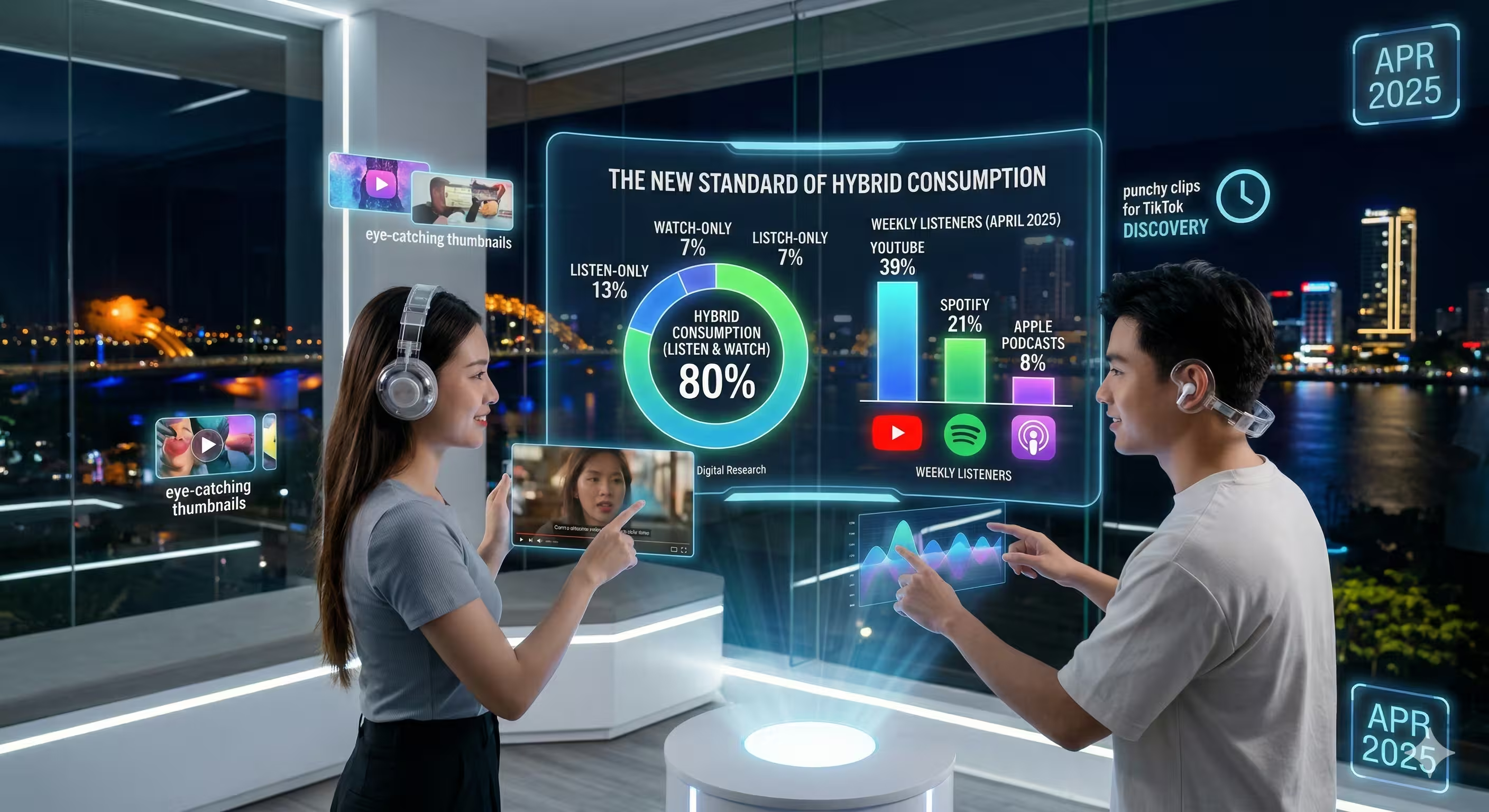
The data tells a clear story. According to research from Triton Digital, while only 13% of podcast consumers are listen-only and 7% are watch-only, a massive 80% now do both (Source: Triton Digital, The Podcast Report, 2025). This hybrid behavior is why platforms like YouTube are dominating podcast discovery.
In April 2025, YouTube captured 39% of U.S. weekly podcast listeners. That's way ahead of Spotify at 21% and Apple Podcasts at 8%. For a deeper dive into these numbers and what they mean for brands, you can read the full research on video podcasting trends.
This is especially true for newer podcast fans. They find shows through eye-catching thumbnails and short, punchy clips on YouTube and TikTok. For them, if your podcast doesn't have a visual side, it might as well not exist.
Of course, before you even hit record, you need to nail your foundation: your Niche, Persona, and Content.
These are the strategic pillars that your video content will bring to life.
Video Elevates Your Brand and Narrative
A video podcast does more than just put a face to a voice. It turns your show into a full-blown brand experience, building trust and reinforcing your authority in a way audio alone just can't.
Here’s how video makes your show better:
- Deeper Audience Connection: Seeing your body language and facial expressions builds a familiarity that audio can't replicate. It makes you human.
- Enhanced Storytelling: You can use multiple camera angles, share your screen for a demo, and add professional graphics. This transforms a simple talk into a dynamic presentation.
- Professionalism and Credibility: A polished video setup—great lighting, sharp cameras, and clean branding—sends a powerful signal. It tells the world you’re serious, which boosts your brand's credibility.
The intimacy of seeing a host or guest speak creates a powerful bond. Viewers feel like they are in the room, part of the conversation, which turns passive listeners into an active, engaged community.
Fueling Growth Through Shareable Content
Maybe the biggest win for video is how incredibly shareable it is. A single one-hour episode can be sliced into dozens of high-impact clips for social media. This is the growth multiplier effect in action. To get a better handle on this, check out our guide on the differences between a podcasts vs YouTube content strategy.
Actionable Insight: Create a "repurposing checklist" for every episode. This should include: 1 full-length video, 3-5 short clips (1-3 min) with captions, 2-3 vertical videos (<60s) for Reels/Shorts, and 5 quote graphics. This systematizes your promotion and ensures maximum reach.
By creating short clips of your best quotes, key insights, or funny moments, you can feed your message across platforms like TikTok, Instagram Reels, and LinkedIn. Each clip is a gateway, pulling new audiences back to your full-length episodes.
Investing in a professional production workflow isn't just an expense; it’s an investment in your brand’s growth. It removes the technical headaches so you can focus on creating incredible content, knowing your show will look and sound as authoritative as your message.
Achieving Broadcast Quality Production
You can have a brilliant concept and the most charismatic host in the world, but if your podcast sounds bad, people will tune out. It’s that simple. Today's listeners expect a certain level of polish, and broadcast quality production is no longer a luxury reserved for big media networks—it's the baseline for credibility.
This is the invisible layer that builds trust and makes your content feel authoritative. It’s what separates a garage project from a professional media asset. Think of it like a shaky smartphone video versus a polished brand film. The message might be identical, but the delivery completely changes how your audience perceives its value. One feels disposable; the other commands respect.
From Raw Recording To Polished Product
Getting from a raw audio file to a finished episode isn't about one magic button. It's a series of deliberate steps in post-production that create that clean, professional sound.
Of course, it all starts with capturing the cleanest possible source audio. That's a topic in itself, and you can get the full rundown in our guide on how to set up a podcast studio.
Once you have the recording, the real work begins. This goes way beyond just cutting out the "ums" and "ahs." It’s about creating a rich, balanced soundscape.
- Dynamic Sound Design: This is where you add your show’s sonic identity. Think subtle musical intros, outros, and transitional sound effects that make your podcast instantly recognizable.
- Audio Mastering: This is the final polish. An engineer balances loudness, EQs the frequencies, and applies compression so your show sounds consistently great whether someone is listening on high-end headphones, in their car, or through a laptop speaker.
The Visual Elements of a Great Podcast
When video enters the picture, the production standards get even higher. You’re not just producing audio anymore; you’re creating a visual experience that needs to hold a viewer's attention and reflect your brand's quality. The goal is to make watching the show just as compelling as listening to it.
Your voice is a strong marketing tool for producing familiarity and trust with your potential customers. It also helps you feel approachable as podcasts have a more informal feeling to them than writing where it is harder to truly convey your real personality.
This visual polish comes from a few key areas:
- Multi-Cam Editing: Nobody wants to stare at a static shot for 30 minutes. Switching between different camera angles on hosts and guests makes the conversation feel dynamic and keeps viewers locked in.
- Professional Color Grading: This is what gives your video that consistent, cinematic look. The process adjusts color and tone to correct for different lighting and makes the final product look polished and high-end, not like a standard video call.
- Branded Graphics: Integrating elements like lower thirds (the graphics with a person's name and title), custom backgrounds, and animated logos is what turns a simple recording into a true branded media asset.
The Before and After Impact
Picture a typical remote recording. The "before" is just two people on a standard Zoom call—the audio has an echo, the lighting is harsh, and the whole thing feels flat.
The "after" is a polished, multi-camera production. The audio is crisp and clean. The video is sharp, color-corrected, and cuts between engaging angles. Branded graphics appear seamlessly. This is the transformation that turns a simple conversation into an asset that builds brand equity. For executives and industry leaders, this level of quality isn't just nice to have; it's a direct reflection of your own standards of excellence.
7. Winning with Consistency and Distribution
So you’ve created a brilliant podcast. That’s a huge accomplishment, but it's only half the job. If an amazing episode is recorded but no one ever hears it, did it even really happen? To actually win, you need a disciplined distribution plan and a rock-solid commitment to a consistent publishing schedule.
Think of your release schedule as a pact with your audience. When they know a fresh episode is waiting for them every Tuesday morning, they build a habit around you. That reliability doesn’t just earn listener loyalty; it also gets you noticed by the algorithms on platforms like Spotify and YouTube, which heavily favor active, predictable shows.
The Power of a Consistent Cadence
Out of everything you can do, showing up consistently might be your biggest competitive advantage. By 2026, the global podcast audience is set to hit a staggering 619.2 million listeners (Source: eMarketer, 2024). While the market is growing, there’s a surprising trend that creates a massive opening for dedicated creators.
The number of active podcasts—those that have published a new episode in the last 90 days—actually cratered from 59% in late 2020 to just 17.7% by early 2023. This "podfade" is a huge opportunity for brands that simply refuse to quit. You can check out more trends shaping the podcast landscape.
An inconsistent publishing schedule is the fastest way to lose an audience. Consistency builds trust, creates anticipation, and signals to both listeners and platforms that your show is a serious, professional endeavor.
What does this mean for you? By just committing to a regular cadence you can actually sustain—whether that’s weekly or bi-weekly—you’re already way ahead of the pack. Sticking around is how you turn a casual listener into a loyal subscriber.
A Multi-Channel Distribution Strategy
Once your episode is ready, your job is to get it in front of every single relevant person you can. Hitting "publish" and hoping for the best isn't a strategy. A great podcast deserves a smart, multi-channel distribution plan that puts the right content on the right platforms.
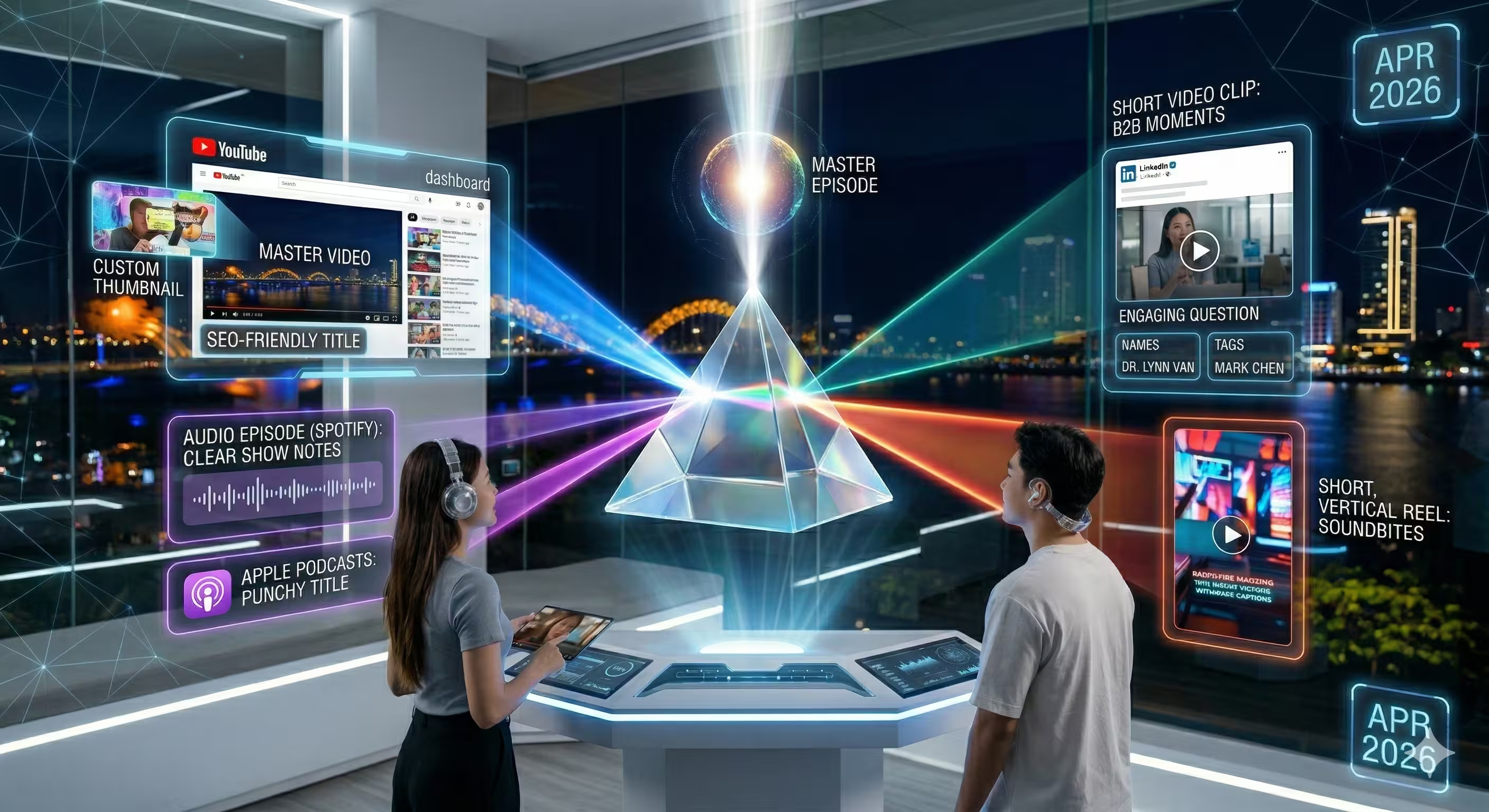
Your distribution workflow should look something like this:
- YouTube: This is a key discovery engine. Post the full video with an SEO-friendly title, a detailed description, and a can't-miss custom thumbnail.
- Audio Platforms (Spotify & Apple): Still the heartland for audio-first listeners. Make sure your show notes are clear and your episode titles are descriptive and punchy.
- LinkedIn: An absolute must for B2B brands and leaders. Share short video clips of the best moments, ask your audience engaging questions, and always tag your guests to leverage their network.
- Other Social Channels: Platforms like Instagram and TikTok are perfect for short, vertical video clips (reels) that highlight the most compelling soundbites from your episode.
When you treat each platform as its own unique channel, you dramatically increase your show's surface area, making it incredibly easy for new listeners to find you.
Maximizing Reach Through Repurposing
Here's where the pros separate themselves from the amateurs: content repurposing. A single podcast episode isn't just one piece of content. It’s the raw material for dozens of smaller, bite-sized assets. This lets you squeeze every drop of value from your production efforts and stay active on social media without burning out.
From just one 30-minute episode, you can easily spin off:
- Full-Length Video: The main event for your YouTube channel.
- Full-Length Audio: For Spotify, Apple Podcasts, and every other audio directory.
- Short Video Clips (2-3 minutes): Ideal for sharing on LinkedIn or as YouTube Shorts.
- Vertical Reels (30-90 seconds): Pull out the juiciest moments for TikTok and Instagram.
- Quote Graphics: Transform powerful statements into shareable images for all your social feeds.
- Blog Post / Show Notes: Create an SEO-optimized article using the episode transcript and key insights.
This system turns your podcast from a once-a-week event into a powerful content engine that feeds your entire marketing strategy. For more actionable tips, check out our deep dive on how to market a podcast effectively. This process ensures every single episode works as hard as you do to build your brand and grow your audience.
8. Measuring Success and Driving Real Growth
If you aren't measuring your podcast's performance, you're flying blind. Creating incredible content is just the first step. True success comes from knowing exactly what’s working and using that data to drive tangible growth for your brand.
This means moving past simple vanity metrics. A huge download number might feel good, but it tells you nothing about whether people are actually listening, engaging, or taking the actions you want them to.
Moving Beyond Vanity Metrics
The real story of your podcast's impact is in the data that reflects actual listener behavior. Platforms like Spotify for Podcasters and YouTube Studio are goldmines for these insights.
Here are the metrics that really matter:
- Audience Retention: What percentage of your audience listens all the way through? A high retention rate is the ultimate sign that your content is genuinely compelling.
- Engagement Rates: On platforms like YouTube, this means likes, comments, and shares. These are signals that your content is sparking real conversation.
- Follower Growth: A steady climb in subscribers shows you're building a loyal community that wants to keep hearing from you.
A podcast's success shouldn't be judged by its raw download count, but by the strength of the connection it builds. A smaller, highly engaged audience that trusts your brand is far more valuable than a large, passive one that barely pays attention.
Actionable Strategies for Real Growth
Once you see what's resonating, you can double down on it. Growth isn't an accident; it's the result of consistent, deliberate effort.
Here are three powerful growth tactics you can put to work immediately:
- Strategic Guest Swaps: Don't just interview guests on your show. Partner with other hosts in your niche and appear on each other's podcasts. It’s a direct and authentic way to get in front of a new audience that’s already primed to like what you do.
- Targeted Social Media Promotion: Stop just posting a link to your latest episode. Create short, dynamic video clips of the best moments and share them on LinkedIn, TikTok, and other relevant platforms. Tag your guests and ask engaging questions to tap into their networks.
- Leverage for PR Opportunities: A high-quality podcast is a powerful PR asset. It’s a living portfolio of your expertise that you can pitch to journalists and event organizers. This opens the door to media features, speaking gigs, and other opportunities that solidify your thought leadership.

Connecting Your Podcast to Business Outcomes
Ultimately, for a brand or leader, a great podcast functions as a strategic growth engine.
Actionable Insight: Create a simple "Podcast to Pipeline" dashboard. Track metrics like "Leads from Podcast Landing Page," "Demo Requests Mentioning Podcast," and "Social Engagement on Clips." Review it monthly to connect your podcasting efforts directly to business results.
By focusing on the right metrics and using smart growth tactics, you can draw a direct line from your show to real business results. This turns your podcast from a simple piece of content into a system for building authority, generating qualified leads, and deepening customer relationships.
Got Questions? We’ve Got Answers About Creating a Great Podcast
Even with the best game plan, stepping into the podcasting world can feel like a leap. Let's tackle some of the most common questions we hear from brands and leaders to clear up the confusion and reinforce what it takes to build a truly great show.
How Long Should a Podcast Episode Be?
This is the million-dollar question, and the answer isn't a magic number. The right length is whatever your content and audience demand.
For most B2B and leadership podcasts, the sweet spot tends to be 25-45 minutes. That's long enough to deliver real substance but short enough to fit neatly into a commute, a workout, or a lunch break.
The real goal here is value density, not just runtime. A tight, powerful 20-minute episode will always outperform a rambling 60-minute one padded with fluff. Keep a close eye on your analytics—if your audience consistently drops off at the 30-minute mark, that’s your show telling you it’s time to tighten things up.
Do I Really Need a Video Podcast?
For any brand serious about growth in 2026, the answer is a hard yes. With a staggering 80% of podcast consumers now watching and listening, an audio-only show is simply invisible to a huge part of your potential market (Source: Triton Digital, 2025). Platforms like YouTube have become podcast discovery engines, and without video, you're not even in the race.
But great video isn't just about being seen. It creates a much stronger human connection, makes your content stickier, and gives you an arsenal of shareable clips for social media. For a brand, investing in professional video isn't a luxury; it's a non-negotiable for building authority and maximizing reach.
"Your voice is a strong marketing tool for producing familiarity and trust with your potential customers. It also helps you feel approachable as podcasts have a more informal feeling to them than writing where it is harder to truly convey your real personality."
What Are the Biggest Mistakes New Podcasters Make?
We see the same three pitfalls derail new shows time and time again. The first, and most immediate, is poor audio and video quality. Nothing screams amateur faster or erodes your credibility more quickly.
The second killer is inconsistent publishing. If listeners don't know when to expect your next episode, they won't build a habit around your show. You'll fade into the background noise. Finally, a vague or weak value proposition means your content doesn't resonate with anyone in particular, getting lost in a sea of look-alike podcasts.
How Do I Measure the ROI of My Company Podcast?
Measuring podcast ROI means looking past download numbers and connecting your show directly to business goals.
- For Brand Awareness: Look at audience growth, social media mentions and shares, and how much referral traffic the podcast drives to your site.
- For Lead Generation: Use dedicated landing pages or unique discount codes mentioned only on the podcast. This lets you track direct conversions.
- For Thought Leadership: Are you getting more inbound guest inquiries? Speaking invitations? Mentions in industry publications? These are clear signs your authority is growing.
Actionable Insight: Don't forget the qualitative feedback. When a new customer tells you, "I've been listening to your podcast for six months, and that's why I'm here," you've found your most powerful ROI metric. Document these testimonials; they are invaluable for proving impact.
Ready to create a podcast that drives real business results without the production headaches? micDrop offers an end-to-end video podcast production service that handles everything from remote recording and professional editing to multi-channel distribution. Learn how we can help you launch a broadcast-quality show at https://www.micdrop.cc.


