How to Market a Podcast for Explosive Growth in 2026

If you want to know how to market a podcast, it all boils down to one thing: a solid strategic foundation built before you ever hit record. It’s about more than just a good idea. Building a passionate audience means deeply understanding your ideal listener, creating a professional brand, and establishing a digital home base to turn casual interest into loyalty.
Great shows aren't just lucky; they’re launched with precision.
Building Your Pre-Launch Marketing Foundation
Let's be clear: the podcasting world is crowded. While estimates vary, the total number of podcasts has surged dramatically. According to data from Podcast Index in March 2024, there are over 4.2 million podcasts available.
But here’s the actionable insight: a significant portion of those shows are no longer active. An analysis by Amplifi Media and Podnews suggests that only about 155,000 podcasts (less than 4%) updated in a recent 30-day period (Source: Podnews, June 2024). That’s your opening. A professional, consistent approach is what will make you stand out. Simply having a great concept and a quality mic is no longer enough to cut through the noise. Your marketing has to start long before your first episode goes live.

Define Your Ideal Listener Persona
Your first job isn't about picking marketing channels. It's about people. Who, exactly, are you talking to?
A vague description like "entrepreneurs" or "marketing managers" just won't work. You need to get specific and build a detailed ideal listener persona.
Think beyond basic demographics. Create a real profile:
- Daily Challenges: What problems are they actually facing at work or at home? How can your podcast be the solution they’re looking for?
- Content Habits: Where do they hang out online for industry news? Are they scrolling LinkedIn, active on X (formerly Twitter), or lurking in niche forums?
- Audio Preferences: What other podcasts are already in their library? Knowing this tells you who your real competitors are—both direct and indirect.
For example, if you're targeting B2B tech marketers, your persona isn't just a job title. It's "Sarah, a 32-year-old Senior Content Manager at a SaaS startup." You’d know she struggles with proving content ROI, listens to "Marketing Against the Grain" on her commute, and checks LinkedIn for industry news. That level of detail makes every single marketing decision that follows so much easier.
Establish Your Show's Core Objective
Why are you even making this podcast? The answer to that question drives your entire strategy. Without a clear goal, you have no way to measure success or justify the time and resources you're pouring into it.
Defining your primary goal is the most critical pre-launch decision. It’s the compass that guides your content, promotion, and guest strategy, ensuring every action contributes to a tangible business outcome.
Your objective will likely fall into one of these buckets:
- Brand Awareness: To establish your company or personal brand as a go-to authority in a specific niche.
- Lead Generation: To attract listeners and convert them into customers for your products or services.
- Community Building: To create a loyal, engaged community around a shared interest or industry.
If your goal is lead generation, for instance, your calls-to-action will focus on downloading a resource or booking a demo. If it's brand awareness, you’ll prioritize getting booked on other shows and creating highly shareable social media clips.
Create Your Podcast's Digital Home Base
Your podcast needs a central hub that you own and control—a dedicated website or landing page. This is non-negotiable.
While people discover and listen on podcast apps, your website is where they subscribe, join your email list, and become part of your world. If you're building from scratch, check out our guide on how to start a podcast with no audience for some foundational tips.
This home base is where you will direct all your marketing traffic. Make sure it features your killer brand assets, including eye-catching cover art and a show description that speaks directly to your ideal listener. These elements are your first impression—invest the time and money to make them look professional and on-brand.
Executing a Launch With Maximum Initial Impact
How you launch your podcast sets the stage for all future growth. Just hitting ‘publish’ on one episode and crossing your fingers is a recipe for failure. To make a real splash, you need a coordinated burst of activity that tells both listeners and podcast platforms that your show is one to watch.
The aim here is simple: generate a massive, initial spike in downloads and engagement. This immediate traction is what gets you noticed and helps you climb the "New & Noteworthy" charts on platforms like Apple Podcasts, giving you a huge visibility boost in those critical first few weeks.
Build Anticipation with a Trailer
Weeks before your first full episode ever sees the light of day, you need to start generating buzz. The single best way to do this is with a compelling podcast trailer.
Think of it as a movie preview for your show—a short, punchy audio or video clip that runs for 30-90 seconds. This isn't an episode; it’s an advertisement for your episodes.
A killer trailer needs to:
- Introduce the Host: Quickly say who you are and establish your credibility.
- Explain the Premise: Get straight to the point—what is the show about and who is it for?
- Showcase the Tone: Give people a taste of the show's vibe. Is it serious, funny, high-energy, or laid-back?
- End with a CTA: Tell everyone the official launch date and, most importantly, tell them to "follow" or "subscribe" so they get notified.
As soon as your trailer is ready, submit your RSS feed to all the major directories—Apple Podcasts, Spotify, Google Podcasts, and others. This approval process can take a few days, so getting it done early ensures you’re live everywhere on launch day.
Use the Launch Burst Technique
When launch day finally arrives, don't just release a single episode. We always recommend the launch burst technique: publish 3 to 5 full episodes all at once. There are a couple of powerful reasons for this.
First, it gives new listeners an instant library to binge. One episode might pique their interest, but having a backlog of content proves you're serious and gives them a reason to stick around. More episodes right away mean more initial downloads, which is a huge signal to the platform algorithms.
Giving your audience multiple episodes at launch completely changes their first impression. They're not just sampling a new show; they're diving into a fully-formed world of content, which makes them far more likely to subscribe.
Think about it from the listener’s perspective. If they love your first episode, they can immediately roll right into the next two. That instantly triples your downloads from a single person and helps lock in their new listening habit.
Activate Your Existing Network
On day one, your most powerful promotional tool is the audience you already have. We're talking about your email list, social media followers, professional connections, and even your friends and family.
Get your launch assets ready ahead of time to make it incredibly easy for your network to share. Create a simple promotion kit that includes things like:
- Audiograms: Short video clips featuring a powerful soundbite and an animated waveform.
- Quote Graphics: Eye-catching images with a key quote from you or a guest.
- Behind-the-scenes Photos: A few shots from your recording sessions to make the launch feel more personal.
When you ask your network for help, be specific. A generic "please share my podcast" is easy to ignore. Instead, try a clear and direct request: "Could you share this link on LinkedIn today and mention what you're most excited to hear?" This makes it far more likely they’ll actually take action and amplify your launch.
Scaling Your Reach With Content Repurposing
A strong launch gets you noticed, but smart content repurposing is what keeps the audience growing long-term. Don't think of your podcast episode as a one-and-done asset. It's a goldmine. The real trick to scaling your marketing without burning out is to break down that single recording into dozens of smaller pieces for different platforms.
This is more than just cross-posting the same link everywhere. It’s about building an entire content ecosystem. Every short video clip, every quote graphic, and every blog post acts like a signpost pointing new audiences back to your main show. You’re meeting your ideal listeners where they already hang out, in the formats they actually prefer.
From One Episode to a Content Factory
The guiding principle here is simple: record once, distribute infinitely. If you're recording video alongside your audio, a single one-hour interview can easily fuel an entire week's worth of promotional content. It’s all about working smarter, not harder.
You need to become an expert at spotting the best moments in your episodes. Keep an eye out for:
- Powerful Quotes: A single, impactful sentence that’s perfect for a text or image post.
- Actionable Tips: That 60-second clip where your guest gives a specific "how-to" breakdown.
- Contrarian Takes: A bold or surprising statement that will spark conversation and debate.
- Key Data Points: A powerful statistic that you can build a visual around.
Once you’ve pulled these moments, you can spin up a whole suite of assets. A single interview might become two or three short video clips for TikTok and Reels, a longer 2-5 minute deep-dive for LinkedIn, a carousel post summarizing key takeaways, and a handful of quote graphics.
Prioritize Video for Maximum Discovery
Audio might be the heart of your podcast, but today, video is the engine for discovery. A huge slice of your potential audience spends their time on visual-first platforms. If you're not incorporating video, you're leaving a massive number of listeners on the table.
Putting your full video episodes on YouTube is non-negotiable. It’s not just another social platform; it's the second-biggest search engine on the planet. Research from Edison's "The Infinite Dial 2024" report shows that 39% of weekly podcast listeners say they have consumed podcasts on YouTube, making it a critical channel for people actively searching for content just like yours. If you're trying to figure out how to manage both, we've got some more thoughts on the relationship between podcasts and YouTube.
This flowchart maps out how your core content can fuel a multi-channel launch campaign that builds on itself.
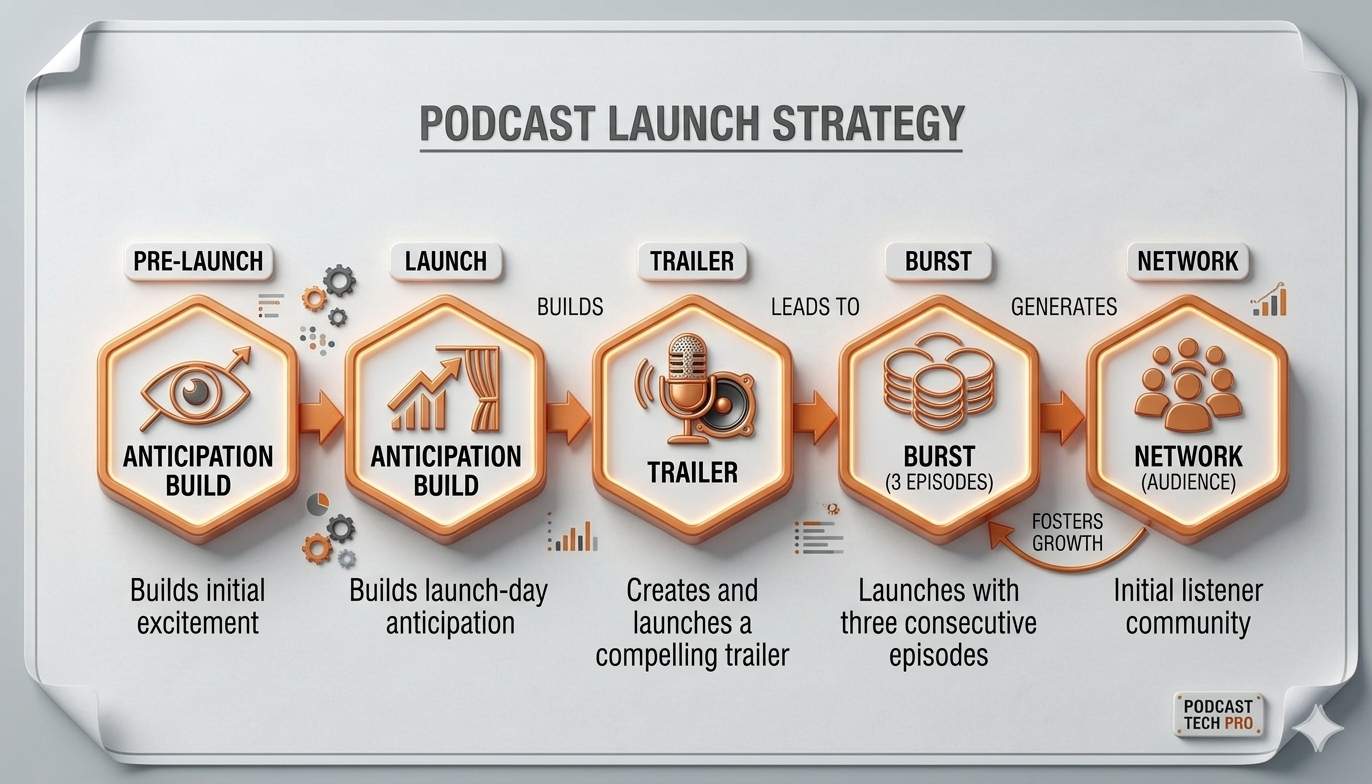
Starting with a trailer, then hitting them with a burst of episodes, and getting your network involved creates a powerful flywheel for discoverability.
Turn Audio into Authoritative Written Content
Your repurposing plan shouldn't end with video. Those podcast conversations are packed with expertise that can be spun into high-performing written content—especially SEO-optimized blog posts.
A full episode transcript is the perfect foundation for a detailed article. This move achieves two major marketing goals at once:
- Captures Search Traffic: A well-written blog post on your episode's topic can start ranking on Google, pulling in a completely new audience that prefers reading over listening.
- Adds Depth and Authority: You can expand on the conversation, add more links, data, and resources to build out a truly comprehensive guide on your website.
By turning your episode's audio into a full-fledged article, you give your content a second life in search engines. This allows you to capture an entirely different segment of your audience that might never discover you through a podcast app.
For example, an episode on "Mastering B2B Sales Cycles" can become a blog post titled "The Definitive Guide to Shortening Your B2B Sales Cycle." You can embed the episode player, add detailed show notes, and link out to guest resources. This single asset then works for you 24/7, pulling in organic traffic and reinforcing your expertise long after the episode goes live.
Driving Sustainable Growth With Organic and Paid Tactics
That initial launch-day excitement is fantastic, but the real challenge is what comes next. How do you build a loyal, growing audience week after week? The answer isn't a single silver bullet, but a consistent, smart blend of organic and paid marketing.
This is about creating a repeatable system—a growth engine—that moves your show beyond one-off promotions and starts attracting the right kind of listeners on a predictable schedule.
Let's break down how to combine long-term value plays like SEO with the targeted punch of paid ads. Getting this mix right is how you turn a new show into an industry fixture.
Master Discoverability With Podcast SEO
Think of Apple Podcasts and Spotify as search engines for audio. When your ideal listener types in "B2B marketing trends" or "leadership advice," you need your show to pop up. That’s podcast SEO in a nutshell: optimizing your show so people who are actively looking for your content can find you.
It starts with treating your episode titles and descriptions like valuable marketing assets.
- Keyword-Rich Titles: A clever, inside-joke title might feel good, but it does nothing for discoverability. Instead of "Episode 42 with Jane Doe," go with something like "Mastering Account-Based Marketing with Jane Doe." This tells listeners and algorithms exactly what they're getting.
- Detailed Show Notes: Your show notes are prime real estate for SEO. Don't just dump a few guest links. Write a few solid paragraphs summarizing the episode’s best moments and insights. Weave in keywords naturally. Treat it like a mini-blog post for every episode.
- The Power of Transcripts: Publishing a full transcript on your site is a game-changer. It not only makes your show more accessible but gives search engines thousands of relevant words to index. This is how you start ranking for all those specific, long-tail search queries.
An episode you optimize today will keep pulling in new, relevant listeners for months—even years—to come. It's the gift that keeps on giving.
Get in Front of New Audiences by Guesting on Other Podcasts
One of the most powerful organic growth hacks is simply getting yourself booked as a guest on other people's podcasts. A "podcast tour," as it's often called, puts your voice and expertise directly into the ears of an already-engaged audience.
You get a warm introduction from a trusted host, which is a powerful form of social proof. As Hannah Isted, host of The Best Marketing Podcast Ever, points out, it's also a phenomenal networking tool.
Being invited to other podcasts and building relationships is an incredible benefit. When you guest on a show, you're not just reaching a new audience; you're building a professional network and validating your expertise in the market.
Start by making a target list of 10-15 podcasts that your ideal customers are already listening to. Then, craft a personalized pitch that shows you've actually listened to their show and explains the specific value you can bring to their audience.
Use Paid Ads to Pour Fuel on the Fire
Organic growth builds a strong foundation, but paid ads let you hit the accelerator. When you're ready to scale, strategic ad spend can deliver new listeners with speed and precision.
Here are two paid strategies that work incredibly well for podcasts:
- Targeted Social Media Ads: Find your best 30-60 second video clips—the moments that are packed with value or a killer soundbite. Turn them into ads on LinkedIn, Instagram, or TikTok, and target users by job title, industry, or interests that match your listener persona. Your goal is to drive clicks directly to your show on Spotify or Apple.
- Podcast-to-Podcast Ads: This is like guesting, but at scale. You can buy ad spots on other shows your audience loves, either as a host-read ad (the gold standard) or programmatically through services like Spotify Ad Analytics. You're reaching people at the exact moment they're already consuming audio content.
Start with a small, testable budget. The key is to obsessively track your cost per acquisition (CPA) for each new follower. This data tells you exactly what's working so you can double down, ensuring your ad spend fuels predictable, sustainable growth.
Building Authority Through Strategic Partnerships and PR
Ready to take your podcast from just another show to an industry-defining voice? This is where you move beyond simple promo swaps and start forging high-impact collaborations that build real authority.
It’s about looking at your podcast not just as content, but as a networking powerhouse. Every episode is a chance to build relationships that attract a higher-caliber audience and cement your status as the go-to expert in your field.
Identify and Pitch Complementary Brands
First, look for brands that serve the same audience you do but aren’t direct competitors. Think of it like a plumber and an electrician—both serve homeowners, but they solve different problems. Find your podcast’s equivalent.
Who else is selling to your ideal customer? If your show is for startup founders, you could partner with a SaaS accounting tool, a legal tech platform, or even a corporate travel agency.
Once you have a shortlist, your pitch needs to be all about mutual value. Don't just ask for a shoutout. Propose a specific, creative collaboration that benefits their audience.
Here are a few ideas to get you started:
- Co-branded Mini-Series: Pitch a 3-episode series on a topic where your expertise overlaps. This creates unique, co-owned content that you can both promote heavily.
- Content Swap: Offer to record an exclusive bonus episode just for their audience in exchange for them doing the same for you. It’s fresh content for both feeds and a natural introduction.
- Expert Roundup Episode: Invite a key leader from their company to join a panel discussion on your show. They get a platform, and you get great content with a built-in promotion partner.
Turn Your Insights into PR Opportunities
Your podcast is a goldmine of unique commentary and expert insights. It's time to start treating it that way. By strategically packaging these conversations, you can earn media coverage that builds massive credibility.
Your podcast is an engine for generating original perspectives. Turning those conversations into press releases or bylined articles for trade media is how you get your expertise in front of journalists and a much wider professional audience.
Start treating your best episodes like original research. Did you just interview three industry leaders about a hot-button issue? Synthesize their key takeaways into a "State of the Industry" report or a data-driven press release.
For example, after an episode on the future of AI in marketing, you could draft a release titled, "3 Trends Shaping AI Marketing in 2026, According to Industry Experts." Send it directly to journalists at top marketing publications. Even if it doesn't become a full story, it immediately positions you as a valuable source for future commentary.
Become a Go-To Source for Journalists
The ultimate PR win is becoming the person journalists call when they need a quote on your subject. This doesn't happen by accident; it's about cultivating relationships with the right reporters and editors.
Start by following them on social media and engaging thoughtfully with their work. When you drop an episode that’s directly relevant to their beat, send them a short, personalized email. No spam, just value.
Try something like this: "Hi [Journalist Name], I saw your recent article on [Topic]. We just released a podcast episode on this with [Guest Name], and she shared a surprising take at the 15:30 mark. Thought you might find it interesting for your research."
This approach is helpful, not demanding. Over time, these small touchpoints build familiarity and trust. As these relationships grow, you'll find they open doors to more formal partnerships, which can often lead to direct revenue. Exploring the different models available is a smart next step; you can learn more about crafting attractive podcast sponsorship packages in our detailed guide. By consistently showing up as a helpful expert, you make it easy for the media to find—and feature—you.
Measuring What Matters to Optimize Your Marketing
You can't fix what you don't measure. Just throwing marketing tactics at the wall and hoping something sticks is a recipe for wasted effort. A data-first approach is what turns your podcast marketing from a guessing game into a repeatable growth engine.
It’s easy to get hooked on vanity metrics. That sudden spike in total downloads feels great, but does it mean anyone actually listened? Or cared? Real success is found in the numbers that show genuine engagement and loyalty.

Go Beyond Basic Downloads
To get a real sense of your performance, you have to look past the top-line download number. The right Key Performance Indicators (KPIs) will show you exactly how listeners are behaving and how your marketing is really doing.
Start with these core engagement metrics:
- Audience Retention: This is your holy grail. Your podcast host will show you a graph of when listeners drop off. A huge dip in the first 5 minutes? Your intro probably isn't grabbing them. A consistent drop in the middle of every episode? Your segments might be dragging, or your ad reads are turning people off.
- Subscriber Growth Rate: Total subscribers are nice, but the rate of growth is what shows momentum. Are you adding new followers faster this month than last? This tells you if your promotional efforts are actually picking up steam.
- Click-Through Rate (CTR) from Show Notes: When you link to a guest's site, a resource, or your own landing page, the CTR is a direct measure of how engaged your audience is. It proves they're not just listening—they're taking action.
Establish a Monthly Performance Review
Data is only useful if you act on it. The trick is to build a simple, consistent habit of reviewing your analytics so you can make smarter decisions. A monthly check-in is perfect—it keeps you agile and lets you course-correct quickly.
Your monthly review should be a focused session, even if it's just you, answering a few critical questions:
- Which marketing channels brought in the most new listeners?
- Which episode topics hit home, based on retention and feedback?
- What experiments did we try, and what did we learn?
A monthly review cycle shifts you from being reactive to proactive. This simple discipline is what separates the podcasts that fizzle out from the ones that build sustainable, long-term growth.
This process creates a feedback loop that constantly sharpens your content and your promotion. It’s the engine that drives your show forward.
To stay organized, we recommend using a simple tracking template. It helps you visualize trends and spot opportunities or problems at a glance.
Podcast Marketing KPI Tracking Template
A template for tracking key metrics to measure the effectiveness of your podcast marketing efforts on a monthly basis.
This table isn't just about logging numbers; it's about connecting the dots. The "Notes/Insights" column is where the magic happens—it’s where you turn data into a story that informs your next move.
Interpret Listener Feedback and Reviews
The numbers tell you what happened. The comments and reviews tell you why.
Qualitative feedback from Apple Podcasts reviews, YouTube comments, and social media DMs is pure gold. Look for themes. Are people consistently raving about a specific segment? Are they confused by a concept you thought was simple? This is a direct line into your audience's head.
For instance, Hannah Isted, host of The Best Marketing Podcast Ever, actively tells listeners to message her on Instagram. This creates a direct feedback channel, helping her understand what truly resonates and making her community feel heard. It’s a powerful way to make sure your show is delivering exactly what your listeners want.
Your Top Podcast Marketing Questions, Answered
When brands and leaders first jump into podcasting, the same questions always come up. You’ve launched the show—now what? How do you turn those initial downloads into real, sustainable growth?
Let's clear up the confusion and get straight to the answers you need.
How Long Until I See Real Results From My Marketing?
Everyone wants to know the timeline. While a big launch can give you a nice initial spike, building a real audience through consistent marketing usually takes 3 to 6 months.
Don't get discouraged if you're not a top-charter overnight. Growing a loyal community is a long game. The key is sticking to the fundamentals:
- Consistent Publishing: Stick to a reliable schedule your audience can count on.
- Smart Repurposing: Turn every episode into a goldmine of clips, graphics, and articles for social media.
- Ongoing Promotion: Keep getting your name out there by guesting on other podcasts and promoting your content.
Pay attention to the early wins. Things like social media engagement, new email subscribers, and clicks to your website are great signs you’re on the right path, often showing up long before the download numbers explode.
What’s the Single Best Tactic for a New Podcast?
If you’re just starting out and struggling to get noticed, your most powerful move is guesting on other established podcasts in your niche. It’s often called a "podcast tour," and it's how you market a show without a huge budget.
Think of it this way: you’re getting a direct, warm introduction to an audience that is already hooked on podcasts. The host is essentially giving you their stamp of approval.
This one strategy delivers multiple wins at once:
- Borrowed Trust: You gain instant social proof from a respected host.
- Showcase Your Expertise: It’s the perfect stage to prove your value and knowledge.
- Drive Subscriptions: Listeners who like what they hear can find and subscribe to your show on the spot.
Should I Bother With Video, or Is Audio Enough?
For maximum reach in today's market, you absolutely need video. A video-first podcast strategy is essential. Audio is still crucial, but discovery platforms like YouTube and TikTok have completely changed how people find new shows.
Recording in video is non-negotiable for modern podcast marketing. It allows you to create a wealth of repurposable content that expands your visibility on platforms like YouTube, TikTok, and Instagram Reels, reaching audiences that might never find an audio-only show.
The best approach is to record everything in high-quality video first. Then, you can publish the full video episodes on YouTube and Spotify while stripping the audio for all the traditional podcast directories. This way, you capture listeners everywhere they are.
Ready to stop worrying about production and start focusing on creating great content? micDrop offers end-to-end video podcast production services for brands and leaders. We handle everything from remote recording and multi-cam editing to short-form repurposing, so you can build your authority with a polished, scalable show. Learn more about our productized plans at https://www.micdrop.cc.


