Choosing a Professional Podcast Production Service
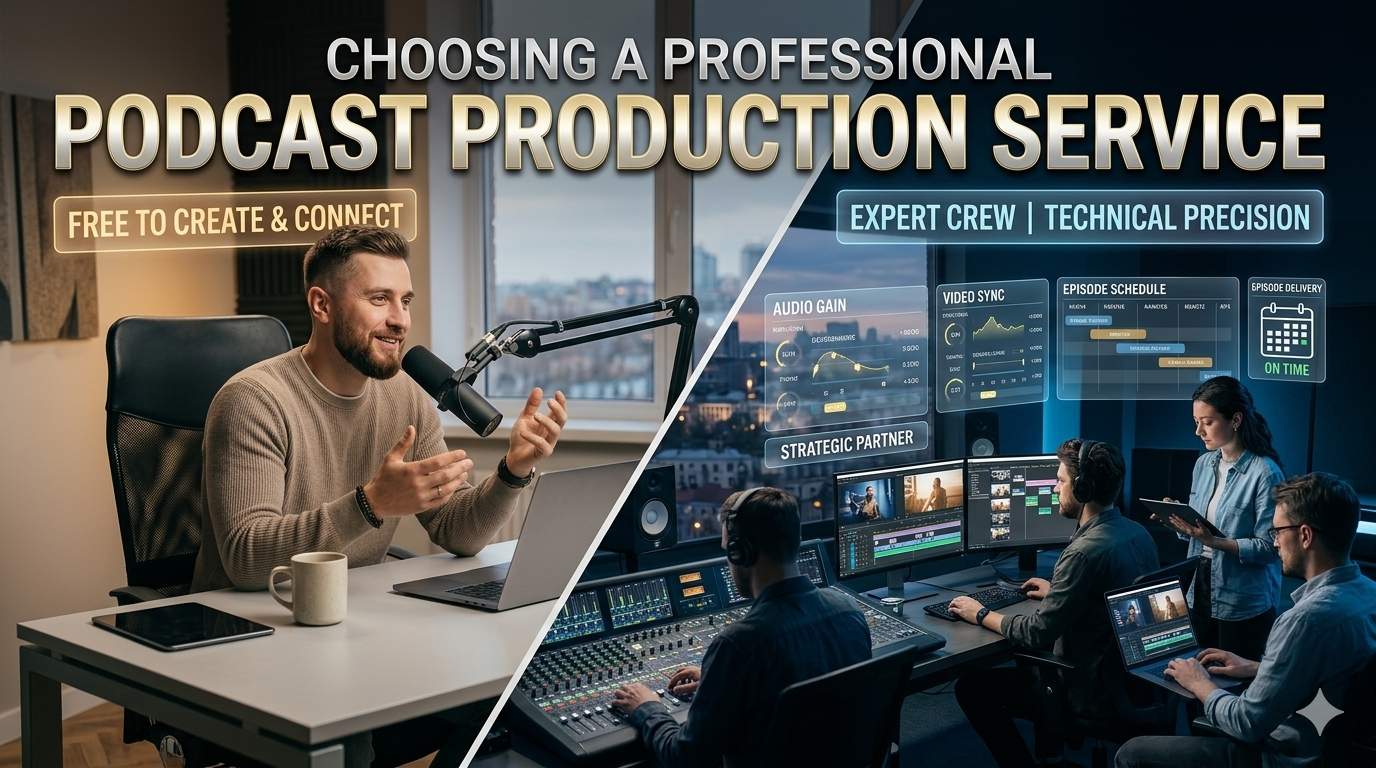
So, what exactly is a podcast production service? Think of it as your dedicated, on-demand creative and technical crew. They're the strategic partner handling all the complex, behind-the-scenes work, freeing you up to do what you do best: create incredible content and connect with your guests.
When Good Podcasts Go Silent
It’s never been easier to start a podcast. But keeping one going? That's a completely different challenge. The internet is a graveyard of shows that launched with big ideas and even bigger ambitions, only to vanish after a handful of episodes. This isn't a rare occurrence—it's a common story for countless brands and creators, a phenomenon known as "podfading."
The problem usually isn’t a lack of compelling content or interesting guests. It's the relentless, often underestimated grind of consistent production. The chasm between having a great message and delivering it with professional polish, week in and week out, is where most podcasts fall apart.
The Overwhelming Production Hurdle
Many businesses jump into podcasting thinking it’s as simple as hitting record and uploading a file. They soon find out the reality is far more demanding. The constant cycle of scheduling guests, recording, editing audio, mixing sound, and distributing the final episode quickly turns into a massive drain on time and resources.
This is especially true in today's crowded market. To succeed, you need to be consistent and stand out.
The State of Podcasting for Brands in 2026
The podcasting world is more competitive than ever. Launching a show is just the first step; sustaining it is the real challenge. The numbers below paint a clear picture of the environment you're stepping into.
Simply put, consistency is the key to capturing a piece of that massive listener base. You can explore more data on the state of podcasting to get a fuller sense of the competitive field.
This is exactly where a podcast production service becomes a game-changer. It’s not about just hiring an editor; it's about bringing on a strategic partner to own the entire workflow.
A podcast can be slow, serious, or niche—but it still has to give the listener something to respond to. That something is resonance: emotional, intellectual, even spiritual. That’s what makes something entertaining.
Your Dedicated Production Crew
Imagine having an expert team whose sole focus is making your show a success. That’s what a full-service production partner delivers. They handle the technical headaches so you can get your time and creative energy back.
A quality service ensures your podcast is:
- Professionally Polished: Crystal-clear audio, seamless edits, and balanced sound that makes listening a pleasure.
- Visually Compelling: For video podcasts, this means sharp multi-camera editing, pro color grading, and branded graphics that make your content pop.
- Consistently Delivered: A reliable publishing schedule is locked in without you ever needing to open an editing timeline.
- Strategically Distributed: Episodes are optimized and published across all major platforms, from Spotify and Apple Podcasts to YouTube and LinkedIn.
By offloading these intensive tasks, a podcast production service transforms a content chore into a streamlined, sustainable asset for your brand. It’s the solution that bridges the gap between your great ideas and a consistently excellent show that builds your audience and authority for the long haul.
Deconstructing the Production Workflow
So what really goes into creating a polished, professional video podcast? It's a whole lot more than just hitting the record button.
Think of a podcast production service as your general contractor. They manage every single specialist, from audio engineers to video editors, to bring your vision to life. It's an end-to-end process that turns a raw conversation into a high-impact content asset.
This workflow is typically broken down into four key stages. A dedicated producer oversees the entire journey, making sure nothing gets missed.
The real challenge for most creators is the production itself. It's where great ideas often stall, leading many to "podfade" and give up on their shows.

This is the friction point. A structured, professional workflow is what gets you past this wall and keeps your show consistent.
Stage 1: Pre-Production and Strategy
This is where the groundwork for a successful episode is laid. It’s all about meticulous planning to make sure your recording session is smooth, focused, and high-quality. A production service doesn't just show up on recording day; they set you up for success from the start.
Key activities in this phase include:
- Content Strategy: Aligning episode topics with your brand goals and audience interests.
- Guest Management: Handling all scheduling, tech checks, and guest prep so they know exactly what to expect.
- Technical Setup: Making sure both you and your guest have the right gear for crystal-clear audio and video. For a deeper look at equipment, check out our guide on choosing an audio interface for podcasting.
Stage 2: Guided Production
Recording day is where the magic begins. With a professional service, you’re not flying solo. A producer joins the session remotely, acting as a director to ensure you and your guests look and sound your best.
This guided approach is a game-changer. The producer can fix tech issues on the fly, steer the conversation back on track, and guarantee all audio and video tracks are captured perfectly. It removes the technical stress, letting you focus completely on having a great conversation.
Stage 3: Professional Post-Production
This is where the raw recording is shaped into a polished final product. Post-production is easily the most time-intensive part of the process, involving a team of specialists to handle the heavy lifting.
A full-service production partner handles the complex editing, sound design, and branding, transforming a simple recording into a cohesive piece of media that reflects your brand’s high standards.
Deliverables at this stage typically include:
- Audio Editing and Mixing: Cutting out mistakes, "ums," and dead air, while balancing levels and adding your intro/outro music.
- Multi-Camera Video Editing: Switching between host and guest camera angles to create a dynamic, TV-style experience.
- Color Grading and Sound Design: Enhancing the video's visual appeal and using noise reduction and EQ to make the audio sound crisp.
- Branding Integration: Adding your logos, motion graphics, and lower thirds with names and titles to reinforce your brand identity.
Stage 4: Distribution and Repurposing
The job isn't finished when the episode is edited. The final, critical stage is getting your content in front of the right people and maximizing its value. A top-tier production service manages this entire workflow for you.
This includes publishing the final episode to all major audio platforms (like Spotify and Apple Podcasts) and, crucially, to video platforms. With over 1 billion monthly viewers of podcast content on YouTube (Source: Cumulus Media), high-quality video is essential. The financial incentive is also clear: worldwide podcast advertising revenue is projected to hit $4.46 billion in 2025 (Source: Statista).
Beyond just publishing, your producer will also repurpose the episode into a whole suite of short-form assets. Think video clips for social media, quote graphics, and audiograms to fuel your content calendar for weeks. This strategic approach ensures every single episode delivers maximum ROI.
Calculating the True Cost: In-House vs. Outsourcing
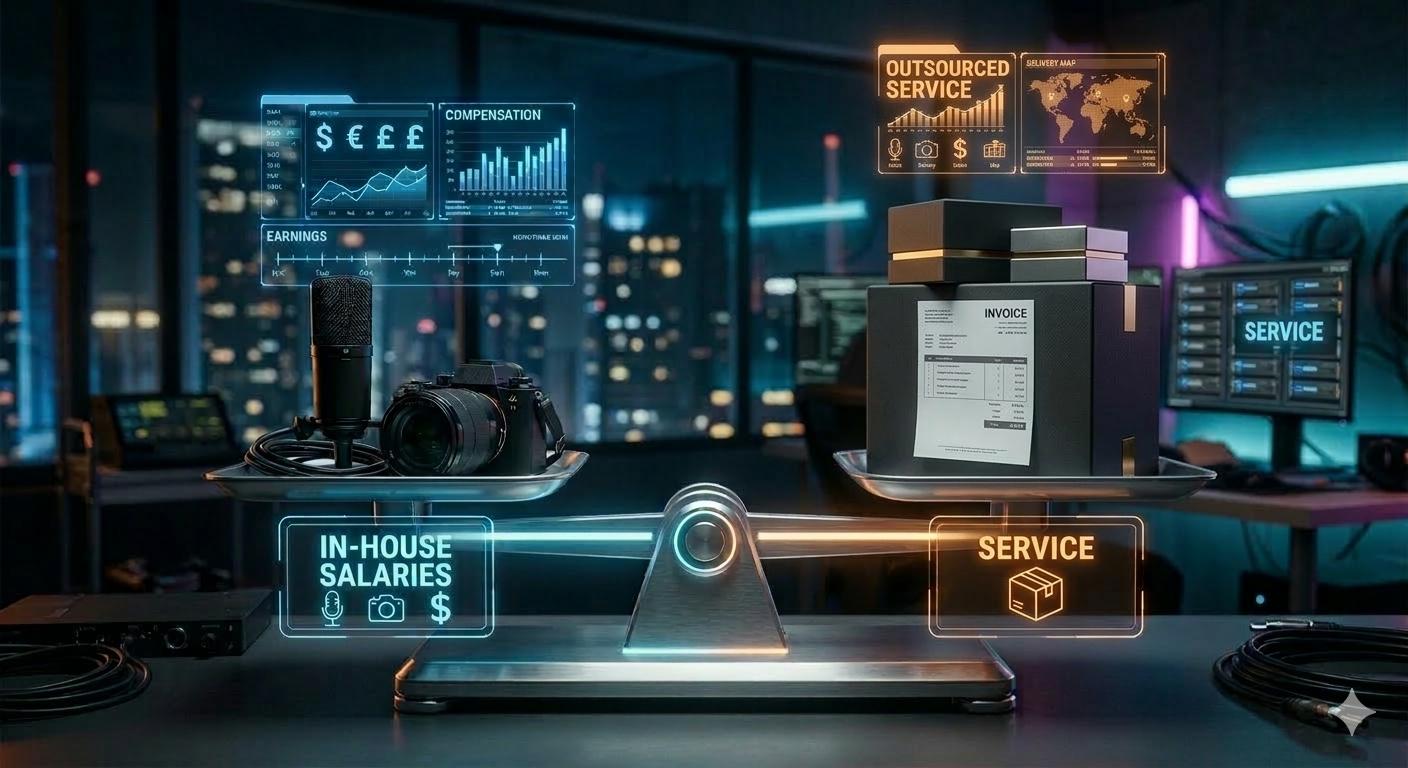
When it's time to produce your podcast, you face a big decision: build your own in-house team or hire an expert production service? This isn't just a simple pros-and-cons list. It’s a hard look at the real-world costs to help you make a smart business move.
Doing it yourself might seem like the cheaper route at first glance, but the real costs are often buried in salaries, lost time, and missed opportunities. Going it alone means you're not just making a podcast; you're becoming a full-blown production house. Outsourcing, on the other hand, gives you an entire team of pros for one predictable fee.
The Hidden Costs of In-House Production
Building a podcast team from scratch is a massive undertaking. Sure, there are the obvious costs for gear and software subscriptions, but those are just the tip of the iceberg. The real financial drain comes from the people—the salaries, benefits, and time required to run a high-quality show, week after week.
Just think about all the roles you suddenly need to fill:
- Producer: Manages guests, directs recording sessions, and keeps the entire workflow on track.
- Audio Engineer: Edits, mixes, and masters the audio so it sounds clean and professional.
- Video Editor: Juggles multi-camera footage, handles color grading, and adds graphics.
- Graphic Designer: Creates eye-catching thumbnails, audiograms, and social media content.
Hiring even one person with this mix of skills is incredibly expensive, and finding a unicorn who excels at all of them is next to impossible. What usually happens? These jobs get piled onto your existing marketing team, pulling them away from their core responsibilities and leading to burnout and an inconsistent, amateur-sounding show.
The Strategic Edge of Outsourcing
Working with a podcast production service completely changes the game. Instead of taking on the full cost and management nightmare of a new team, you pay a straightforward fee for on-demand access to a complete, specialized crew. You’re not just buying an editing service; you're offloading the entire operational headache.
By outsourcing, you’re not just buying a service; you’re buying back time, guaranteeing consistency, and gaining a strategic partner whose only job is to make your show succeed. This frees up your team to focus on what they do best: growing your business.
This approach gives you instant expertise without the overhead of salaries, benefits, and endless training. A dedicated service already has proven workflows and industry best practices in place, ensuring your podcast meets a professional standard from day one.
It’s the difference between building an entire kitchen just to cook one meal versus hiring a five-star chef who brings their own state-of-the-art kitchen with them.
A Side-by-Side Resource Comparison
To put things in perspective, let’s compare the resources needed for a typical weekly video podcast. This table highlights the stark difference in what you'll need to invest.
Comparing In-House vs Outsourced Production Resources
Ultimately, calculating the true ROI isn’t just about comparing numbers on a spreadsheet. The in-house approach often leads to "podfading," where the internal strain becomes too much and the show fizzles out.
Partnering with a podcast production service ensures your show remains a consistent, high-quality asset that builds your brand and drives business goals—without draining your most valuable internal resources.
Understanding Pricing and Measuring Your Return
When you’re ready to invest in a podcast production service, cost is always a top question. But the price tag is more than just a number—it’s a direct reflection of the expertise, quality, and scope of work you're getting.
The real key is understanding what you're paying for and, more importantly, how to measure the business value you get back.
Decoding Common Pricing Models
Podcast production pricing isn’t standardized. Most services use a few common structures, each built for different needs and budgets. Knowing these models helps you make a true apples-to-apples comparison.
Here are the most common pricing structures:
- Per-Episode Fee: A straightforward flat rate for each episode. This is a great fit if you have an inconsistent publishing schedule or just want to test the waters without a long-term commitment.
- Monthly Retainer: The most common and cost-effective model for shows that publish consistently (weekly or bi-weekly). This gives you a predictable monthly cost and usually includes a full suite of services, from production and distribution to content repurposing.
- Project-Based Pricing: This is typically for one-off needs, like a complete podcast launch package or a limited-run narrative series. You receive a custom quote for the entire project upfront.
The price always correlates with complexity. Basic audio editing sits at the lower end. A full-service package with multi-camera video, motion graphics, and a library of social media assets will naturally be a larger investment.
Moving Beyond Direct Monetization to True ROI
Don't fall into the trap of measuring a podcast's success by ad revenue alone. While sponsorships are a plus, the real return on investment (ROI) for most businesses is far more strategic and significant.
Your podcast is a content engine that drives real business results.
The true value of a business podcast isn't in selling ad slots. It's in building a core content asset that generates qualified leads, builds undeniable brand authority, and shortens your sales cycle. Think of it as a long-term investment in your brand's voice and influence.
Viewing a podcast as just another marketing expense is a fundamental mistake. It’s an asset that grows in value over time, working for you 24/7. If you are interested in direct revenue, you can learn more about how to monetize a podcast in our detailed guide.
Key Metrics for Measuring Business Impact
So how do you track this bigger, more meaningful ROI? You have to look past simple download counts and focus on the metrics that connect directly to your business goals.
A professional podcast production service delivers more than a polished show—it delivers content designed to move these specific needles.
Track these critical business metrics:
- Qualified Lead Generation: Are people visiting your site, downloading resources you mention, or booking demos? Use unique links and landing pages to trace these leads right back to your podcast.
- Increased Brand Authority: Keep an eye on social media mentions, inbound press inquiries, and invitations for your leaders to speak at events. A great show establishes your team as the definitive experts.
- Shorter Sales Cycles: Is your sales team using episodes to educate prospects? A lead who has already listened to hours of your content comes into the conversation informed, trusting, and ready to move forward.
- Talent Attraction and Retention: Your podcast is a powerful window into your company’s culture and vision. When candidates mention the show in interviews, you know you’re attracting talent that’s already bought into your mission.
When you focus on these outcomes, the conversation shifts from "How much does it cost?" to "What can our podcast achieve for the business?". This is how you justify the investment and prove its value, month after month.
Questions to Ask Before Hiring a Production Partner
Picking a production partner is a huge decision for your show. It's easy to just compare prices, but finding a team that actually gets your brand and can help you grow requires digging a little deeper.
Think of this as your buyer's checklist. These questions are designed to get past the sales pitch and uncover what a service can really do. A true partner will be excited to answer them—a simple editing service might not.
Questions About Process and Workflow
You need a partner with a rock-solid process that makes your life easier, not more complicated. These questions get right to the heart of their day-to-day operations.
- Walk me through your revision process. A great answer will involve a clear system, like a dedicated portal where you can drop time-stamped comments right on the files. A major red flag is anything vague like, "just email us your changes." That's a recipe for chaos.
- Who will be my dedicated point of contact? The best services, like micDrop, give you a dedicated producer. This means one person who knows your show inside and out. If they can’t name a specific person or role, you might get bounced around a team of strangers.
- How do you ensure audio and video quality during remote recordings? A top-tier service will talk about their guided recording process. This is where a producer actually joins the session to manage the tech and make sure the source files are perfect from the start. If they only talk about fixing things in post-production, be warned—great quality starts with a great recording. You can learn more about how factors like EQ impact quality in our guide on the podcast frequency EQ chart.
Questions About Deliverables and Value
Your podcast isn't just one long episode—it’s a content machine. Your production partner should be helping you get the most out of every single recording.
- Can you show me examples of short-form video clips you've created from a long-form episode? They should be able to instantly pull up examples of killer Reels, Shorts, or TikToks that are dynamic and properly captioned for social media. If all they can show you are basic cuts, they don't get content repurposing.
- What assets are included beyond the final episode? A full-service partner will deliver a suite of assets like show notes, transcripts, audiograms, and quote cards. These are the tools that save your marketing team hundreds of hours and make promotion a breeze.
A partnership with a podcast production service should be an investment in a full content system, not just an edited file. Their ability to repurpose your core content into a library of channel-specific assets is what drives exponential ROI.
Questions About Expertise and Fit
Finally, you need to know if their team has the right experience and if they can scale with you. These questions test their track record and strategic thinking.
- What types of clients do you typically work with? You want to find a service that has experience with brands or creators in your niche. It means they already understand your audience and what works.
- How do you handle scaling up or down? Your needs will change. A great partner offers flexible plans, like micDrop's Bi-Weekly and Weekly packages, letting you adjust your show's frequency without being locked into a rigid contract.
Asking these questions gives you the intel you need to choose a podcast production service that's a genuine partner—one who's ready to help you build a standout show that hits your business goals.
Turning One Episode Into a Full Content Calendar
Hitting "publish" on a polished episode isn't the finish line. In fact, if you’re only thinking about the single audio or video file, you're missing the whole point. The real magic begins after the recording stops.
Think of each episode not as a standalone piece of content, but as a content engine—a wellspring of material that can fuel your entire marketing calendar for weeks. This is exactly what a professional podcast production service does. They don't just hand you a file; they deliver a complete package of assets, all designed to make your show work harder for you.

From Long-Form to a Library of Assets
The strategy behind this is called content repurposing. It’s the art of taking your long-form episode and methodically breaking it down into dozens of smaller, bite-sized pieces. Each piece is then tailored for the specific platform where it will live, maximizing its chance to connect with your audience.
Here’s what that integrated workflow looks like in practice:
- Engaging Video Clips: Pulling the most compelling 30-60 second highlights to create Reels, TikToks, and YouTube Shorts.
- Insightful Quote Cards: Designing sharp, on-brand graphics that feature a powerful statement from your guest, perfect for sharing on LinkedIn and X (formerly Twitter).
- Dynamic Audiograms: Combining a short audio clip with animated captions and your branding, making your content pop on social feeds where users might be scrolling with the sound off.
- SEO-Rich Blog Posts: Transforming the full episode transcript into a detailed article that pulls in organic search traffic and gives people another way to engage with your ideas.
The True Value is Time and Consistency
The real win here isn't just getting a bunch of extra content. It's the hundreds of hours you and your team get back. Trying to create all these assets in-house means coordinating a designer, a video editor, and a copywriter—a huge time and resource drain. A production partner has this process dialed in.
When you partner with a service that handles repurposing, you're not just buying production. You're buying a system that guarantees your brand stays active and visible across all channels with minimal effort from your team. This consistency is what builds momentum and grows your audience over time.
For instance, a single one-hour video podcast can easily be turned into:
- A Full YouTube Video: The cornerstone piece, complete with an optimized title, description, and eye-catching thumbnail.
- Five High-Impact Video Clips: Each one focused on a different key moment or idea, ready for social media.
- Ten Quote Graphics: Highlighting the most memorable insights from the conversation.
- A 2,000-Word Blog Post: Fully transcribed, formatted for readability, and optimized for search engines.
- A LinkedIn Newsletter: Summarizing the episode’s main takeaways for your professional network.
Just like that, one recording session has filled your content calendar for the next two weeks. This is the strategic advantage a top-tier podcast production service brings to the table. It elevates your show from a standalone product into the central pillar of a sophisticated and efficient content marketing machine.
Frequently Asked Questions
Still have a few questions? You're not alone. Here are the straight answers to what people usually ask before they partner with a production service.
How Long Does It Take To Launch My Podcast?
You can expect to go from zero to a fully launched show in about 4-6 weeks.
That timeline covers everything—strategy sessions to nail down your concept, building your brand, getting your equipment sorted, and recording your first batch of episodes. The goal isn't just to launch, but to launch with momentum.
What Equipment Will I Need To Buy?
Probably less than you think. A great production service will cut through the noise and point you to a simple, high-impact setup.
For most people, a quality USB microphone and a good pair of headphones are all you need to get started. Your producer’s job is to recommend the right gear and make sure it’s set up perfectly, so you sound like a pro from day one.
The real value of a podcast production service isn’t just the editing. It's the expertise and seamless workflow that lets you be the expert. They take care of all the tech, so all you have to do is show up and talk.
Can A Production Service Help With Strategy?
Absolutely. The best ones insist on it. A top-tier service is more than just a technical crew; they’re your strategic partner.
They’ll help you pinpoint your ideal listener, sharpen your show’s format, and map out content that actually drives your business goals. They provide the strategic foundation you need to grow your show for the long haul.
What Is The Difference Between An Editor And A Production Service?
Think of it like this: an editor is a freelancer you hire for a single task—chopping up the audio or video you send them.
A full production service, on the other hand, is your dedicated team managing the entire process. They’re with you from pre-production strategy and guided recording sessions all the way through to post-production, distribution, and even repurposing your content. It’s the difference between hiring a specialist and onboarding a complete production department.
Ready to build a standout show without the production headaches? micDrop is an end-to-end solution that gives you a dedicated producer to handle it all. Start building your authority with micDrop today.


