How to Monetize a Podcast in 2026 for Real Growth
So, you're ready to turn your podcast from a hobby into a real revenue-generating machine? That's the right mindset. Making money from your show isn't about luck; it's about treating it like a media business and building a smart, sustainable strategy.
The right path for you will hinge on your audience, your niche, and your content. We're going to lay out a blueprint to help you find the best monetization models for your unique show.
Your Podcast Monetization Blueprint
Let's get one thing straight: this isn't about flipping a switch and watching the money roll in. It's about building an income stream that feels authentic to your brand and rewarding for your hard work.

There has never been a better time to be in this space. The entire podcasting ecosystem is growing at an explosive rate, and the numbers tell a powerful story.
Worldwide podcast advertising spend is projected to hit a staggering $4.46 billion in 2025—that's an 11% jump from 2024. And it’s not stopping there. Forecasts show the market climbing to $5.03 billion by 2027. This surge is powered by a massive global listener base of 584.1 million people in 2025, which is expected to swell to 619.2 million by 2026. You can dig into even more stats on this boom in a detailed breakdown from PodcastVideos.
The Main Ways to Make Money Podcasting
When it comes to monetizing, most podcasters start with one of three main avenues before branching out. Think of them as the foundational models for your business.
- Advertising & Sponsorships: This is the one everyone knows. Brands pay for pre-roll, mid-roll, or post-roll ad slots to get their message in front of your listeners.
- Direct Listener Support: This is where your most loyal fans pay you directly. Think one-time donations, recurring memberships on platforms like Patreon, or selling access to premium, bonus, or ad-free content.
- Your Own Products & Services: This is often the most lucrative path. You sell your own offerings, like branded merchandise, digital products (courses, e-books), or high-ticket services like consulting and coaching.
The table below gives you a quick snapshot of these models, so you can start thinking about which one aligns best with your show's current stage and future goals.
Podcast Monetization Models at a Glance
As you can see, you don't need a massive audience for every model. The key is choosing the one that fits the relationship you've already built with your listeners.
The smartest creators I know see sponsorships as a bonus, not the foundation. They build a resilient business first, creating revenue streams that work whether they have 500 listeners or 50,000.
Are You Ready to Monetize Your Podcast?
Before you start pitching sponsors or setting up a Patreon, you need an honest gut check. Is your show truly ready? Trying to monetize too early can feel inauthentic and fall flat. You're looking for signs that your podcast is a valuable asset, not just a side project.
Here are the key signals to look for:
- Consistent Download Numbers: Are your downloads per episode steady or, even better, growing? You don't need a million downloads, but consistency proves you have a reliable audience.
- An Engaged Community: Do people email you? Leave reviews? Comment on your social posts? An engaged listener is infinitely more valuable to an advertiser (and to you) than a passive one.
- A Clear Niche and Audience: Can you describe your ideal listener in a sentence or two? The more clearly you can define your audience, the easier it is to sell to sponsors or create products they'll love.
If you're nodding along to these points, you're in a great position to start building your monetization blueprint. Let's get to it.
Building a Monetization-Ready Foundation
Before you even think about chasing your first sponsorship dollar, you need to have a show that’s actually built to sell. Monetizing a podcast isn't just about having good content—it's about creating a professional media asset that signals real value to listeners and brands alike.
Too many creators get this backward. They obsess over download numbers, thinking a massive audience is the only path to a paycheck. The truth? A smaller, super-engaged audience can be infinitely more valuable than a huge, passive one. The foundation of monetization is trust, and that starts with knowing exactly who you're talking to.
Define Your Ideal Listener Avatar
You need to know your audience so well that sponsors immediately see them as their perfect customer. It's not enough to say you target "small business owners." Get specific. Are they B2B SaaS founders in their post-seed stage? Or are they solopreneurs bootstrapping a new service business? This level of detail is your biggest advantage.
A crystal-clear avatar lets you:
- Create hyper-relevant content: This pulls in more of your ideal listeners and builds a fiercely loyal community.
- Pinpoint the right sponsors: You can confidently approach brands whose products are a direct solution to your audience's problems.
- Justify premium rates: A niche, high-value audience (like C-suite executives) can demand much higher CPMs, even if the download numbers aren't massive.
The most successful podcasters I work with think of sponsorships as their last line of defense, not their first. They’re building sustainable businesses around their shows, creating multiple revenue streams that work whether they have 500 listeners or 50,000.
This deep audience insight is the bedrock of every single monetization strategy you'll use, from affiliate links to direct ad sales.
Establish Consistency and a Solid Backlog
Imagine a new TV show that just aired whenever it felt like it—you’d stop tuning in. Your podcast is no different. A consistent publishing schedule isn't just a suggestion; it's a non-negotiable. It proves you're reliable and professional, which is a huge signal to both your audience and the podcast platforms' algorithms.
Just as critical is having a backlog of 10-15 high-quality episodes live before you even start your outreach. This library of content proves your commitment. It gives potential sponsors a body of work to binge, allowing them to get a feel for your style, your audio quality, and your audience. This drastically lowers the perceived risk of partnering with you.
Invest in Professional Production Quality
Bad audio is an instant deal-breaker. It screams "amateur" to listeners and potential sponsors. But professional quality is more than just clear sound—it’s your entire brand presentation.
Here’s what you need to nail:
- Crisp Audio: Get rid of background hum, echo, and weird volume jumps. Your voice is literally in your listener's ear, so the experience has to be clean. Getting the right gear is a key first step. You can learn more in our guide to choosing an audio interface for podcasting.
- Polished Editing: This means cutting out the filler words ("um," "like," "you know"), long pauses, and any obvious mistakes. Tight editing keeps your listeners hooked and makes your show sound professional.
- Clean Branding: Your show needs sharp-looking cover art, a clear and compelling description, and consistent branding everywhere. This visual identity is often the very first impression a sponsor will have of your show.
When you put it all together, these three pillars—a defined audience, a consistent schedule, and pro-level quality—are what turn your podcast from a passion project into a valuable media property ready to earn.
Choosing Your Core Monetization Strategy
There’s no magic bullet for podcast monetization. The most successful shows don't rely on a single income stream; they build a diverse portfolio that matches their audience and content. Think of it as layering different models to create a resilient financial engine for your show.
But the first, and often toughest, question is: are you even ready? This flowchart is a great gut-check to see where you stand.
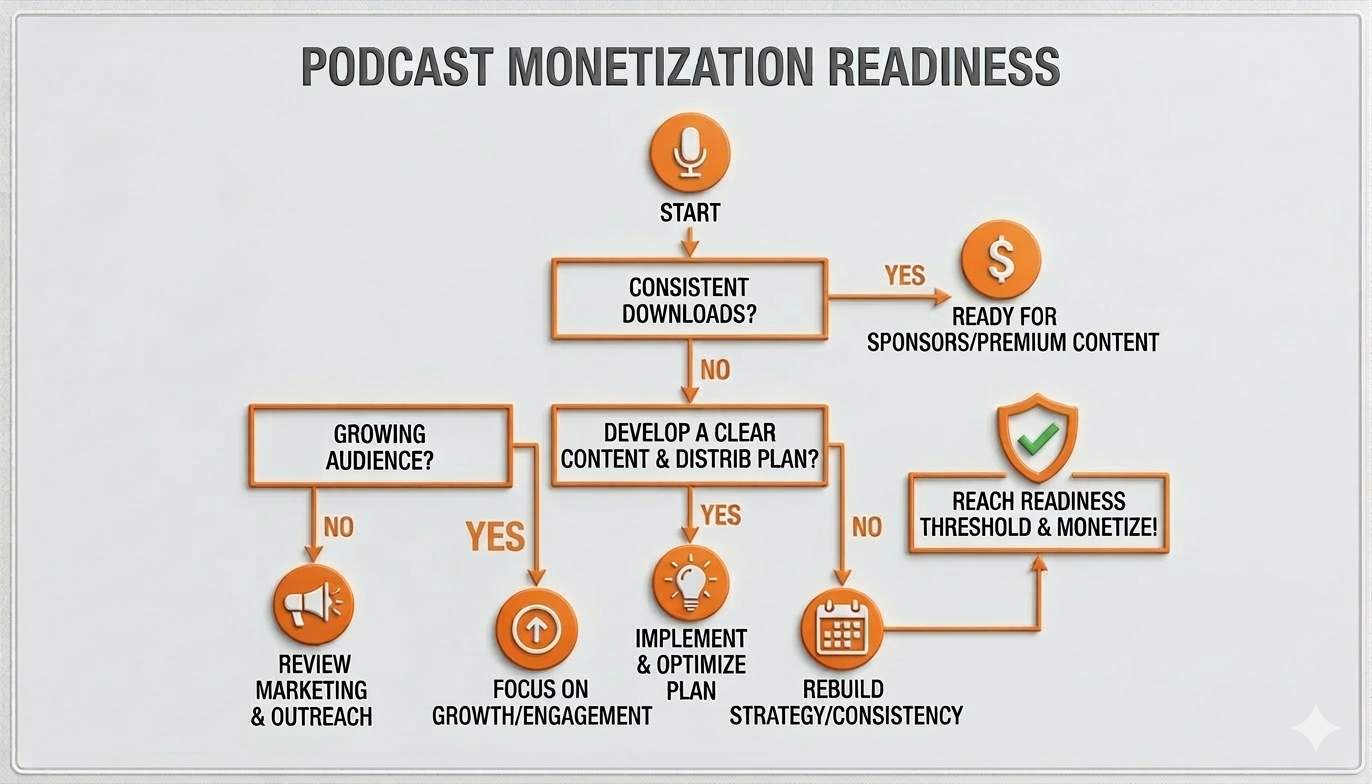
As you can see, consistent downloads are the key that unlocks most ad-based models. But don’t worry if your numbers aren't massive yet. It just means your initial focus should be on building a loyal, consistent listenership first.
Advertising and Sponsorships
This is what most people think of first, but it’s not a one-size-fits-all approach. Knowing the difference between the ad types is crucial for maximizing revenue.
- Host-Read Ads: This is you, personally reading an ad, often with your own authentic spin. These ads build incredible trust and pull the highest rates ($20-$50+ CPM) because they feel like a genuine recommendation from a trusted friend. They're perfect for shows with a strong host-listener bond.
- Programmatic Ads: Think of these as algorithmically-placed ads inserted into your episodes by an ad network. They’re fantastic for filling unsold inventory and can scale easily, but the CPM rates are typically lower ($10-$25).
- Direct Deals vs. Ad Networks: When you hunt down your own direct sponsorships, you get total control over who advertises and you keep 100% of the revenue. The alternative is joining an ad network like Acast or Megaphone, which outsources the sales grind and connects you with bigger brands in exchange for a revenue share.
Direct Listener Support
Your biggest fans are often more than willing to pay for more of what they love. This model forges a direct financial link between you and your audience, cutting out the middleman.
For a B2B podcast, this could be a premium tier with deep-dive industry reports or exclusive Q&A sessions with experts. For a consumer-focused show, it might mean bonus "after-show" chats or early, ad-free access to episodes.
The real power here is community. People aren't just paying for content—they're paying for a sense of belonging and a closer connection to the host and other superfans.
Here are the most popular ways to do it:
- Memberships: Use platforms like Patreon or Supporting Cast to offer recurring subscriptions that unlock a package of exclusive benefits.
- Premium Content: Apple Podcasts Subscriptions and Spotify make it simple to put individual bonus episodes or an entire ad-free feed behind a paywall.
- Donations: A simple "buy me a coffee" link gives grateful listeners a low-friction way to show their appreciation with a one-time payment.
Affiliate Marketing and Beyond
A truly robust monetization plan goes beyond just ads and subscriptions. While sponsorships are often the big prize, they shouldn't be the only game in town. According to a 2023 report from PwC, advertising makes up the bulk of revenue, but successful creators often supplement this with more stable income from affiliate deals and memberships.
This kind of diversification is key, especially as the global podcast audience is projected to hit 619.2 million in 2026.
- Affiliate Marketing: This is one of the easiest ways to start earning from day one. You simply earn a commission by promoting products or services you genuinely use and believe in. It’s a model built on authenticity, not just audience size.
- Merchandise: Selling branded t-shirts, mugs, and other gear is a great way to deepen your community connection while opening up another revenue stream.
- Licensing & Repurposing: Your audio is a valuable asset. You can license clips to other media outlets or repurpose your content into entirely new formats. Many podcasters are finding huge success by also publishing video versions of their episodes. For a closer look, check out our guide on the synergies between podcasts and YouTube.
By combining two or three of these strategies, you build a system where your income isn't dangerously reliant on a single source. This is how you turn a passion project into a stable and profitable business.
Crafting Your Pitch and Securing Sponsors
Alright, you've got a solid monetization plan. Now for the exciting part: turning that strategy into actual revenue. This is where you move from planning to selling, and it all starts with a professional pitch that proves your show’s value to brands.
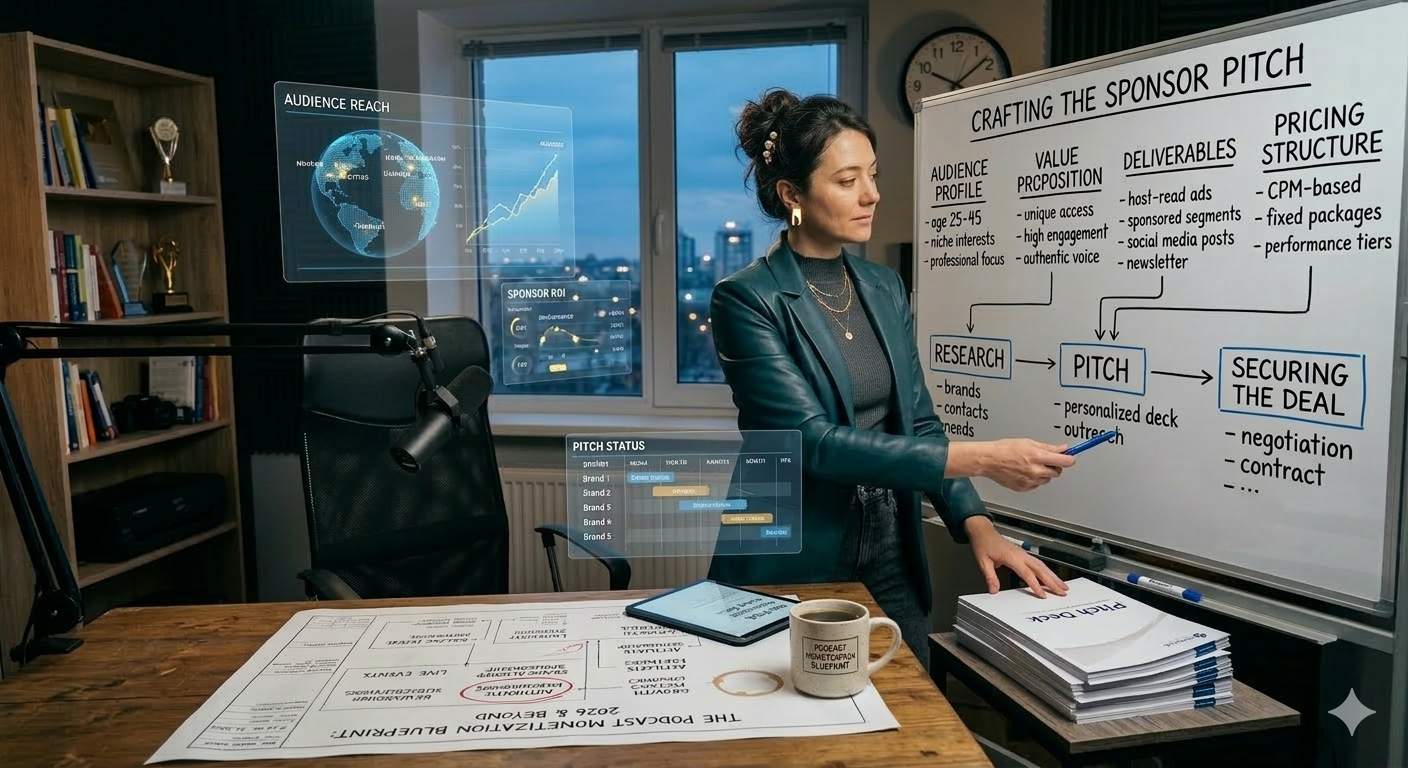
Here's a hard truth: sponsors rarely just show up at your door, especially when you're starting out. Unless you have a massive audience, waiting around is not a strategy. Confident, proactive outreach is what turns your great content into a profitable business.
Build a Professional Media Kit
Think of your media kit as your podcast’s resume. It’s a sharp, visually clean document that gives a potential sponsor everything they need to make a fast, informed decision. This is your first impression, so make it count.
A killer media kit must include:
- Show Overview: A short, punchy "about" section that nails what your podcast is, who it's for, and what makes it different.
- Audience Demographics: Go deeper than just age and gender. What are their job titles? Their interests? Where do they live? This is where that ideal listener avatar you built really comes to life.
- Key Performance Metrics: Highlight your best numbers. We’re talking average downloads per episode (within the first 30 days is a key metric), total monthly downloads, and listener engagement signals like reviews or social media chatter.
- Sponsorship Packages: Lay out your offerings clearly. Define your ad types (pre-roll, mid-roll, host-read), list your rates, and create package deals to incentivize bigger buys.
Your media kit is a sales tool, not just a data sheet. You’re not just showing numbers; you’re telling a story about a valuable, engaged audience that a brand can’t afford to ignore. Give them the "why" behind the download stats.
Calculating Your Rates and Setting Prices
Pricing your ad slots feels like a dark art, but there’s a simple formula that gives you a great starting point. The industry standard is CPM, or "Cost Per Mille," which is the price an advertiser pays for 1,000 downloads (or impressions).
Here’s the basic calculation:
(Average Downloads per Episode / 1,000) x CPM Rate = Your Ad Rate
Let’s say your podcast gets 5,000 downloads per episode and you use a standard $25 CPM:
(5,000 / 1,000) x $25 = $125 per ad slot
CPM rates aren’t set in stone. Host-read ads, which feel more authentic and personal, command much higher CPMs ($25-$50+). Programmatic ads that are dynamically inserted usually fall in the $15-$25 range. And if you have a niche B2B show with a highly specialized audience, you can often forget CPM and charge a premium flat rate that reflects the unique value you offer.
Your Outreach and Negotiation Playbook
With your media kit and pricing locked in, it’s go-time. Your goal is to send personalized, compelling emails that actually get opened and start a conversation. A generic "To Whom It May Concern" blast is a one-way ticket to the trash folder.
Actionable Tip: Research the brand and find the name of the marketing manager or partnerships lead on LinkedIn. Addressing them by name dramatically increases your chance of getting a reply.
Sample Outreach Email Template:
Subject: Partnership Idea for [Brand Name] + [Your Podcast Name]
Hi [Contact Name],
My name is [Your Name], and I host [Your Podcast Name], a podcast that helps [describe your audience] with [describe your content focus]. I’m a huge fan of [Brand Name] and have been using [specific product] for a while now.
Our audience of [number] monthly listeners consists primarily of [describe your ideal listener avatar], and I believe your mission to [mention brand's mission/product goal] would deeply resonate with them.
I'd love to explore a partnership to feature [Brand Name] on our show. You can view our media kit here: [Link to Media Kit].
Are you open to a brief chat next week to discuss this further?
Best,
[Your Name]
And don't ever be afraid to negotiate. When I was just getting my own podcast off the ground, I struck a deal with my first sponsor to cover all my production costs. In return, I gave them mentions in every episode. It was a true win-win: I launched debt-free, and they built a relationship with my audience from day one. Always look for creative deals that deliver value for both sides.
Unlocking New Revenue with Video Podcasting
If you’re still thinking of your podcast as an audio-only product, you're leaving serious money on the table. The move to video isn't just a fleeting trend—it's a fundamental shift in how people consume content and, more importantly, how brands want to reach them.
Adding a video version of your show for platforms like YouTube and Spotify immediately expands your territory. You’re no longer just competing for ears; you’re capturing eyes. This dual-platform strategy makes your show far more discoverable and opens it up to a massive audience that prefers to watch, not just listen.
Why Video Pulls in Higher Ad Rates
This is where it gets interesting. Video podcasts are a powerful hybrid, mixing the intimacy of audio with the visual punch of video. That combination is exactly why you can command premium ad rates and attract a whole new class of sponsors.
The numbers don't lie. According to a 2023 Westwood One study, 41-53% of weekly listeners in the US will prefer watchable podcasts by 2026. And vodcast viewers aren't just passive listeners—they consume 1.5 times more content and are far less likely to be multitasking. In fact, 44% give the content their undivided attention, which is an advertiser's dream. This trend is a big part of why global podcast ad revenue is on track to hit $5 billion by 2026, as highlighted in a recent industry analysis.
So why are advertisers so willing to pay more?
- Serious Brand Recall: Visuals stick. Seeing a product, a logo, or a host's genuine reaction creates a much stronger memory than an audio spot alone.
- More Ad Slots: Video opens up new real estate. You can now sell visual overlays, sponsored backgrounds, or even subtle product placements—inventory that simply doesn't exist in an audio-only format.
- YouTube's Ad Engine: Getting your show on YouTube plugs you directly into their massive ad-share revenue model. Once you meet the requirements, it becomes a completely new, passive income stream.
The biggest mistake I see is treating video as an afterthought. To really cash in, you have to produce a quality visual experience. This doesn’t require a Hollywood budget, but it means getting your lighting right, using multiple camera angles, and investing in sharp editing.
Turn One Episode into a Content Machine
The real magic of video podcasting is how it can be repurposed. A single long-form video interview isn't just one asset; it's the raw material for an entire content ecosystem. This approach turns your show into a multi-platform engine that constantly fuels audience growth and opens up even more monetization opportunities.
Actionable Tip: Create a simple spreadsheet to track your repurposed content. List the original episode, then have columns for Short Clip 1 (topic/platform), Short Clip 2, Quote Graphic, Blog Post, etc. This helps you stay organized and ensure you're maximizing every recording.
Here's how one hour-long video recording can be sliced and diced:
- The full-length episode for your core audience on YouTube and Spotify.
- 3-5 short, punchy clips (30-90 seconds) perfect for grabbing attention on TikTok, Instagram Reels, and YouTube Shorts.
- A few powerful quote graphics or audiograms for sharing on professional networks like LinkedIn or X (formerly Twitter).
- A detailed blog post for your website that embeds the full video, pulling in valuable search engine traffic.
This isn't just about maximizing reach; it's about building a powerful, consistent brand presence across every platform your audience uses. If you're ready to build a scalable workflow for this kind of polished content, exploring professional corporate video production services can take the headache out of the process.
By embracing video, you're not just adding a new revenue stream. You're building a more profitable and resilient media brand for the future.
Common Podcast Monetization Questions Answered
When it comes to making money from your podcast, you’re going to hear a lot of conflicting advice. Let's clear it up and answer the questions we get asked most often.
How Many Downloads Do I Need to Monetize My Podcast?
The "magic number" for downloads is a moving target, but the industry does have some clear benchmarks.
Your first taste of revenue will likely come from programmatic ads. With platforms like Spotify for Podcasters, you can start seeing small returns with as few as 100 listeners to enable automated ads.
But if you’re chasing direct sponsorships with brands, the expectations are higher. Most advertisers want to see a minimum of 5,000 to 10,000 downloads per episode within the first 30 days. That number proves you have a consistent, engaged audience.
The big exception here? Hyper-niche shows. If your B2B podcast reaches a super-valuable audience—think C-suite execs or specialized engineers—you can land major deals with much smaller download counts. For these shows, audience quality crushes quantity.
It's also worth remembering that some of the best monetization strategies have nothing to do with download numbers. Things like affiliate marketing, selling digital products, or offering premium content can be wildly profitable with just a few hundred dedicated listeners who trust you.
How Long Does It Take to Make Real Money from a Podcast?
Podcasting is a long game. Be patient.
For most creators, the first 6 to 12 months should be dedicated entirely to one thing: making great content and growing an audience. Don't even think about money yet.
Once you’ve built that consistent listenership and are hitting the 5,000-download mark, you can start your sponsor outreach. From there, it can easily take another 1 to 3 months of sales work to land your first deal.
Of course, some revenue streams can be activated on day one.
- Affiliate Marketing: You can drop affiliate links for products you actually use into your show notes from your very first episode.
- Listener Donations: Setting up a simple "buy me a coffee" link gives your audience an immediate way to show their support.
The real key here is trust. While the tech setup is fast, significant income only comes after you've built a strong relationship with your listeners. For a brand-new show, give yourself a full year of consistent effort before you expect a reliable income stream.
What Are the Best Platforms and Tools for Monetization?
Your tech stack will depend entirely on which revenue models you choose. Here are the tools we see working best for our clients.
For advertising, these platforms serve different stages of growth:
- For Beginners: Spotify for Podcasters (formerly Anchor) and Spreaker have built-in programmatic ad tools that are simple to turn on, no matter your size.
- For Growing Shows: Once your audience is larger, ad networks like Acast, Megaphone, and Podbean’s ad marketplace connect you to bigger advertisers.
For direct listener support and memberships, these are the industry standards:
- Patreon: The undisputed leader for building a community with tiered membership perks.
- Apple Podcasts Subscriptions: Lets you offer premium episodes or ad-free content right inside the Apple Podcasts app.
- Supporting Cast: A powerful, purpose-built platform just for podcast membership programs.
For affiliate marketing, you can join big networks like ShareASale to find partners. An even better approach? Reach out directly to the brands whose products you already use and love.
Should I Use Host-Read Ads or Programmatic Ads?
This is a classic debate, but the answer is simple: use both. Each one plays a different strategic role, and a blended approach almost always brings in the most revenue.
Host-Read Ads are the gold standard. When you, the host, personally endorse a product, it lands with the authority of a recommendation from a trusted friend. This is exactly why they command the highest CPMs (often $25-$50+) and drive the best results. The downside is they require a lot of manual work: outreach, negotiation, and tracking.
Programmatic Ads are inserted into your episodes automatically by an algorithm. The major win here is efficiency. You can monetize your entire back catalog and fill any unsold ad spots without lifting a finger. The tradeoff is you have less control over the ads and the CPMs are lower, usually in the $10-$25 range.
Actionable Tip: Prioritize selling high-value, host-read ad slots directly to your dream brands. Then, use programmatic ads to automatically monetize every other available ad impression. This two-pronged approach ensures you’re squeezing the maximum revenue out of every single download.
Tired of the production headaches that come with creating a high-quality video podcast? micDrop is an end-to-end production studio that pairs you with a dedicated producer to handle everything from guided remote recording and editing to distribution and analytics. We help you create a polished, scalable show that elevates your brand, so you can focus on creating great content. Learn more about how we can help at https://www.micdrop.cc.


