How to Enhance Public Speaking Skills and Command Any Room in 2026
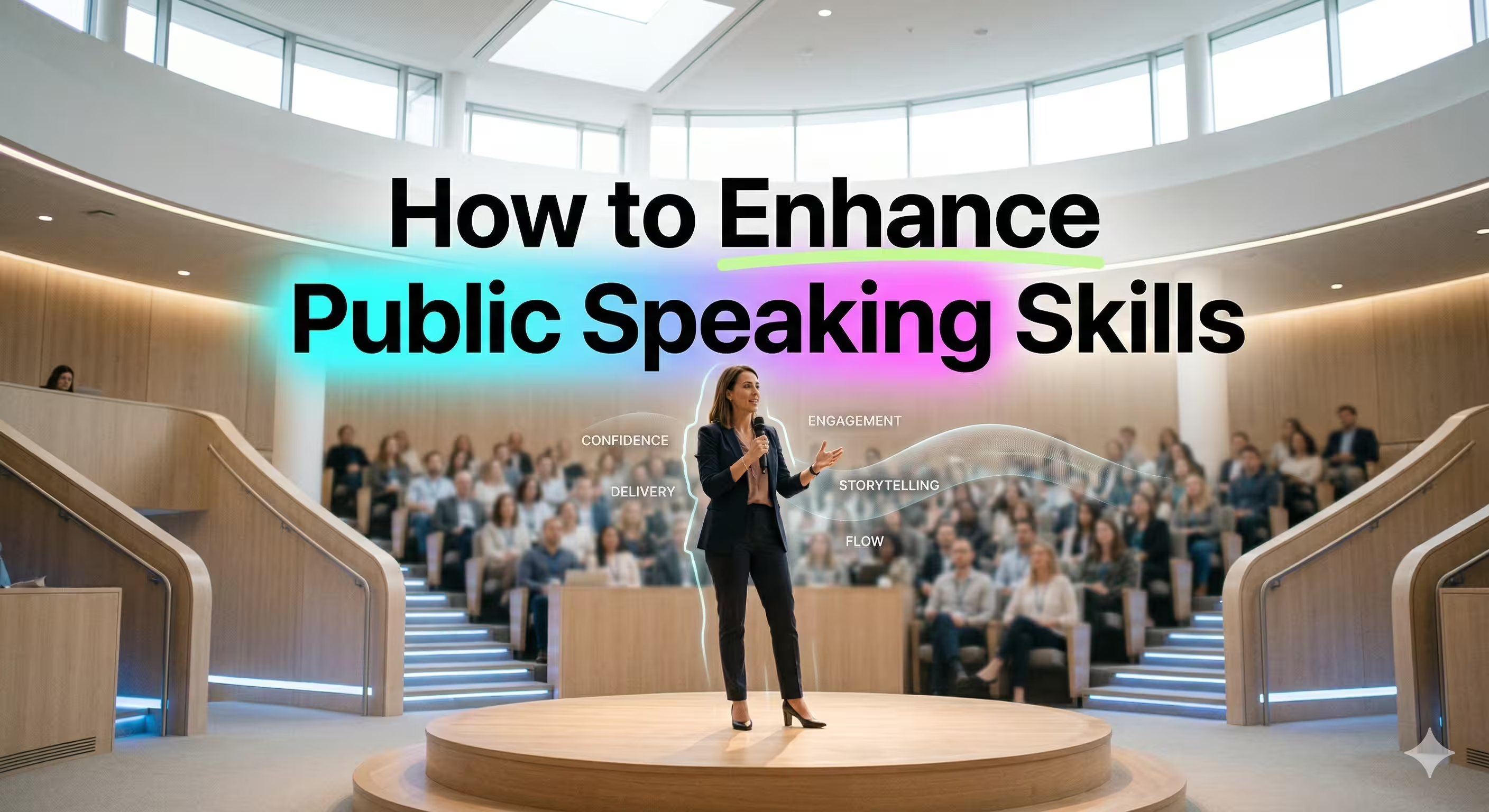
Let's get one thing straight: mastering public speaking isn't just a "soft skill." In today's market, it's a career-defining tool. The key is to master your message, polish your delivery, and build an unshakeable mindset through consistent, deliberate practice.
It's time to stop seeing public speaking as a source of fear and start treating it as your most powerful strategic advantage.
Why Powerful Public Speaking Is Your Ultimate Career Advantage
Think about it. In a world drowning in digital noise, from video podcasts to virtual keynotes, the leaders who truly connect are the ones who communicate with authenticity and polish. They build authority and trust that others can't touch.
This isn't just a gut feeling. Demand for strong public speaking skills has shot up, with some reports showing a 20% increase in importance on the job market in just the last five years. A staggering 92% of professionals agree that stellar presentation skills are non-negotiable for career success (Source: Prezi).
The Direct Link Between Communication and Career Growth
The financial and career stakes are higher than you might think. Honing your public speaking can directly boost your earning potential by up to 10%. On the flip side, letting that fear linger can cost you that same 10% in wages and stall promotions by as much as 15%. That's a huge gap, especially when you consider only about 25% of college grads feel ready to speak in a professional setting.
You can dig into more data on the impact of public speaking on professional success, but the core truth is undeniable.
Confident employees are 70% more likely to be promoted into management roles, according to a study by the University of California. That single stat proves this isn't just about giving a better presentation—it's about actively taking control of your career path.
To help you get started, we've broken down the core areas you'll need to focus on to become a more impactful and confident speaker.
Key Pillars for Enhancing Public Speaking Skills
These three pillars—Mindset, Message, and Delivery—are the foundation of every great talk, whether it's on a stage or on a screen.
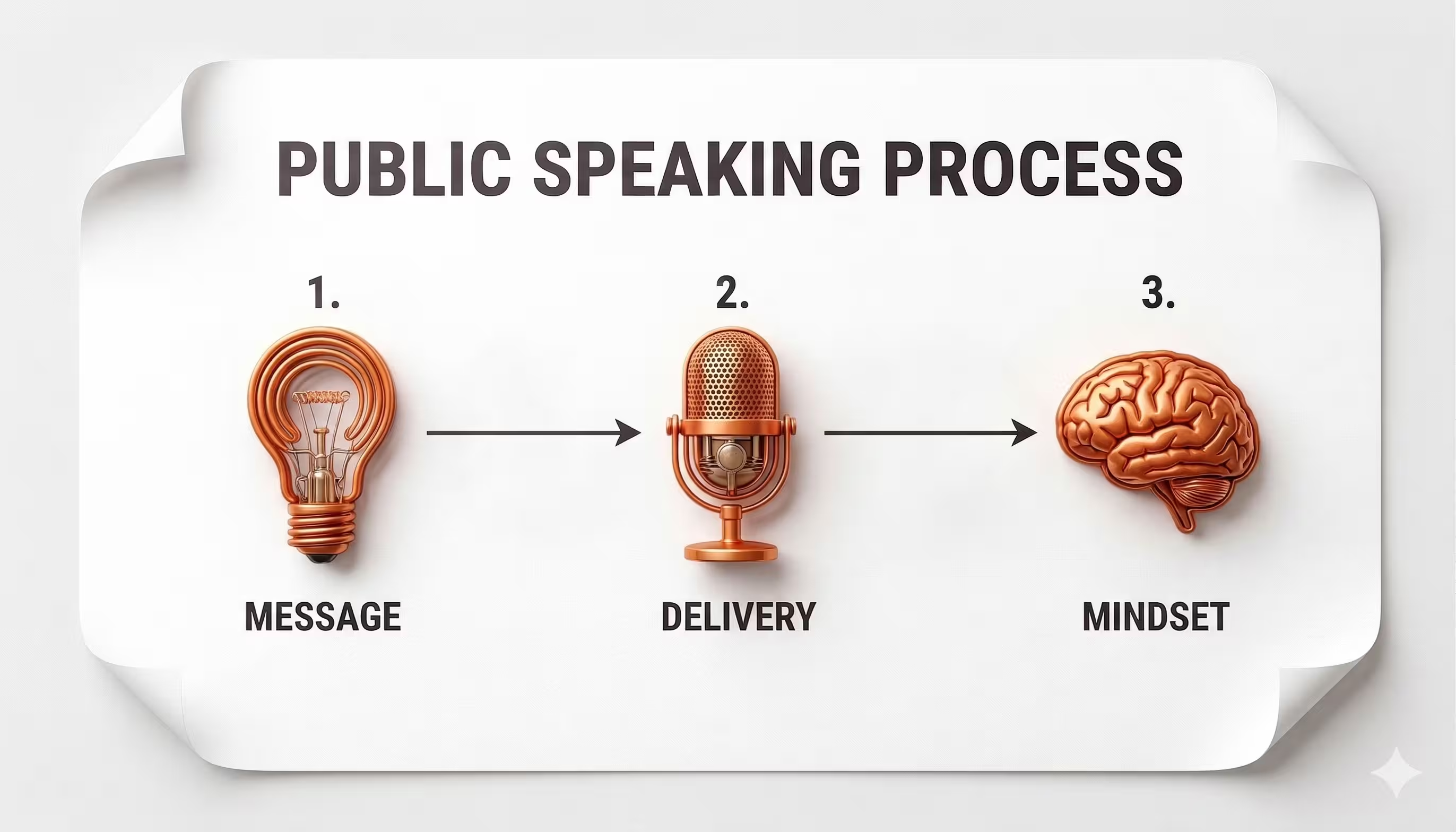
As you can see, it all works together. A powerful message falls flat with poor delivery, and great delivery can't save a weak message. It all rests on a confident mindset.
Thriving in the Modern Professional Landscape
The definition of a "stage" has completely changed. Your platform might be a company all-hands, a LinkedIn Live stream, or a guest spot on a top-rated video podcast.
Leaders who nail these formats don't just share information; they build communities and cement themselves as the go-to experts in their field.
Here’s where polished speaking skills create real, tangible results:
- Become the Authority: When you speak with clarity and conviction, people don't just hear you—they see you as an expert and respect what you have to say.
- Inspire Action: A well-told story, delivered with passion, can rally a team, win over skeptical stakeholders, and turn prospects into customers.
- Boost Your Visibility: The most articulate leaders are the ones getting invited to speak at conferences, appear on podcasts, and give media interviews. It's a cycle that amplifies both your personal brand and your company's reach.
Putting in the work to become a better public speaker is a direct investment in your own influence. It's about building a career that's not just successful, but resilient.
Build Your Foundation: Mindset and Storytelling
Every truly great talk begins long before you walk on stage or press record. Forget what you’ve been told about "power poses" or just memorizing your lines. The real work—the stuff that makes a difference—starts inside your own head. It all comes down to building a solid mindset.
Let’s get one thing straight: “Just be confident” is terrible advice. Confidence isn't a light switch. It's what happens when you’re prepared and you’ve made peace with your nerves. The truth is, most speakers never completely lose those pre-show jitters. And that’s a good thing. The goal isn’t to kill your nerves; it's to channel them.
Turn Nerves into Performance Energy
That fluttery feeling in your stomach? That isn't fear. That’s your body getting ready to do something important. It’s performance energy. Think about it—elite athletes, musicians, and actors all feel that same rush. They’ve just learned how to use it for focus and energy instead of letting it trip them up.
Stop fighting your nerves and start working with them. When you feel it, tell yourself, "Good. My body is ready to deliver." This simple mental shift turns a potential weakness into your greatest source of on-stage energy.
The Real Source of Confidence? Preparation.
Real, unshakable confidence comes from one place: knowing you’ve done the work. It’s not about being fearless; it's about being so prepared that you can handle anything. When you know your material cold, you free up mental space to actually connect with your audience.
- Know Your “Why”: Before you write a single slide, get brutally clear on your core message. What’s the one thing you need your audience to walk away with? A clear purpose is a natural confidence booster.
- Internalize, Don’t Memorize: Memorizing your speech word-for-word is a recipe for disaster. You’ll sound robotic, and if you forget one line, the whole thing can fall apart. Instead, internalize your key points and the flow between them. This lets you have a real conversation.
- Practice with a Purpose: Don’t just run through your lines. Practice your opening, your key transitions, and your closing until they feel like second nature. This builds muscle memory and cuts down on the decisions you have to make when the pressure is on.
This is what separates the amateurs from the pros. It's about respecting your audience enough to show up fully prepared. That’s the true foundation of speaking confidence.
Use Story to Make Your Message Stick
Once you have that solid mindset, your most powerful tool is storytelling. We are all wired for stories. A good story makes data understandable, turns a boring topic into a captivating journey, and builds a real connection between you and your listeners.
Think about the last presentation that actually stayed with you. I’m willing to bet it wasn’t because of the bullet points. It was a story—a personal struggle, a surprising discovery, a hard-won victory.
For example, instead of just showing a slide with customer churn data, a founder could tell a quick story about a specific, frustrating conversation they had with a client who was about to leave. Suddenly, the problem isn’t a number on a chart; it’s a real, emotional issue that needs solving.
You don’t need a complicated plot. A simple three-act structure is often the most effective:
- The Setup: Introduce the "before" picture. Who are we talking about (you, a client, your team) and what was their world like?
- The Conflict: What went wrong? Describe the challenge, the roadblock, or the problem that created tension. This is the heart of the story.
- The Resolution: How was the problem solved? What was learned, and what does the "after" picture look like? This is where you anchor your core message.
When you combine a prepared, energetic mindset with the power of a well-told story, you stop just giving a speech. You start creating an experience that people will remember and act on.
Master Your Vocal Tone and Body Language
You can have the most brilliant message on the planet, but if the delivery is weak, it will fall completely flat. Your voice and body are the instruments you play. To truly connect with an audience—and become a powerful speaker—you have to master them.
Vocal delivery isn't just about being heard. It’s how you convey emotion, authority, and confidence. Body language communicates volumes before you even say a word. In fact, research by Dr. Albert Mehrabian suggests nonverbal cues can account for a significant portion of a message's impact.
Let’s get into the specific drills that will make your delivery as powerful as your content.
Find Your Vocal Power and Variety
A monotone voice is an audience’s cue to check out. To keep listeners locked in, you need vocal variety—purposeful changes in your pitch, pace, and volume that add emphasis and emotion. A flat delivery signals boredom, not expertise.
- Pacing: Speaking too fast makes you sound nervous and is impossible to follow. Go too slow, and you'll bore everyone to tears. The secret is to vary your pace. Slow down for critical points, then speed up slightly when you’re telling an exciting story.
- Pitch: This is the highness or lowness of your voice. Varied pitch adds a musical quality to your speech. A great (and fun) way to practice is reading a children's book out loud, exaggerating the voices for different characters. It teaches you to move your pitch up and down intentionally.
- Volume: Use volume as a tool. To draw the audience in for an important point, lean in and lower your voice. To express excitement or make a bold declaration, raise it.
A strong voice starts with proper breathing. Forget shallow chest breaths; practice diaphragmatic breathing, pulling air deep into your belly. This gives your voice a richer, more resonant quality and has the added benefit of calming your nerves. The right equipment helps, too. For recorded content, a good mic is a game-changer. Check out our guide on recommended microphones for podcasting to see what a difference it can make.
Key takeaway: Get comfortable recording yourself. It’s awkward at first, but it is the single most effective tool for spotting and fixing your vocal habits. Listen for your pace, pitch, and any slide into monotone.
Eliminate Distracting Filler Words
Nothing kills your credibility faster than a presentation peppered with "ums," "ahs," and "likes." These are verbal crutches that signal a lack of confidence and preparation. Your brain is just trying to catch up with your mouth.
The fix is surprisingly simple: the power of the pause.
Instead of filling silence with noise when you need a moment, just stop talking. Take a breath. This does more than just eliminate the filler word—it adds dramatic weight. The pause gives your audience a second to digest what you just said and makes you appear more thoughtful and in control.
Try this: Speak on a simple topic for one minute and focus on replacing every potential "um" with a silent beat. It feels weird at first, but soon the pause will become your new—and much more powerful—habit.
Project Confidence Through Body Language
Your physical presence has to match the power of your words. Whether you're on a massive stage or a tiny laptop screen, how you hold yourself is critical.
Here’s how to project authority and build connection:
- Posture and Presence: Stand or sit tall, with shoulders back and your chest open. This posture doesn't just look more confident; studies on "power posing" by social psychologists like Amy Cuddy suggest it can actually make you feel more confident. Ground yourself and avoid fidgeting or shifting your weight, as that just screams nervousness.
- Purposeful Gestures: Your hands should amplify your message, not distract from it. Use open-palm gestures to appear inclusive. Use them to emphasize numbers or illustrate a concept. A good rule of thumb is to keep your hands visible and moving within a "gesture box" between your waist and shoulders.
- Meaningful Eye Contact: This is how you build trust. On stage, don't just scan the room. Lock eyes with different individuals for 3-5 seconds each, as if you're having a series of mini-conversations. On camera, the rule is different: look directly into the camera lens, not at your own face on the screen. For your audience, that's what creates direct eye contact.
Appearing natural on video is its own skill. Always set up your camera at eye level to create a direct line of sight. And make sure your lighting is good enough that people can actually see your facial expressions. A stiff, motionless speaker is boring, but so is a fidgety one. Just allow yourself to move naturally, like you would in a real-life conversation.
Structure Your Presentation for Maximum Clarity and Impact
The most charismatic speaker in the world can’t save a rambling, disorganized presentation. Charisma might get you a few minutes of attention, but structure is what makes your message stick.
Think of it as the invisible framework holding your entire talk together. It’s what guides your audience from curiosity to conviction, turning a collection of good ideas into a journey with a clear destination.

Crafting a Killer Opening
You get about 30 seconds. That’s it. In that first half-minute, your audience decides whether to lean in or mentally check out. A weak opening is an invitation to scroll through their phone.
So, please, don’t start with "Hi, my name is..." or by walking through a boring agenda. Hook them right away.
Try one of these field-tested techniques:
- Ask a Provocative Question: Get them thinking immediately. Something like, "What if the most common advice for success is actually holding you back?"
- Share a Surprising Statistic: A jaw-dropping number establishes your topic's importance instantly. "Every single day, an amount of data equivalent to all the books in the Library of Congress is created, yet 99% of it is never analyzed."
- Start with a Story: Drop them right into a brief, relevant anecdote. "The first time I ever gave a presentation, my mind went completely blank..." This creates an instant human connection.
Your only goal in the opening is to make them care. Give them a reason to put their phone down and a promise of what’s in it for them.
Choosing the Right Framework
Once you’ve got their attention, you need a logical flow to keep it. This is where a structural framework comes in. These are time-tested blueprints for building a persuasive argument, so you don’t have to reinvent the wheel.
Structure isn't about restricting creativity; it's about channeling it. A clear framework frees you from worrying about 'what comes next' and lets you focus on delivering your message with passion and clarity.
Here are two of the most effective frameworks you can use to enhance public speaking skills:
- Problem-Solution-Benefit: This is the classic model for persuasion. You start by highlighting a pain point the audience feels (Problem). Then, you present your idea as the way to fix it (Solution). Finally, you paint a clear, compelling picture of their better future (Benefit). It’s a go-to for sales pitches or any talk meant to drive action.
- What? So What? Now What?: This framework is brilliant for making complex ideas simple and actionable. First, explain the core concept (What?). Next, explain why it matters to them (So What?). Finally, give them a clear, simple next step (Now What?). This is perfect for training, presenting research, or any time you need to educate and inspire.
The framework you choose depends entirely on your objective. Are you trying to persuade, inform, or inspire? Match your structure to your goal.
Delivering a Memorable Conclusion
How you end is just as crucial as how you begin. A weak ending will cause your entire message to evaporate. A strong one locks in your core idea and tells the audience exactly what to do with it.
Never treat your closing as an afterthought. It's your last, best chance to make an impact. Make sure it includes these two things:
- A Clear Summary: Re-state your single most important point. No new information here. A simple phrase like, "If you remember only one thing from today, let it be this..." works perfectly.
- An Actionable Call to Action (CTA): Tell them what to do next. Be specific. "Download the worksheet," "Sign up for the demo," or "Try this technique in your next meeting." Make it easy and obvious.
When you bookend your talk with a powerful opening and a decisive close—all held together by a clear structure—you've done more than just give a speech. You've created a memorable and impactful experience.
Use Tech and Feedback to Dramatically Accelerate Your Progress
Let's be honest, waiting until you feel "ready" to speak is a trap. You don't get better by thinking about it; you get better by doing it. Real, rapid improvement comes from a smart, modern rehearsal plan that uses technology and targeted feedback to sharpen your skills.
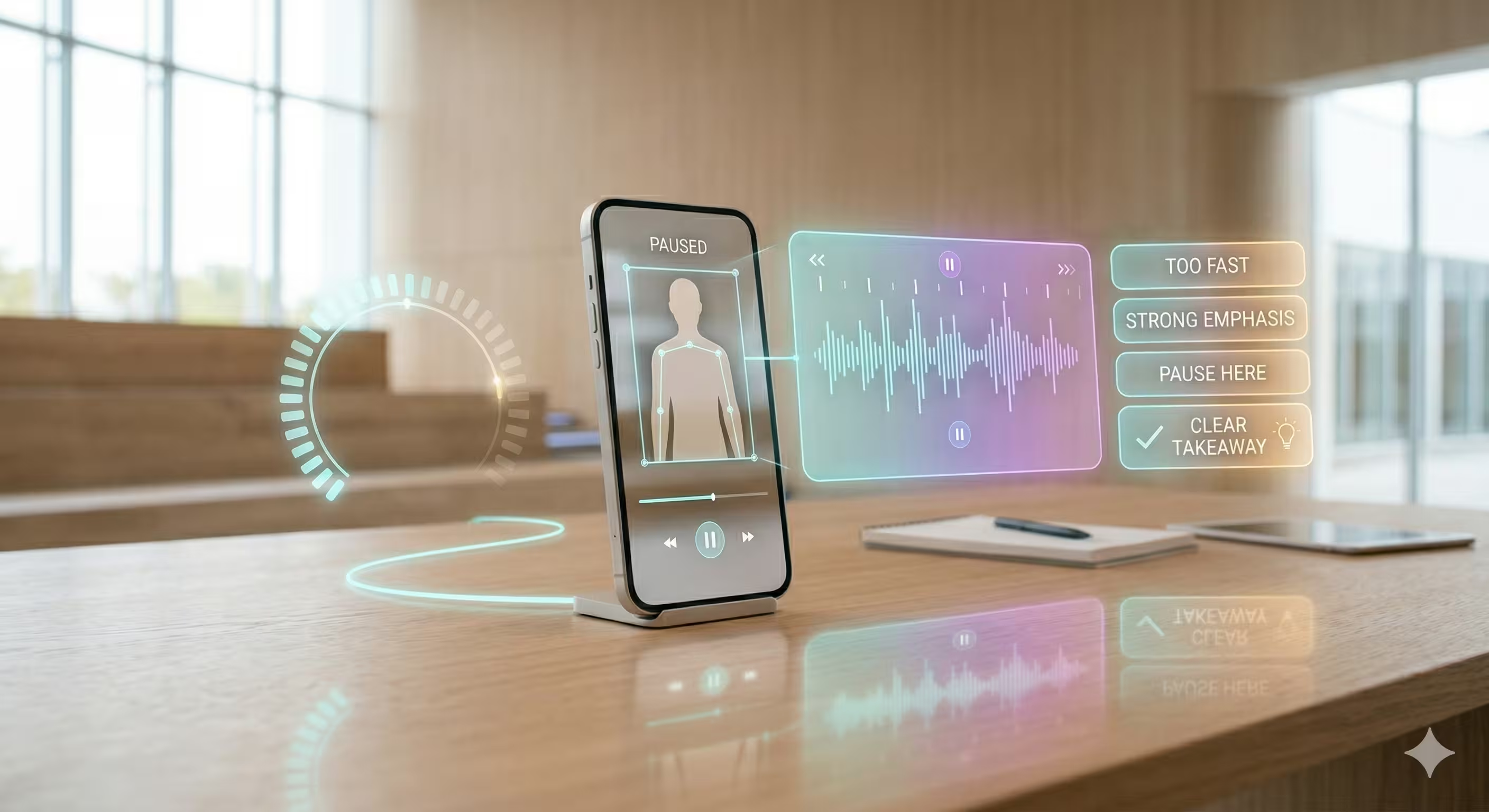
The most brutally honest coach you have is probably in your pocket right now. Your smartphone. Recording your practice sessions is completely non-negotiable if you're serious about getting better. It’s awkward at first, I get it. But it's also the fastest way to see the undeniable truth about your delivery.
Become Your Own Best Critic
The moment you watch yourself on video, your perspective shifts. You’re no longer just the speaker—you’re the audience. This is where the magic happens. You’ll immediately spot the distracting habits and awkward tics you never knew you had.
To avoid getting overwhelmed, just focus on one thing at a time for your first few reviews:
- Vocal Delivery: Are you a monotone robot? Do you sound like you’re in a rush? Hunt down those filler words—the "ums," "ahs," and "likes"—and make a note of them.
- Body Language: Look at your posture. Are you stiff as a board or are you fidgeting? Your gestures should add to your message, not distract from it.
- Clarity and Flow: Is your core message getting lost? Are your transitions between points smooth, or do they feel abrupt and confusing?
This self-analysis isn't about beating yourself up. It's about making small, targeted adjustments in your next practice run. Record, review, repeat. That’s the cycle that builds skill fast.
Build a Constructive Feedback Loop
Self-critique is crucial, but we all have blind spots. That’s why you need outside perspectives from trusted peers, mentors, or even a professional coach.
But here’s a pro-tip: never ask a vague question like, "So, what did you think?" You'll get vague, unhelpful answers. Instead, guide your reviewers by asking specific, targeted questions.
Try asking things like:
- The Hook: "On a scale of 1-10, how well did my first 30 seconds grab your attention?"
- The Main Idea: "What was the one key takeaway you got from my presentation?"
- The Action: "Were you perfectly clear on what I wanted you to do at the end?"
This structured approach turns polite nods into actionable advice. And if you're creating recorded content like a podcast, getting this feedback right starts with capturing clean audio. To nail the technical side, check out our guide on how to set up a podcast studio.
"The biggest room in the world is the room for improvement." - Helmut Schmidt
Use Visuals as Your Secret Weapon
Think of your slides as more than just information—they're your wingman. A polished, professional deck acts as a psychological safety net. It’s not about using them as a crutch; it’s about using every tool at your disposal to project authority.
And the data backs this up. We know that a significant portion of speaking anxiety comes from a lack of preparation. When you feel good about your materials, that confidence shines through. For instance, studies have shown that using VR for public speaking training can result in massive skill improvements for users.
This confidence boost is real. Research shows that 91% of presenters feel more self-assured when they have well-designed visuals supporting them. The bottom line? An overwhelming 95% of individuals believe that proper training and professional tools can help them conquer their speaking fears. You can read the full research about public speaking training and confidence to see the data for yourself. Smart practice and the right tools simply work.
Achieve a Polished Presence with Professional Production
Once you’ve put in the reps and sharpened your delivery, the next real jump in quality comes from giving your message a professional finish. This is where bringing in a production partner becomes a total game-changer, especially for leaders creating recorded keynotes or video content.
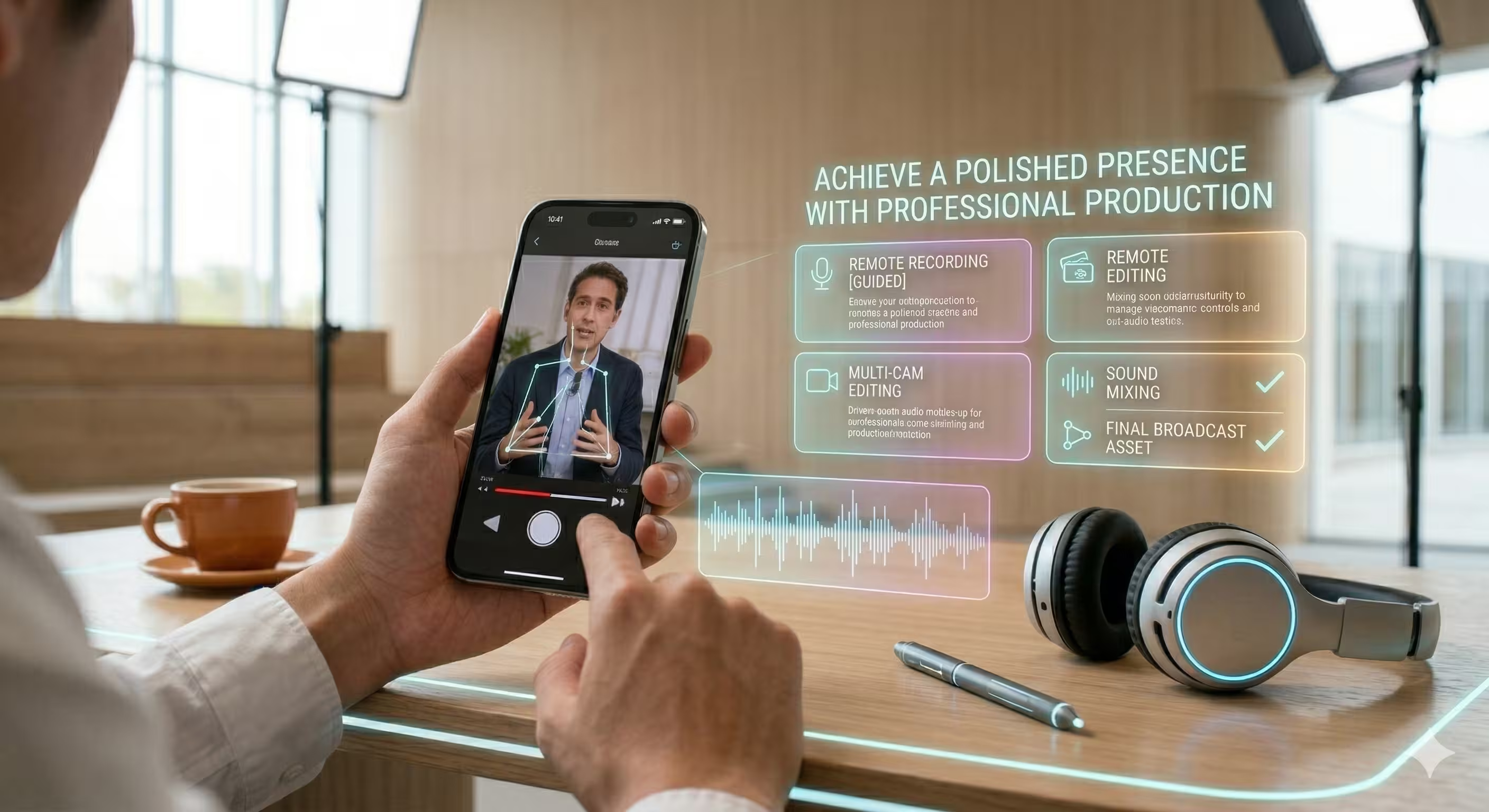
An end-to-end service takes your presentation from a simple laptop recording to something that feels like a broadcast-quality asset. This move takes all the technical headaches—like guided remote recording, multi-camera editing, and sound mixing—off your shoulders. It frees you up to focus on the one thing that matters: delivering your message with power and authenticity.
Go Beyond DIY and Invest in Authority
Think of professional production less as a cost and more as a direct investment in your personal brand. While DIY practice is crucial for getting the fundamentals down, a polished final video signals to your audience that your message is serious and worth their time.
Professional production is your accelerator. It ensures the quality of your presentation matches the quality of your ideas, removing any friction between you and your audience.
When your video looks and sounds clean, viewers focus on your insights, not a buzzing microphone or a poorly lit room. That professional sheen adds a layer of credibility that self-recorded videos just can't match, setting you apart instantly. To see what this process involves, you can check out our guide on the benefits of using corporate video production services.
Ultimately, this approach helps you build a high-quality content engine that keeps working for you long after you’ve stepped away from the camera.
Scale Your Impact Through Strategic Repurposing
A single, well-produced keynote or video podcast isn't a one-off asset. It’s a content goldmine. With the right strategy, you can repurpose it to multiply your reach across all your channels. A dedicated production team is built for this.
Your one long-form recording can be turned into a whole suite of content:
- Engaging LinkedIn Clips: Short, punchy video segments with animated captions perfect for a professional feed.
- Dynamic YouTube Shorts and TikToks: Fast-paced, vertical videos designed for quick discovery.
- High-Quality Audio Podcasts: A clean audio-only version of your talk for platforms like Spotify and Apple Podcasts.
- Quote Graphics and Carousels: Visually striking images that pull out your key takeaways for Instagram and X (formerly Twitter).
This multi-channel approach makes sure your one performance delivers the biggest possible impact. By handling everything from the initial recording to the final edits, a production partner helps you build a powerful, scalable presence that cements your authority.
Frequently Asked Questions About Public Speaking
As you start working on your speaking skills, a few questions always seem to pop up. Let's tackle them head-on so you can get back to practicing.
How Long Does It Take to Get Better at Public Speaking?
You’ll start feeling more confident surprisingly quickly—often within a few weeks of practicing two or three times a week. That initial boost is huge.
But for a truly noticeable, lasting improvement in your skills, you should plan for about 3-6 months of consistent effort. Your progress really comes down to two things: how often you practice and the quality of the feedback you're getting. The more you speak, record, and review, the faster you'll see results and enhance your public speaking skills.
What Is the Most Important Skill for a Beginner?
Forget about advanced delivery tricks for now. The single most important thing for a beginner to nail is message clarity and pacing.
Your first job is simply to be understood. Concentrate on structuring your thoughts logically and speaking slowly enough for your audience to keep up. This is the foundation everything else is built on. Once you have that down, you can start adding in more sophisticated techniques.
Myth Buster: Some of the most incredible speakers I've ever seen are introverts. They often succeed because they prepare obsessively and think deeply about their message. Public speaking is a learned skill, not a personality trait you're born with.
Can an Introvert Become a Great Public Speaker?
Absolutely, and they often do. The idea that you have to be an extrovert to own a stage is one of the biggest myths in this field.
In fact, introverts often carry a secret weapon: they tend to be meticulous preparers. They dive deep into their topic and carefully structure their arguments, which results in presentations that are incredibly well-organized and insightful. Don't let the "introvert" label be an excuse—turn it into your greatest strength.
Ready to stop worrying about the technical details and focus solely on your message? micDrop is an end-to-end video production service that handles everything from guided remote recording to multi-camera editing and social media repurposing. We help you create broadcast-quality content that builds authority and scales your reach.
Transform your presentations into polished, professional assets today.


