Podcast Marketing Services: 2026 Growth Guide
So, you’re thinking about launching a podcast for your brand. But what does it actually take to turn a great idea into a show that builds authority, engages your ideal customers, and delivers real business results?
That’s where podcast marketing services come in.
What Are Podcast Marketing Services?
Think of a professional podcast service as the strategic and operational partner for your brand's voice. In the early days, just having a podcast was enough to stand out. Today, with over 4.5 million shows out there (Source: Podcast Index, 2024), simply publishing an episode is like shouting into the wind.
A true podcast partner does more than just promote your show—they manage the entire lifecycle. They're the strategic and creative force dedicated to helping you connect with a niche audience, build unshakable authority, and turn your podcast into a powerful marketing engine.
To get a sense of what a full-service podcast marketing partner brings to the table, here’s a look at the core components they should be managing for you.
Core Components of Podcast Marketing Services
`These pillars work together to build momentum and ensure your investment pays off. They transform your podcast from a simple content piece into a cohesive part of your larger marketing strategy.
Why Professional Services Matter More Than Ever
The podcasting world is exploding. The global market is on track to hit $39.63 billion by 2025, with a global audience of 584.1 million listeners (Source: Grand View Research). More importantly for businesses, 68% of listeners report making a purchase based on a podcast recommendation (Source: The Infinite Dial 2023).
But getting your voice heard in such a crowded space requires more than just good content—it requires a strategic system.
Actionable Insight: A strategic podcast, done right, becomes a relationship-building engine that helps you connect with ideal partners, generate referrals, and close high-value clients. The focus shifts from vanity metrics like downloads to the real ROI that comes from building trust and authority.
This is the critical shift. Engaging expert podcast marketing services is no longer a luxury; it’s a strategic necessity for brands serious about growth. A dedicated partner provides the oversight to ensure your content not only reaches an audience but also turns listeners into loyal advocates for your brand.
By managing the complex workflows, they free you up to focus on what you do best: sharing your expertise and building meaningful connections. To learn more, check out our article on why podcasts are effective for business.
Understanding Your Podcast Marketing Deliverables
So, what should you actually get from a podcast marketing service? Forget the vague promises. A real partner doesn't just "promote" an episode—they turn a single recording into a full-blown content machine that works for your brand 24/7.
Think of it this way: You don't pay a contractor for "a house." You get specific deliverables—a foundation, framing, plumbing, electrical. Your podcast is no different. You should expect concrete assets at every single stage.
This flow chart breaks down the core process. It's not a one-and-done path; it’s a cycle where analytics from one episode sharpens the strategy for the next.
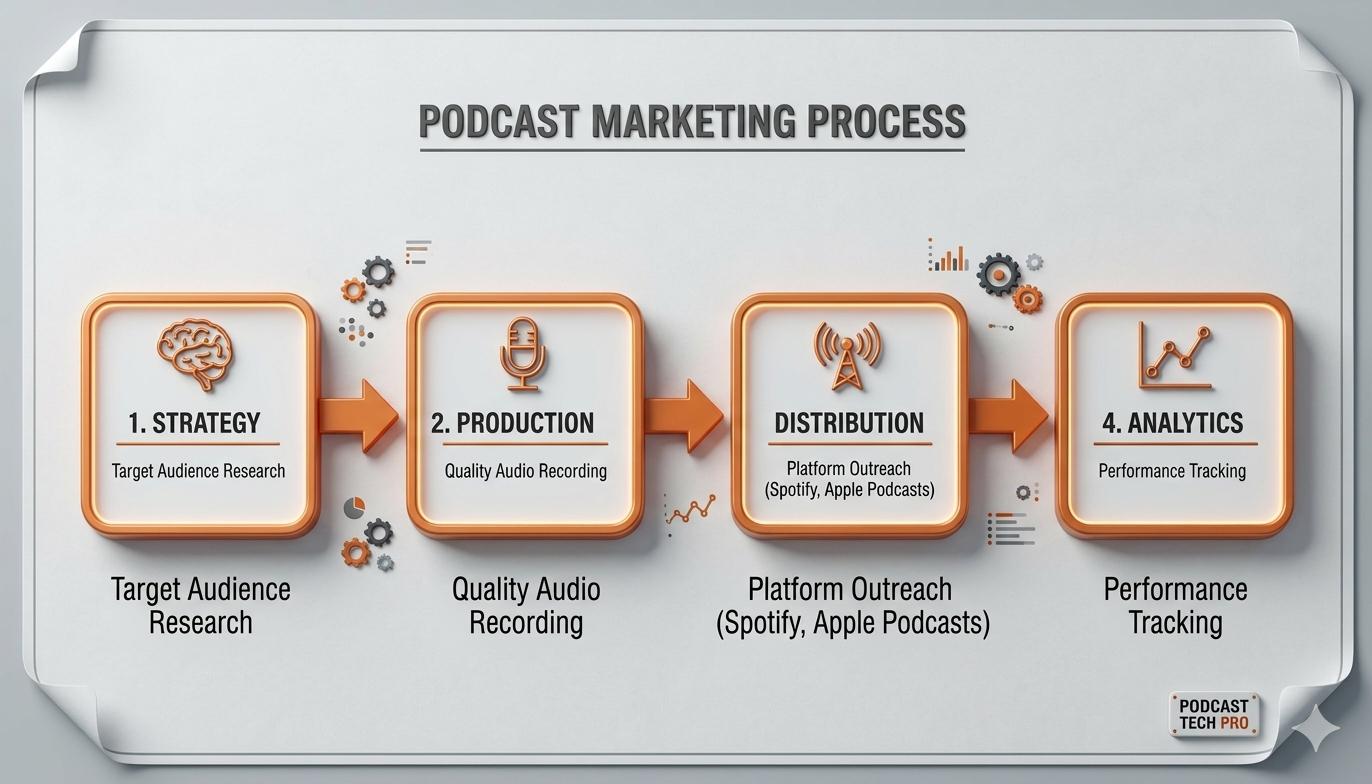
This loop is what drives continuous improvement and ensures your show gets better and smarter over time.
Strategic Launch Support
Before you even think about hitting "record," the work begins. This is the blueprint phase, and it’s non-negotiable. If your show's concept doesn't align with your business goals, the best production in the world won't deliver ROI.
Key deliverables you should see here:
- Concept Validation & Audience Persona: A crystal-clear profile of your ideal listener and a show concept built specifically to hook them. Actionable Insight: Use this persona to guide guest selection and episode topics, ensuring every piece of content speaks directly to your target buyer.
- Go-to-Market Plan: A documented launch strategy outlining target platforms, promotion tactics, and an initial guest outreach plan.
- Brand Kit Development: Professional cover art, intro/outro music, and on-brand templates for all your video and social assets.
This planning stage prevents you from burning time and money on content that misses the mark.
High-Fidelity Production and Editing
With the strategy locked in, it's time to create a show that sounds and looks as professional as your brand. In a world of high audience expectations, choppy audio or bad video is an instant credibility killer.
Actionable Insight: The real power of a B2B podcast isn't just in the content itself, but in how it functions as a relationship-building platform. The production quality must match the high-value conversations you're having to reinforce your authority and professionalism.
This is especially true for video podcasts, which have become the standard for thought leadership. The deliverables need to be far more than a simple edit.
Your production package should include:
- Multi-Cam Video Editing: A dynamic, professionally cut video using multiple camera angles to keep viewers locked in.
- Advanced Sound Design and Mixing: Crystal-clear audio, free of noise, with balanced levels that make for an effortless listening experience.
- Branded Motion Graphics: Custom animated intros, lower thirds for guest names and titles, and other visual pop that reinforces your brand.
These elements come together to create a broadcast-quality feel that signals you’re a serious player.
Intelligent Distribution and Repurposing
A great episode is only half the battle. A core job of any marketing service is getting that content seen and heard. This means smart distribution to all the right platforms and—crucially—repurposing that one long-form episode into dozens of smaller content pieces.
This is how one hour of recording becomes a full week of marketing assets. For instance, a single video podcast can be sliced and diced into:
- Short-Form Videos: Dozens of powerful clips perfect for TikTok, Instagram Reels, and YouTube Shorts.
- Audiograms and Carousels: Visually slick audio snippets and quote graphics designed to grab attention on LinkedIn and X (formerly Twitter).
- SEO-Optimized Blog Posts: Full transcripts and show notes published on your site to capture search traffic and give your audience a written resource.
Actionable Insight: Create a content calendar based on these repurposed assets. Plan to share 3-5 short-form clips, 2-3 quote graphics, and one blog post per episode to maximize visibility and engagement across all channels.
This content multiplication is the secret to staying top-of-mind without constantly creating new material. It’s how you squeeze every drop of value out of each episode you produce.
How to Drive Audience Growth for Your Podcast
Look, making a great podcast is a huge win. But getting people to actually listen? That’s where the real challenge starts. Your show's success hinges on audience growth, which means tackling it from two sides: a slow-and-steady organic strategy paired with the rocket fuel of paid promotion.
Think of it like building a fire. Organic growth is the kindling—it catches slowly but builds a solid, hot base. Paid ads are the gasoline you pour on to make it explode.
It all starts with that organic fire. This isn't about chasing a one-hit viral wonder. It’s about methodically building a discoverable show that consistently attracts the right kind of listeners—the ones who will stick around. When you nail organic growth, you're building a loyal community that genuinely trusts your voice.
Building Your Organic Growth Engine
Organic tactics are all about making sure people who are already searching for content just like yours can find you. These methods build long-term value and a stable listenership that becomes the bedrock of your show.
Here are the core organic plays:
- Podcast SEO: You have to optimize your episode titles, show notes, and descriptions. Using the right keywords gets you found on Spotify, Apple Podcasts, and Google when people are looking for answers. Actionable Insight: Use a tool like Ahrefs or SEMrush to find low-competition keywords your audience searches for and build episode titles around them.
- Guest Swapping and Features: Getting yourself featured on other podcasts in your niche is a game-changer. It’s one of the best ways to get in front of a pre-qualified audience that’s already wired to like what you do.
- Community Engagement: Don't just broadcast; participate. Be active in the places your ideal listeners already are, like LinkedIn groups, subreddits, or niche forums. Share your expertise, answer questions, and introduce your show when it feels natural.
These strategies feed each other. Better SEO means more discovery, which grows your audience, which makes it easier to land guest spots on bigger shows. This organic flywheel is powerful, but it takes time. That’s where paid promotion comes in to light a fire under it.
Accelerating Reach with Paid Promotion
While organic growth is your foundation for sustainability, paid promotion is the catalyst for rapid growth. It lets you skip the slow grind and put your podcast directly in the ears of a hyper-targeted audience. This is where professional podcast marketing services earn their keep, using their expertise to get the most out of every dollar you spend.
The proof is in the numbers. Podcast advertising is a juggernaut, blowing past $2 billion in US revenue in 2024 (Source: IAB). More importantly, podcasts that use paid ads grow their downloads 2x faster than shows relying only on organic social media. Listeners simply trust podcasts more than other channels, which is why a massive 68% report making a purchase based on an ad or recommendation they heard. You can get more details on these podcast advertising statistics and see just how potent this channel is.
Paid campaigns come in a few key forms:
- Host-Read Ads: You sponsor another podcast, and the host gives your show a personal shout-out to their loyal listeners.
- Programmatic Ads: Automated platforms place your short audio ads across a huge network of podcasts, zeroing in on listeners based on their demographics and interests.
- Social Media Ads: You run targeted ad campaigns on platforms like LinkedIn or Instagram, using eye-catching audiograms or video clips to send traffic straight to your newest episode.
Actionable Insight: A smart paid strategy doesn't just buy downloads; it buys data. It tells you exactly which message hits home with your target audience, helping you sharpen both your marketing and your content. Start with a small budget on a platform like LinkedIn, testing 2-3 different clips from your best episode to see which one drives the most clicks.
In the end, the best growth strategy isn’t organic or paid—it’s both. Your organic efforts build the trust and authority that make your paid ads hit harder. In turn, paid promotion injects a burst of speed into your organic growth, creating a powerful loop that drives real, sustainable expansion.
The Undeniable Rise of Video Podcasting
Let’s be honest, the podcasting game isn't just about what you hear anymore. A massive shift is underway. Video is quickly becoming the new default for any brand or creator who's serious about building real authority. You can see it everywhere—major players like Spotify and YouTube are pouring money into video features, and that’s fundamentally changing what audiences expect.
This isn’t just some passing fad. It’s a strategic move. Video lets you capture the stuff that gets lost in an audio-only format: the body language, the knowing glances, the actual energy in the room between a host and guest. It turns what was a passive listening habit into an active, engaging experience that builds a much stronger bond.

That visual element is absolutely critical for earning trust and establishing yourself as a thought leader. When people can actually see you, the connection feels more genuine, making your message stick.
Why Video Is Now Non-Negotiable
The numbers don’t lie. The video podcasting wave is reshaping the entire industry, with forecasts showing an estimated 79.5 million US viewers tuning in by 2026. This explosive growth is happening because platforms like YouTube have become go-to spots for podcast discovery, and their algorithms heavily favor strong visual content. For brands, this means more loyalty and way more eyeballs. Check out the data on the rise of video in podcasting to see just how dominant this format is becoming.
To ride this wave, your production quality has to step up. A single, grainy webcam and a basic USB mic just won't cut it anymore. Today's audiences—and the algorithms that serve them—are looking for polished, multi-camera setups that feel more like a professional broadcast.
Actionable Insight: A high-quality video podcast is more than just a visual upgrade; it's a content goldmine. One long-form episode can be chopped up, repurposed, and spun into an entire marketing ecosystem of short-form clips, social media carousels, and more. Your goal should be to get at least 10-15 micro-assets from every single full-length recording.
This is exactly why specialized podcast marketing services have become so crucial. The right partner brings the production firepower needed to create the dynamic, visually appealing content that wins on today's platforms.
From Audio to a Visual Content Engine
Making the leap from an audio-only show to a full-fledged video podcast takes a very specific set of skills. It's not as simple as just pointing a camera at the host and hitting record.
A professional service will manage all the tricky parts, including:
- Multi-Camera Recording and Editing: This is key. Cutting between different angles creates a dynamic experience that holds viewer attention far longer than a boring, static shot.
- Professional Lighting and Color Grading: Making sure you and your guests look sharp and the final video has a consistent, high-end look.
- Branded Motion Graphics: Adding custom intros, lower thirds with guest names and titles, and other visual touches that reinforce your brand identity.
These aren't "nice-to-haves" anymore. They are the price of admission for any brand wanting to be taken seriously in the video podcasting world. Partnering with a service that lives and breathes videocasts, like micDrop, takes the technical headaches off your plate so you can focus on creating broadcast-quality content, every single time. The battle of the formats is getting clearer by the day, which we cover in our guide on Podcasts vs. YouTube.
How to Evaluate Podcast Marketing Services
Picking the right partner for your podcast is a big deal. They're not just an editor; they're a strategic extension of your team, the co-pilot helping you navigate the competitive world of content. The right agency turns your show into a core business asset.
But with so many options out there, how do you find the right one? It's about looking past the shiny sales deck and really digging into what they can deliver. This checklist will help you vet potential partners and make a choice you won't regret.
Review Their Portfolio and Proven Results
The best way to predict future success is to look at past wins. Before you even think about signing a contract, you need to get a clear picture of an agency's track record.
Don’t just glance at a list of shows they’ve worked on. Ask for specific case studies. Look for hard evidence that they’ve helped clients with goals just like yours, whether you’re a B2B brand aiming for lead generation or a CEO building a personal brand.
Assess Their Scope of Services
A real podcast partner offers a complete package, not just one piece of the puzzle. Juggling separate freelancers for editing, promotion, and social media is a recipe for headaches, inconsistent quality, and missed opportunities.
You need a team that handles it all. Make sure they cover the full spectrum:
- Strategy and Concept Development: Do they help you sharpen your show's core message and identify your ideal listener?
- Full-Scale Production: Can they deliver broadcast-quality audio and video, including multi-camera setups and professional post-production?
- Content Repurposing: Is there a system in place to slice and dice each episode into a full suite of marketing assets, from video clips to blog posts?
- Distribution and Promotion: What’s their actual plan for getting your podcast in front of fresh ears and eyes?
- Analytics and Reporting: How will they track performance and show you a tangible return on your investment?
When everything is managed under one roof, every piece of your podcast works together to hit your business goals.
Analyze Their Workflow and Communication
A clunky, inefficient workflow will kill your momentum. The entire process—from recording an episode to giving feedback and approving the final assets—should feel effortless on your end.
Ask them to walk you through their exact process. How do they handle revisions? What project management tools do they use to keep everything on track and on time?
Actionable Insight: Choosing an agency is a lot like hiring a key team member. You’re searching for a strategic partner who understands your vision, speaks your language, and is genuinely invested in your success. The right partner will feel like an extension of your own team.
Clear and consistent communication is what makes it all work. You should have a single point of contact and a regular schedule for updates. This keeps you in the loop and makes the whole collaboration feel less like a transaction and more like a true partnership.
To help you stay organized, we’ve put together a simple scorecard. Use it to stack up potential providers side-by-side and see who truly aligns with your needs.
Provider Evaluation Scorecard
After filling this out, one provider will likely stand out as the clear winner. The goal isn't just to hire a service; it's to find a partner who will be as committed to your podcast's growth as you are.
Measuring the ROI of Your Podcast Investment
So, you're investing in your podcast. Now for the million-dollar question: is it actually working? When you bring in professional podcast marketing services, you absolutely need to see a return.
Focusing only on downloads is a classic rookie mistake. It's like judging a restaurant by how many people walk through the door, without knowing if they liked the food, will come back, or tell their friends. True ROI connects your podcast's performance to real business goals.

To do this right, we have to look past the vanity metrics and dig into the data that tells the real story about how listeners are behaving and what that means for your brand.
Key Metrics That Drive Business Value
To really understand your return, you need a mix of numbers and feedback. A good agency won't just dump data on you; they'll provide clear, regular reports that show the complete picture of your podcast's health and its impact on your bottom line.
Here’s what you should be tracking:
- Audience Growth Rate: This is the percentage increase in your audience over time. A steady climb shows your promotion is hitting the mark and consistently pulling in the right people.
- Episode Retention Rate: This one is pure gold. It shows what percentage of your listeners stick around for an entire episode. It's the clearest sign you have of which topics and guests are truly connecting with your audience. Actionable Insight: If retention drops at a specific point in most episodes, analyze what's happening. Is your intro too long? Is a certain segment boring? Use this data to tighten your show format.
- Website Referral Traffic: By using a unique URL in your show notes or a call-to-action on air, you can track exactly who is coming to your site from the podcast. This is how you draw a direct line from your content to your sales funnel.
These numbers go way beyond surface-level stats. A high retention rate, for example, is a powerful signal that you’re building genuine authority and trust. If you want more ideas on turning that trust into revenue, check out our guide on how to monetize a podcast.
Connecting Content to Commercial Outcomes
Ultimately, this is all about tying your podcast back to revenue and brand equity. Sometimes that path is direct, and other times it's a bit more subtle. A high-quality show is a massive asset for business development, even when the journey to a sale isn't a straight line.
Actionable Insight: For B2B companies, a podcast's greatest value often lies in the relationships it helps build. Measuring success by the number of strategic partnerships initiated or deals influenced by the show provides a much clearer picture of ROI than download counts alone. Create a simple spreadsheet to track guest outreach, follow-ups, and any resulting business opportunities.
Think about it. When you track engagement on repurposed clips on platforms like LinkedIn, you get a real-time pulse on your brand's influence. A spike in engagement on a video clip from your latest episode is a fantastic indicator that you're building thought leadership where it counts.
And don't forget the qualitative feedback. The comments, reviews, and DMs you get from listeners are invaluable. They tell you why your content is hitting home and give you direct feedback for sharpening your strategy, making sure your investment keeps paying off for years to come.
Frequently Asked Questions
Thinking about bringing in a podcast marketing service? You've got questions, and you need straight answers before you invest.
Let's cut right to the chase and tackle the most common ones we hear from brand leaders.
How Much Do Podcast Marketing Services Typically Cost?
The price tag for podcast marketing really depends on what you're looking for. A basic plan with simple editing and a few social clips might run a few hundred dollars a month.
But if you want a full-service partner—we're talking strategy, multi-cam video, smart content repurposing, and analytics—you should budget for an investment of $2,000 to $5,000+ per month. It's the difference between hiring a freelancer for a task and having a dedicated production studio managing your entire show from start to finish.
How Long Does It Take to See Real Audience Growth?
You’ll get immediate deliverables like polished episodes and ready-to-post social content. But real, sustainable audience growth doesn't happen overnight.
Give it a solid three to six-month runway. That's the time it takes for a strategic partner to get guest appearances rolling, dial in your SEO, and build real momentum. Podcasting growth is a marathon, not a sprint, and consistency over several months is what builds a loyal following.
Actionable Insight: A common mistake is obsessing over download numbers for a B2B podcast. The real win often comes from strategic relationships. A show with a small, hyper-targeted audience that lands you one high-value partnership is infinitely more valuable than a show with thousands of passive listeners.
Why Focus on a Niche Audience Instead of Top Chart Rankings?
Chasing a top chart spot is mostly a vanity metric, especially for a B2B brand. The real power of a business podcast is its ability to connect you with a very specific, high-value audience—the exact people who become your best clients and partners.
A niche strategy pays off in several ways:
- Deeper Engagement: Your content is hyper-relevant, so your audience listens longer and is more likely to act on what you say.
- Clear Authority: You become the go-to expert in your space. It's better to be a big fish in a small pond than an anonymous voice in the ocean.
- Actual ROI: Reaching a handful of your ideal customers generates more business value than reaching thousands of people who will never buy from you.
When you focus on a niche, your podcast stops being a content cannon and becomes a precision tool for business development.
Ready to turn your expertise into a broadcast-quality video podcast that drives real business results? micDrop provides an end-to-end service that manages everything from remote recording and multi-cam editing to strategic repurposing and distribution, so you can focus on sharing your message. Learn more and book a call with our team at https://www.micdrop.cc.


