10 B2B Content Marketing Best Practices for 2026
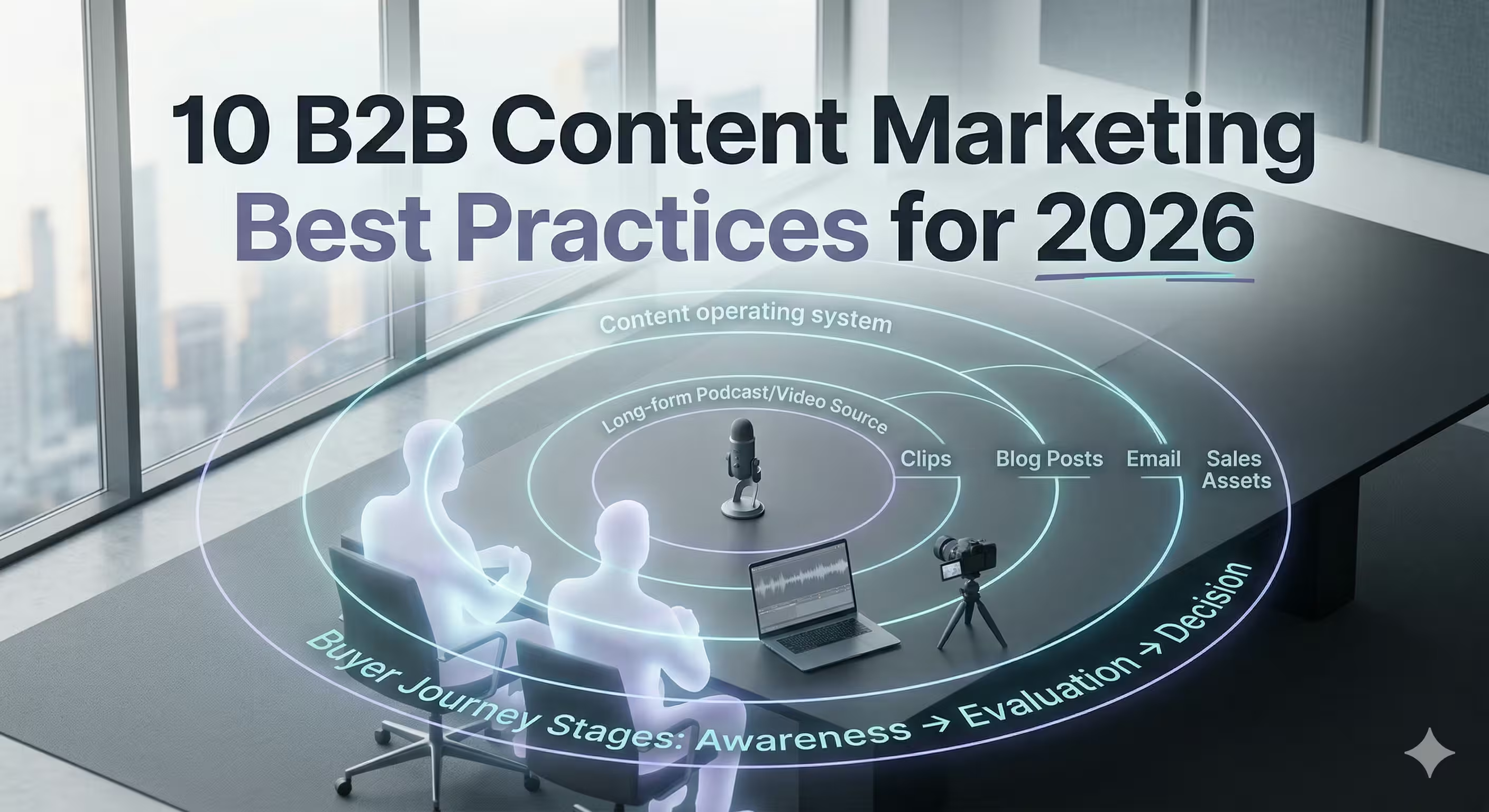
Video now sits at the center of effective B2B content programs. Teams that publish strong expert-led video and audio content consistently create more usable material than teams relying on standalone blog posts or one-off campaign assets.
The reason is practical. A recorded conversation with a founder, operator, or subject matter expert captures judgment, examples, objections, and phrasing that are hard to manufacture in a blank document. That source material can be edited into a podcast episode, short LinkedIn clips, sales enablement assets, blog posts, email content, and a searchable library of customer-facing insight.
Strong B2B content marketing works as an operating system, not a content calendar. The highest-output teams start with a durable source asset, then turn it into multiple formats that match how buyers evaluate vendors across a long, multi-stakeholder process.
That matters even more for brands trying to build thought leadership. Buyers want to assess the people behind the company, not just read polished brand copy. Seeing an executive explain a point of view on camera or hearing a subject matter expert handle a nuanced question builds trust faster than another generic article targeting a keyword.
Production discipline also changes the result here. Without a repeatable process, expert content stays stuck in draft folders, executives postpone recording, and the team burns time coordinating edits, approvals, and distribution by hand. With a structured setup, one recording session can feed weeks of channel-specific content. Teams that want that consistency often use corporate video production services built for recurring executive content to keep quality high without building a full in-house studio.
The ten practices below focus on the intersection that creates the most upside for B2B brands right now: video and podcast production, executive positioning, repurposing systems, and measurement. They are written for teams that need content to support pipeline, strengthen category authority, and scale output with a productized workflow instead of adding more operational drag.
1. Thought Leadership And Executive Positioning Through Video Content
Most B2B thought leadership fails for one reason. It sounds like committee writing.
Strong executive content works because it carries a point of view. Buyers can tell when a founder, operator, or subject matter expert is speaking from experience instead of recycling category language. Video sharpens that difference. It captures judgment, conviction, and nuance in a way polished brand copy often cannot.
A practical starting point is simple. Define what your executive should be known for. Not everything. One tight lane.
Pick a point of view people can repeat
If a CEO talks about hiring, product strategy, AI adoption, and company culture with no connective thread, the content blends into the feed. If that same CEO becomes known for a specific perspective, such as how enterprise teams should operationalize category education, the market starts remembering the voice behind the message.
A structured production setup helps here. A repeatable format, consistent framing, and polished editing make leadership content feel intentional instead of improvised. Teams that need that level of polish often look at options like corporate video production services so executives can focus on the conversation rather than the recording logistics.
The easiest way to weaken thought leadership is to chase broad relevance. Narrow expertise travels farther in B2B.
Batching also matters. Record several conversations in one session block. That reduces scheduling drag and gives the team enough footage to build a consistent release cycle.
Good executive video content also needs reinforcement. A strong clip can drive attention, but a supporting article, post, or short written summary helps buyers revisit the core idea later. The video creates trust. The written companion creates recall.
What does not work is publishing one polished founder interview, celebrating it internally, and disappearing for a month. Authority comes from repetition. Buyers should be able to encounter the same core perspective across multiple touchpoints until it becomes associated with your brand.
2. Multi-Platform Content Repurposing And Atomization
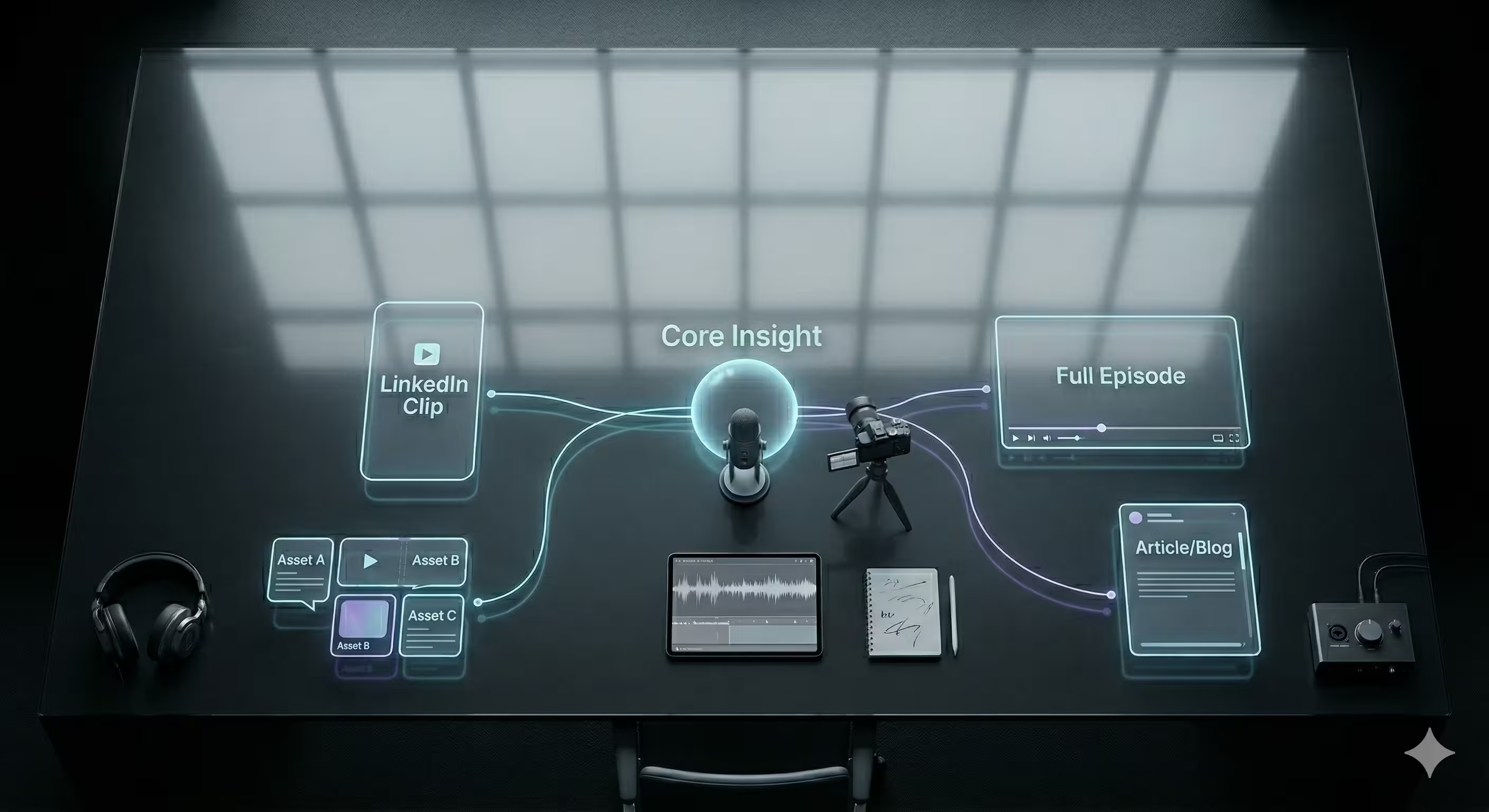
A single recorded conversation can supply a month of useful B2B content if the team plans distribution before the camera turns on.
That is the difference between repurposing and clipping. Repurposing starts with editorial intent. Each asset should answer a different job in the funnel. A full episode gives buyers context. A short LinkedIn clip earns attention in-feed. A written article captures search demand around the core topic. An email recap gives subscribers the takeaway without asking them to watch 30 minutes of video.
The upside is efficiency, but the primary benefit is message control. B2B brands using video or podcasts for thought leadership do not need more topics as much as they need more high-quality expressions of the same point of view. The same executive insight should show up as a customer objection clip, a sales enablement snippet, a blog post, and a follow-up email, each shaped for the channel instead of copied across it.
Plan the asset map before production
Teams get better output when they decide in advance what they need from each recording. That changes the interview, the edit, and the packaging.
Use a simple atomization checklist:
- Define the hero asset: webinar, podcast episode, customer interview, or founder conversation
- Pull 5 to 10 priority moments: sharp opinions, clear frameworks, objections, proof points, or stories
- Match each moment to a channel: LinkedIn video, article section, email teaser, sales follow-up, YouTube Short
- Write the hook for the platform: a LinkedIn caption should not read like a YouTube title
- Set a conversion goal: reach, engagement, email signups, demo interest, or sales enablement use
Productized workflows are helpful here. A team using a repeatable system, or a partner built for content repurposing services, can turn one source file into a consistent package without rebuilding the process every week.
Edit for extraction
The edit should serve more than the full-length asset. I usually mark timestamps during the recording review, then group clips by use case instead of chronology. One group supports awareness. Another handles buyer education. Another gives sales something timely to send after a call.
That approach produces stronger outputs because the editor is cutting for a purpose, not just trimming runtime.
It also reduces strain on subject matter experts. Instead of asking a VP, founder, or product lead for constant net-new content, the team can get more mileage from one well-run session. That matters in B2B environments where leadership time is scarce and approval cycles are slow.
Adapt the message, not just the file
Posting the same cut everywhere with the same caption and aspect ratio wastes the source material. LinkedIn rewards a tighter business hook. YouTube often needs stronger topic framing and search intent. Email needs a fast takeaway and a reason to click.
Saffron Edge makes a related point in its article on B2B content marketing strategies, trends, and examples. Strong programs get more from cornerstone content by reworking it into formats people will consume.
For teams building thought leadership through video and podcasts, atomization is an operating model. Done well, it turns one recording into a coordinated set of assets that sales can use, marketing can distribute, and buyers can encounter in the format they prefer.
3. Consistent Content Cadence And Production Batching
Teams with a documented editorial process are far more likely to publish on schedule than teams running episode by episode. The gap is usually operational, not creative.
B2B content programs stall for predictable reasons. An executive loses a recording slot. Product marketing pulls the team into a launch. Legal sits on approval. Editing slips because the same people also own webinars, case studies, and event support. A strong thought leadership program survives those interruptions because the system already accounts for them.
Cadence should fit the production model you can run.
A steady bi-weekly release schedule usually outperforms an inconsistent weekly promise, especially for brands building authority through video and podcasts. Buyers do not reward ambition on an internal content calendar. They respond to repeated exposure, clear positioning, and a format they learn to expect. Sales and partnerships teams benefit too, because they can plan around known publish dates instead of waiting for the next asset to appear.
For teams using a productized service such as micDrop, batching is often the highest-return operational change. One recording day can produce a month or more of publish-ready material if the prep, capture, review, and approvals are set up in advance. That lowers context switching, protects executive time, and gives the editor a larger pool of material to shape into a consistent series.
The trade-off is real. Batch too aggressively and the content can feel dated, especially if your category changes fast or your product story is still evolving. Record too close to publish and the whole calendar becomes fragile. The answer is to separate evergreen themes from timely inserts. Batch the durable material. Leave room for current commentary, product updates, and customer proof.
A setup that works in practice usually includes:
- Quarterly theme planning: Choose a small set of audience problems, objections, and point-of-view topics before scheduling recordings.
- Monthly recording blocks: Reserve half-days or full days so executives can record multiple episodes, interviews, or solo segments in one window.
- Standard pre-production docs: Use repeatable briefs, runsheets, talking points, and approval criteria so each session starts faster and produces cleaner footage.
- Editorial buffer: Keep finished episodes and supporting clips in reserve so one cancellation does not break the release calendar.
- Fast post-production handoffs: Assign owners for rough cut review, compliance checks, captions, thumbnails, and distribution copy before recording starts.
Many teams either create momentum or lose it at this point. If every episode starts from a blank page, you are asking busy operators to perform on demand inside a system with no slack. That rarely holds for a full quarter.
Batching fixes that by turning content into a production workflow instead of a recurring fire drill. It is one of the clearest ways to scale thought leadership without demanding constant live effort from the same executives.
4. Guest-Driven Content Strategy And Network Expansion
A good guest strategy does more than fill your content calendar. It changes who pays attention to your brand.
When you bring in respected operators, customers, analysts, or complementary partners, you borrow context as much as audience. Their presence signals that your platform is worth appearing on. That matters in B2B because authority is often social before it becomes measurable.
The strongest guest programs are selective. They do not chase names for vanity. They invite people who sharpen the show’s positioning.
Invite guests who deepen your niche, not dilute it
A founder podcast for finance leaders should not suddenly book unrelated consumer creators just because they have a large following. Reach is useful. Relevance is better.
Good guest selection usually falls into a few buckets:
- Credibility guests: People whose presence raises the perceived quality of the show.
- Insight guests: Practitioners with sharp operational lessons.
- Network guests: Partners or customers whose audiences overlap with yours.
The content payoff is obvious, but there is also a distribution benefit. Guests often share episodes with their own audiences, especially when you make promotion easy with pre-cut clips, approved captions, and clean graphics. That lowers friction and improves the odds of real amplification.
Guest episodes also help when your internal team is still building confidence on camera. A strong interviewer and a prepared guest can create more natural conversations than solo monologues. The exchange creates momentum.
What does not work is sending cold guest invites with no angle, no proof of concept, and no reason this appearance matters to them. Serious guests need a clear show premise, defined audience, and evidence that the production will reflect well on them.
One more trade-off is worth noting. Guest-led programming grows reach faster, but solo or executive-led episodes usually build tighter brand association. The best B2B media programs use both. Guests expand the perimeter. In-house voices own the center.
5. Data-Driven Content Optimization And Analytics Interpretation
Content teams often measure the easiest numbers and miss the ones that improve the program. A video can earn strong reach and still fail to build authority, create sales conversations, or justify another production cycle.
For B2B thought leadership, the job of analytics is simple. Show which episodes deserve more budget, which formats deserve a tighter brief, and which clips are attracting the right audience.
That starts with matching metrics to intent.
If an executive interview series is meant to strengthen market authority, track signals that show real professional interest. Look at average watch time on the full episode, saves, shares into private channels, comment quality, inbound speaker requests, and whether prospects reference the conversation later. If the goal is pipeline support, connect each asset to tagged links, CRM notes, demo paths, and sales-reported influence.
This matters even more for teams running a productized workflow with a partner like micDrop. Once production is systemized, weak measurement becomes the bottleneck. The team can publish every week and still learn very little if reporting stops at impressions and follower growth.
A useful monthly review usually answers four questions:
- Which topics held attention longest?
- Which opening hooks kept viewers through the first 30 to 60 seconds?
- Which hosts, guests, or formats generated serious discussion from the right buyers?
- Which channels led to qualified next-step behavior, not just passive consumption?
Those answers should change operations, not just slides in a recap deck.
For example, if tactical clips from a CFO roundtable keep higher retention than broad leadership commentary, shift the brief toward specific operating problems. If solo videos attract fewer views but produce more sales mentions, keep them in the mix. If YouTube watch time is healthy but LinkedIn clips stall early, the issue may be packaging, not subject matter. Rewrite the opening line, tighten the on-screen promise, and cut slower intros.
Restraint matters here. One weak post does not justify a format change. Five episodes showing the same drop-off point probably do. The goal is pattern recognition, then controlled testing.
Use a short optimization loop:
- review retention and engagement by format
- identify one likely cause
- change one variable
- publish enough episodes to judge the result
Teams that follow that discipline get better faster than teams with bigger dashboards. Clear interpretation beats more reporting.
6. LinkedIn-First B2B Distribution And Professional Network Influence
Many LinkedIn members help drive business decisions at their companies. That is why LinkedIn deserves first treatment in B2B distribution, especially for executive video, interview clips, and podcast-led thought leadership.
The platform runs on professional context. People open it to find useful ideas, test opinions, and signal what they care about in public. A strong clip can perform well here even if it would struggle on a consumer feed, because the standard is relevance to work, not broad entertainment.
For teams producing a podcast or video series, distribution should start before the post goes live. Pick the quote, insight, or disagreement that will matter to a buyer, operator, or peer. Then write the post around that angle instead of dropping in a generic caption.
A good LinkedIn post usually does three things:
- States a clear point early: Lead with the lesson, tension, or opinion in the first lines.
- Adds business context: Tell the reader who this matters to and why it matters now.
- Invites a specific response: Ask about process, results, or disagreement. Empty prompts get empty comments.
Executive distribution matters more than brand-page distribution in many B2B categories. Founders, subject matter leaders, and functional heads often have more credibility and more reach with the right audience than the company page does. In practice, the best setup is coordinated, not identical. The brand page can publish the polished asset. The executive can post a sharper personal takeaway, a short story from the field, or a contrarian view sparked by the episode.
That separation works. The page builds consistency. The person builds trust.
Productized production support can also help here. Teams using a service like micDrop can turn one recording session into a full LinkedIn distribution package: a full episode, several short clips, quote cards, draft captions for brand and executive accounts, and a posting checklist that keeps the rollout consistent without making every post sound templated.
One warning. LinkedIn punishes lazy repurposing. If a clip opens with 20 seconds of scene-setting, viewers scroll. If the caption reads like a webinar registration page, comments dry up. If every post pushes for a demo, the audience learns to ignore the account.
Use a simple publishing standard:
- Open fast: Put the strongest point first.
- Make the clip understandable without sound: Clear captions help, but the visual framing and opening line matter too.
- Give the post a job: Start discussion, validate positioning, support sales follow-up, or extend guest reach.
- Track distribution by account type: Brand, founder, sales leader, and guest posts often perform differently for different reasons.
The practical goal is influence inside a known professional graph. Good LinkedIn distribution gets your ideas in front of buyers, partners, recruits, and industry peers who can carry them further. That is why it belongs at the center of a B2B thought leadership system, not at the end of the workflow.
7. Platform-Native Optimization And Algorithm-Friendly Content Design
Short-form video completion rates, watch time, click-through rate, and save rate are calculated differently across platforms. That alone is enough reason to stop treating cross-posting as a formatting task.
For B2B thought leadership, platform-native optimization is really a distribution discipline. The raw conversation might stay the same, but the way you package it should change based on what each platform rewards and what the audience is trying to do there. A VP scrolling LinkedIn between calls has a different tolerance for setup than a buyer watching YouTube to evaluate ideas in depth or a listener catching an episode during a commute.
The production teams that get more out of each recording session design for those viewing conditions before editing starts. That is especially important when video and podcast content feed a productized workflow. Teams using a service like micDrop can move faster here because the editing brief, clip selection rules, titles, captions, and delivery specs can be standardized without making every asset look identical.
Match the asset to the platform
A strong podcast episode can produce useful content for every channel. Each version needs its own job.
- YouTube: Build for watch time. Use a specific title, a thumbnail with a clear point of tension, and an opening that gets to the argument fast.
- LinkedIn: Build for instant relevance. Front-load the takeaway, keep captions clean, and frame the clip around an operator problem, decision, or lesson.
- TikTok and other short-form feeds: Build for retention. Start with the sharpest line, keep the pacing tight, and limit each clip to one idea.
- Audio platforms: Build for discoverability and continuity. Clean up the intro, write useful episode metadata, and remove any moments that depend on on-screen context.
Editing choices matter early. A 45-minute executive interview can easily produce a strong YouTube cut and fail everywhere else if the first clip starts with greetings, throat-clearing, or broad scene-setting. I have seen solid interviews underperform for no strategic reason other than weak packaging.
A few operating rules prevent that:
- Cut to the claim fast: Put the strongest insight in the opening seconds.
- Design for silent viewing: Burn in captions and make the frame readable on mobile.
- Choose aspect ratio on purpose: Vertical, square, and horizontal each support different behaviors.
- Write titles and descriptions per channel: Search intent, social curiosity, and subscriber behavior are not the same.
- Create clip-level briefs: State who the clip is for, what pain point it addresses, and what action it should trigger.
- Check the feed before publishing: A post that looks polished in a content calendar can still look out of place in the actual platform environment.
The trade-off is simple. Manual review takes more time than automated syndication, but it protects performance. Automated cross-posting can help with coverage. It rarely helps with outcomes. If the goal is B2B thought leadership, not just asset distribution, each platform version should feel native to the channel and useful to the buyer seeing it there for the first time.
8. Email List Building And Direct Audience Ownership
Email keeps working because it protects access to your audience when platform reach drops.
That matters more for B2B video and podcast programs than many teams expect. A strong interview series can build visibility on LinkedIn and YouTube, but those audiences still belong to the platforms. The email list belongs to your brand. It is the channel you control for episode launches, curated insights, event invites, and pipeline nurture.
The mistake is treating email capture as an afterthought. If you publish a founder interview, customer roundtable, or expert podcast episode, the subscription offer should connect directly to that content. Give people a clear reason to opt in and an equally clear reason to keep opening.
Useful offers include:
- Episode briefs with the main argument, key quote, and practical takeaway
- Topic-based roundups for buyers researching one problem over several weeks
- Private clips or extended answers that did not make the public cut
- Short nurture sequences tied to recurring themes from the show
- Post-interview notes packaged by your team or a professional video editing service for B2B podcast and video workflows
What works in practice is simple. Each email should save the reader time.
A good operating format is one email per episode with four parts: the core lesson, one sharp quote, one embedded clip or link to watch, and a short explanation of why the point matters to operators, buyers, or executives right now. That structure turns a long-form recording into a usable asset for someone scanning their inbox between meetings.
Research cited in Taboola's article, 50+ Content Marketing Statistics To Inform Your Strategy in 2025, supports the broader point that personalized, instructive email content continues to perform well. The practical takeaway is to segment by interest and buying stage, not to build an overcomplicated automation maze.
If a subscriber misses three episodes, the next email should still help them re-enter the series quickly. Send a concise recap. Group the best episodes by topic. Point them to the one conversation that matters for their role.
This approach works especially well for brands running a productized content engine. If your team records executive interviews or customer conversations every month, the comment stream becomes a research input, not just an engagement metric. That is one of the highest-value intersections between media production and thought leadership. The show builds authority, and the audience tells you which angles deserve another episode, a short clip, or a follow-up email.
Email should deliver value on its own. If every send is just a pile of links, unsubscribe risk goes up and direct audience ownership stays weak.
9. Production Quality Standards And Brand Consistency

Research from Wistia's 2024 State of Video Report found that businesses are publishing more video than before. That makes quality control more important, not less. In a crowded B2B feed, buyers forgive a simple setup faster than they forgive a distracting one.
Production quality shapes how thought leadership is received. A strong point from a founder or subject matter expert loses force when the mic clips, the framing shifts every week, or clips carry three different visual styles in the same quarter. Buyers may not say, "this brand lacks production standards." They just stop watching, sharing, or trusting the polish behind the message.
The practical goal is repeatability. Teams scaling a video or podcast-led program need a standard they can hold across full episodes, social clips, guest interviews, and executive content.
Set the baseline early:
- Audio: Consistent voice levels, low background noise, and minimal room echo.
- Shot setup: Repeatable framing, camera height, lighting, and eye line for every host and guest.
- Brand treatment: Standard lower thirds, title cards, thumbnail system, and caption style.
- Edit pattern: Fixed intro length, clip pacing, transition style, and CTA placement.
- QA process: Clear review owners, approval rounds, and a checklist before anything ships.
Many teams lose efficiency at this stage. They record one strong conversation, then treat each output as a custom project. That slows publishing and creates visible inconsistency across channels. A productized workflow works better, especially for brands using outside support to scale. Teams that want polished output without building a full post-production bench often use a professional video editing service to keep episode edits, shorts, and brand treatment aligned.
There is a trade-off here. Higher production standards can increase turnaround time, and over-editing can make executive content feel stiff. The answer is not studio-level perfection. It is choosing a quality bar that protects credibility while keeping the publishing engine practical.
Use a simple rule. If the production choice helps comprehension, trust, or recognition, keep it. If it adds effort without improving any of those three, cut it.
Strong B2B brands do not win on polish alone. They win when every asset looks and sounds like it came from the same disciplined operation.
10. Community Building And Audience Engagement Strategy
A large share of B2B pipeline starts long before a sales call. Community gives those early touchpoints continuity.
For video- and podcast-led thought leadership, engagement is not a side task after publishing. It is part of the operating model. The goal is to turn one-way distribution into an ongoing conversation that sharpens your content, surfaces buyer language, and gives prospects more reasons to return.
Small signals matter. A thoughtful reply under a LinkedIn clip. A guest repost that sparks a second round of comments. An email response that becomes the seed for the next interview. Over time, those interactions create familiarity. In B2B, familiarity often comes before trust.
Build a repeatable engagement system
Teams get better results when audience engagement has owners, response standards, and a weekly review rhythm.
Use a simple checklist:
- Reply fast on priority posts: Early comments shape the thread and tell viewers whether the brand is present.
- Ask narrow questions: End episodes and posts with prompts people can answer from experience.
- Capture recurring themes: Move strong questions, objections, and phrases into the content backlog.
- Bring guests back into the discussion: Tag them where useful and give them an easy way to add context.
- Route insights to other teams: Share repeated audience questions with sales, customer success, and product marketing.
This works especially well for brands running a productized content engine. If your team records executive interviews or customer conversations every month, the comment stream becomes a research input, not just an engagement metric. That is one of the highest-value intersections between media production and thought leadership. The show builds authority, and the audience tells you which angles deserve another episode, a short clip, or a follow-up email.
The trade-off is time. Subject-matter engagement requires someone who understands the topic well enough to respond with judgment. Generic community management usually falls flat in B2B because the audience is testing expertise, not looking for brand banter.
A practical model works best. Let a marketer or producer handle triage, then pull in the host, founder, or internal expert for threads that need a real point of view. That keeps response speed reasonable without turning every comment into an executive task.
Community also improves message quality. Repeated questions show where your framing is unclear. Strong objections show where your market is skeptical. Specific wording from practitioners often gives you better headlines and episode setups than anything written in a planning doc.
The standard is simple. If engagement helps your team learn, respond with substance, or create better next-step content, keep investing in it. If it turns into generic posting activity with no feedback loop, cut it and put the time back into higher-signal conversations.
B2B Content Marketing: 10 Best Practices Comparison
Your Next Step From Plan To Published
The most effective b2b content marketing best practices are rarely the most complicated. They are the ones teams can execute consistently.
That is the consistent pattern across all ten practices. Strong programs start with a clear point of view, turn that point of view into a repeatable content format, distribute it with intent, and learn from the response. The format might be a newsletter, a webinar series, a founder-led LinkedIn program, or a video podcast. But the operating principles stay the same. Clarity beats volume. Systems beat bursts of effort. Repurposing beats constantly starting from zero.
For most B2B teams, video and podcast-led content has become one of the most effective ways to do this well. It captures expertise in a way written content often cannot. It creates source material for multiple channels. It gives your executives and subject matter experts a more natural way to communicate what they know. And it supports the long buying cycles that define most B2B categories by building familiarity over time.
There are trade-offs, of course. Video asks more of your workflow than publishing a post in a CMS. Guests need coordination. Editing requires judgment. Distribution takes planning. Measurement gets messy when content influences pipeline indirectly rather than generating instant attribution. None of that should be minimized.
But the answer is not to retreat to easier content. The answer is to build a content model that your team can sustain.
That usually means choosing one core engine first. For many brands, that engine is a recurring expert conversation. It could be a founder interview series, a customer roundtable, an internal subject matter expert show, or a podcast built around industry analysis. Once that engine is running, everything else gets easier. Clips feed social. Quotes support outbound. Episode summaries support email. The full archive strengthens search visibility and brand association over time.
If your team is still early, start smaller than you want to. A clean monthly format with strong production and disciplined repurposing will outperform an overly ambitious weekly plan that collapses after a few releases. If your team is more mature, the next level is usually operational. Better batching, tighter creative standards, stronger channel-specific packaging, and clearer feedback loops from analytics and sales.
The biggest mistake is waiting until the strategy feels perfect. In practice, most content systems become sharper after publishing, not before. You learn which host style works, which topics resonate, which guests attract the right audience, and which clips convert attention into real business conversations.
For teams that want this playbook without building the full production stack internally, an end-to-end partner can help remove the operational drag. micDrop is one option for brands that want remote recording, multi-cam editing, repurposing, and multi-platform publishing wrapped into a repeatable workflow. That kind of support is often less about outsourcing ideas and more about protecting momentum so the people with expertise can keep showing up on camera.
The next step is simple. Choose the core format. Commit to a realistic cadence. Build the workflow around quality and repurposing. Then publish often enough that the market starts to recognize your voice.
If you want to turn executive insight into a consistent video podcast and content engine, micDrop can help manage the workflow from recording through editing, repurposing, and publishing so your team can stay focused on the message.


