A Guide to Content Creation for Brands
Let’s be honest: content creation for brands used to be a fancy term for advertising. Not anymore. Today, it’s the art of creating and sharing genuinely useful media—articles, videos, podcasts—to pull in the right audience and keep them coming back.
This simple shift changes everything. It turns your brand from just another seller into a trusted guide people actually want to hear from.
Why Content Is Your Brand's Most Valuable Asset
Remember the old marketplace? Criers would shout at anyone passing by, hoping to make a sale. That was traditional advertising—loud, interruptive, and all about the transaction. That model is dead.
Modern brand content is like being the master artisan in that same marketplace. People don't run from you; they willingly enter your workshop to learn something valuable. You’re not pushing a message on them; you’re pulling them in with real expertise. This is the heart of modern brand building.
Your customers are in charge now. They have the power to mute ads and find their own answers. They don’t want a sales pitch. They want to be educated, entertained, and understood.

From Seller to Trusted Guide
This calls for a total change in mindset. Your brand isn't just a product provider. You are now a publisher, a media company, and an authority in your field. When you consistently create content that solves real problems for your audience, you build something far more powerful than simple brand awareness.
You build trust.
This trust is the currency of modern business. It’s what turns a one-time buyer into a lifelong advocate and a casual browser into a loyal community member.
High-quality content is what fuels this entire relationship. It can take many forms, each designed to forge a stronger connection:
- Educational blog posts that directly answer your audience's biggest questions.
- Engaging video podcasts that showcase your personality and establish thought leadership. (Our guide on why podcasts are effective for business dives deeper into this.)
- Inspiring social media content that builds a real community around shared interests.
- In-depth case studies that offer undeniable proof of your value.
The Undeniable Growth of Content Marketing
This isn't just a philosophy—the numbers tell the story. The global content marketing industry has seen absolutely explosive growth.
It rocketed from a $36.8 billion market in 2018 to a staggering $413.3 billion by 2022. With projections suggesting it will blow past $600 billion by the end of 2024, it’s obvious where smart businesses are putting their money. (Source: Statista)
This incredible momentum proves that investing in high-quality content creation for brands is no longer optional. It’s a core business function, essential for staying relevant and achieving any kind of long-term success.
How to Build Your Content Strategy Blueprint
Trying to create content without a strategy is like building a house without a blueprint. You might end up with a structure, but it’ll be a mess—unstable, confusing, and definitely not what you wanted. A solid content strategy is what ensures every single piece you create works together to hit specific, measurable business goals.
First things first: you have to define your "why." What is this content actually supposed to do for your business? If you try to do everything at once, you'll accomplish nothing. It’s a classic recipe for failure. Instead, get focused and pick one or two primary objectives to steer the ship.
Some of the most common goals for content creation for brands are:
- Brand Awareness: Getting your name in front of people who have no idea you exist.
- Lead Generation: Capturing contact details from potential customers.
- Audience Growth: Building a dedicated community around a platform, like a YouTube channel or newsletter.
- Customer Loyalty: Keeping your existing customers happy and turning them into advocates.
Go Beyond Demographics to Build Personas
Once you know your goals, you need to know who you’re talking to. And no, basic demographics like age and location aren't enough. That tells you what they are, not who they are or what they care about. To make content that actually connects, you need to build out rich audience personas.
Think of a persona as a fictional character who embodies your ideal customer. You need to get inside their head and understand their world. What are their biggest struggles at work? What are their personal ambitions? What keeps them up at night?
To build a persona that’s actually useful, find the answers to these questions:
- What are their daily pain points and frustrations?
- What phrases are they typing into Google?
- Where do they hang out online to find information or talk to their peers?
- Who do they trust for advice in their industry or personal life?
This is the kind of detail that separates generic, forgettable content from content that feels like it was made specifically for them. It’s how you learn to speak their language and solve their real problems.
Create Your Content Compass
With your goals and audience locked in, it’s time to create your Content Compass. This is your master document, the single source of truth that aligns every piece of content with a clear purpose. It’s your North Star, making sure your team never wastes a minute on random ideas that don’t move the needle.
Your Content Compass is where your business goals meet your audience's needs. For instance, if your goal is lead generation and you know your audience is struggling with "improving team productivity," your compass points directly toward creating a downloadable productivity checklist or hosting an in-depth webinar on that exact topic.
A Content Compass transforms your content from a pile of disconnected assets into a cohesive system. It ensures every article, video, and social post has a job to do, building momentum toward your big-picture business objectives.
Establish Your Core Content Pillars
Instead of chasing every shiny new trend, the most successful brands build deep authority around a few core topics. These are your content pillars—the 2-4 broad subjects you want to own. Your pillars should live at the intersection of what your brand knows best and what your audience cares about most.
For a B2B software company, pillars might be "AI for Small Business," "Cybersecurity Basics," and "Remote Team Management." For a direct-to-consumer wellness brand, they could be "Mindful Nutrition" and "Functional Fitness."
Defining these pillars makes content creation for brands massively more efficient and impactful. It gives you a framework for brainstorming, keeps your messaging consistent, and helps you become the go-to expert in your niche. Every piece of content you produce should tie back to one of these pillars, strengthening your authority with every publish.
Choosing Your High-Impact Content Formats
Alright, you've got your strategy mapped out. Now for the fun part: turning those plans into actual content. Picking the right format is like a chef choosing the right knife—the tool you use will make or break the final dish. Smart content creation for brands isn't about doing everything; it's about picking the right formats to carry your message to the right people.

Think of your content like a well-balanced meal. You need different things to satisfy different cravings. Some formats are snacks—quick, easy to consume, and great for grabbing attention. Others are the main course, offering deep-dives for your most dedicated followers.
To help you connect your goals to the right format, we've put together this quick guide.
Choosing Your Content Format by Goal
Marketing GoalPrimary Content FormatSecondary Content FormatKey Performance Indicator (KPI)Brand AwarenessShort-Form Video (Reels, Shorts)Social Media GraphicsReach, Impressions, SharesAudience EngagementLong-Form Video PodcastLive WebinarsWatch Time, Comments, QuestionsLead GenerationWebinarsSEO-Driven Blog PostsForm Submissions, DownloadsBuilding TrustCase StudiesCustomer Testimonial VideosConversion Rate, Sales Inquiries
This table is just a starting point. The best programs mix and match these formats to create a constant stream of value for their audience.
The Unstoppable Rise of Video Content
Let's be clear: video isn't just another format anymore. For most brands, it's the main event. It’s the fastest way to forge a real human connection, show emotion, and prove your value. Nothing else grabs and holds attention quite like it.
Short-form video, in particular, has taken over. A huge 60% of marketers now put short-form video first in their strategies. It’s not just hype—the format delivers the highest ROI, with 104% more marketers calling it their top performer compared to just two years ago. On a platform like Instagram, which has 2 billion monthly users, people spend half their time watching Reels. That’s where you get noticed. (Source: HubSpot State of Marketing Report)
But while short clips build buzz, authority is built with something deeper.
Long-form video, especially video podcasts, becomes the flagship of your content program. This is where you have real conversations, showcase true expertise, and build a loyal audience that keeps coming back because they trust what you have to say.
This is where production quality becomes non-negotiable. Crisp audio and clean video signal that you respect your audience's time and are serious about your craft. If you want to build credibility, this is a must. Our guide on corporate video production services digs deeper into getting that professional polish.
Foundational Formats for Every Brand
While video gets the spotlight, a few other formats are the workhorses of any strong content program. They quietly and consistently drive traffic, generate leads, and build trust in the background.
- SEO-Driven Blog Posts: Your blog is your brand’s library. Every article is an asset working for you 24/7, answering audience questions and pulling in a steady stream of traffic from search engines.
- Lead-Generating Webinars: Webinars are absolute gold for capturing high-intent leads. They give you a stage to share deep expertise on a niche topic and talk directly to potential customers.
- Trust-Building Case Studies: Nothing says "we get results" like a good case study. They tell a story of before and after, proving exactly how you helped a real customer solve a real problem. They’re indispensable for closing deals.
Adopting a Multi-Format Mindset
The smartest and most efficient brands don't create one-off pieces of content. They think in systems, seeing every core idea as the seed for a dozen different assets. This "create once, distribute many" model squeezes every drop of value out of your work.
For instance, one hour-long video podcast can easily become:
- 5-7 short video clips for TikTok, Reels, and YouTube Shorts.
- A full-length blog post that captures the key insights for SEO.
- Quote graphics for sharing on LinkedIn and X.
- An exclusive email newsletter that gives your subscribers the inside scoop.
This approach turns your content creation for brands into an efficient engine. Instead of constantly hunting for new ideas, you create one big "pillar" piece and then strategically break it down for every channel. Your message gets seen by more people, in the format they love, without you having to reinvent the wheel every single day.
Building Your Content Production Engine
A brilliant strategy is just a document until you build a system to actually execute it. This is exactly where most brands get stuck with their content creation for brands—not on the ideas, but in the day-to-day chaos of just getting things made.
An effective content production engine is what turns that chaos into a predictable, well-oiled process. It’s the key to delivering high-quality assets on time, every time.
Think of it like building a custom car. Your strategy is the blueprint and your content formats are the parts. Your production engine is the assembly line—a standardized workflow that moves each piece from one station to the next with total precision. Without it, you’re just a bunch of people trying to build a car in a messy garage.
Deconstructing the Production Workflow
Every single piece of content, from a 30-second Reel to an hour-long podcast, goes through four distinct stages. If you can understand and standardize these phases, you've cracked the code to a scalable production model.
This is why many brands hire a dedicated producer. This person acts as the project manager for your creative assets, guiding each piece of content through the entire process from start to finish.
Here are the core stages of that workflow:
- Ideation: This is the creative spark. It’s all about brainstorming topics that directly support your content pillars and serve your audience's needs. This isn't just about throwing random ideas at the wall; it's about generating concepts with a clear, strategic purpose.
- Pre-production: This is the planning phase where ideas become actionable. It covers everything from scripting and outlining to creating shot lists, scheduling talent, and gathering necessary props or assets. Solid pre-production is what makes the difference between a smooth shoot and a disorganized disaster.
- Production: This is the "lights, camera, action" phase. It’s when you’re actually recording the video, filming the interview, or capturing the raw footage. For a video podcast, it means getting clean, high-quality audio and video. For other projects, it could be a photoshoot or an on-location B-roll session.
- Post-production: This is where the raw material gets polished into the final product. Editors assemble everything, handling video and audio editing, color grading, adding motion graphics or lower thirds, and creating all the different versions you need for various platforms.
Building Your Team: In-House vs. Partnering Out
One of the biggest calls you'll have to make is how to staff this engine. You really have two main options: building an in-house team or working with a production partner like an agency or studio. Of course, many brands find a hybrid approach works best.
ApproachProsConsIn-House TeamDeep brand knowledge, full creative control, always available.High overhead (salaries, benefits, equipment), requires specialized hiring.Production PartnerAccess to specialized expertise, scalable workflows, no equipment costs.Less direct control, potential for slower communication if not managed well.Hybrid ModelThe best of both: an in-house team handles strategy and a partner manages technical production.Requires crystal-clear communication to keep both sides perfectly aligned.
For a lot of tech companies and leaders, the hybrid model is the most efficient path. It lets your internal team stay focused on the core message and strategy while a partner like micDrop handles the technical heavy lifting of recording, editing, and distribution. You get a professional result without the internal headcount.
The Power of a Content Calendar
Your production engine absolutely needs a traffic controller. That’s your content calendar.
This is so much more than a list of publish dates. It’s a living document that tracks every single piece of content through all four production stages, creating a single source of truth for the entire team.
A well-maintained content calendar eliminates bottlenecks, prevents last-minute scrambles, and gives everyone visibility into what's coming next. It transforms your workflow from reactive to proactive.
Tools like Asana, Trello, or Monday.com are perfect for this. You can create a "card" for each content asset and literally drag it through columns representing each production stage: Ideation > Pre-production > Production > Post-production > Published.
This kind of visual workflow ensures nothing falls through the cracks. A producer can see at a glance if a script is late, if an edit is stuck, or if an asset is ready for review. This level of organization is the foundation for scaling your content creation for brands and maintaining the consistent publishing cadence you need to grow an audience.
How to Amplify and Repurpose Your Content
Great content is useless if no one sees it.
Hitting "publish" is just the start. The most successful brands operate on a simple, powerful principle: Create Once, Distribute Forever. This isn't about working harder; it's about making your work go further, turning one major content asset into dozens of promotional opportunities.
Mastering Strategic Distribution
Before you chop up your content, you need a solid distribution plan for the main piece. This is your "cornerstone" asset—usually a deep-dive blog post, a webinar, or a long-form video podcast.
These assets need a permanent home, typically your blog or YouTube channel. These owned platforms act as your content library, building SEO authority over time and becoming a resource for your audience.
Once published, the next step is amplification. Push the cornerstone content to your existing audience through your email list and main social media channels. This initial surge creates the momentum you need for the next phase.
The Art of Content Atomization
With your cornerstone content live, it's time to start content atomization. This is the process of breaking down a large piece of content into smaller, "atomic" assets, each designed for a specific platform.
Think of it this way: your main video isn't just one asset. It’s a goldmine of clips, quotes, and ideas waiting to be extracted.
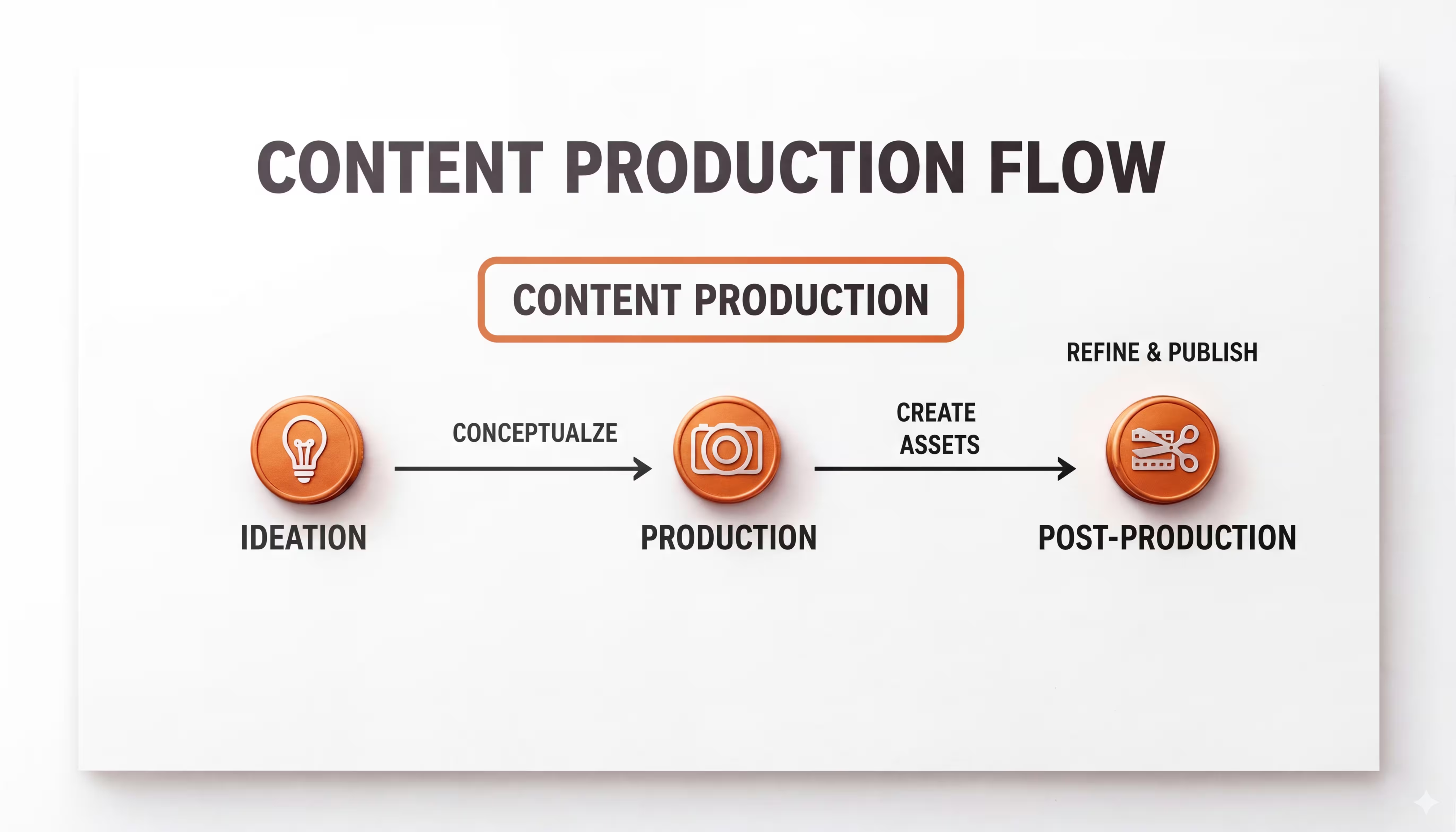
Post-production isn't just for cleaning up audio; it’s where you strategically multiply your content’s reach.
A single one-hour video podcast episode, for example, can be atomized into a huge volume of content that fuels your channels for weeks:
- Five to seven short-form video clips: These are your 30-60 second highlights perfect for TikTok, Instagram Reels, and YouTube Shorts. Each clip should isolate a single powerful idea, a key statistic, or an actionable tip.
- One SEO-optimized blog post: Transcribe the audio and reshape the conversation into a structured, keyword-rich article. This captures search traffic from people asking questions that your episode answers. For a deeper dive, check out our guide on building a podcast marketing strategy.
- Three to five quote graphics: Pull the most memorable lines from the episode. Turn them into clean, shareable graphics for platforms like LinkedIn, X (formerly Twitter), and Instagram. These are perfect for starting conversations.
- One exclusive email newsletter: Offer your subscribers something extra. Share a behind-the-scenes story or a key takeaway that didn't make the final cut. This rewards your most loyal audience members.
Adopting this system changes the game. You move from a frantic, constant sprint for new ideas to an efficient, predictable content engine. You work smarter by ensuring every piece of cornerstone content delivers value long after its initial publication.
A Repeatable Workflow for Maximum Impact
Atomization gives you a repeatable workflow. With every cornerstone asset, you're not just creating a podcast or a blog post—you’re launching a multi-channel campaign.
This process ensures your message finds your audience wherever they are, in the format they prefer.
One person might discover you through a Google search for your blog post. Another might be stopped mid-scroll by a dynamic Reel on Instagram. A third might see a quote graphic shared by a colleague on LinkedIn. Each touchpoint is a new entry point to your brand and your core message.
This is how modern content creation for brands achieves scale. You don't multiply the work; you multiply the impact.
Measuring What Matters for Content Success
Creating brilliant content is only half the job. If you're not measuring its performance, you're just guessing—wasting time and money on what feels right instead of what actually works.
Truly effective content creation for brands closes that loop. It connects your efforts to real business results and turns your content from a line item expense into a reliable source of growth.
It’s time to look past vanity metrics. Big view counts and follower numbers feel great, but they don’t pay the bills. Real success is measured by the numbers that directly impact your bottom line, whether that's generating new leads or building an audience that sticks around.
Aligning Metrics with Business Goals
First thing's first: match your key performance indicators (KPIs) to the goals you set in your content strategy. The metrics that matter for brand awareness are totally different from the ones that matter for lead generation. You have to get this right.
Here's a simple breakdown of which metrics to track for common goals:
- For Brand Awareness: Your goal is reach and recognition. You need to be tracking organic traffic growth from search and your share of voice (how often your brand is mentioned versus your competitors).
- For Lead Generation: It's all about capturing potential customers. Zero in on conversion rates from your content (like webinar sign-ups) and your cost per lead (CPL) to make sure you're being efficient.
- For Audience Building: When you're growing a community, the important numbers are subscriber growth (on YouTube or your newsletter) and engagement metrics like watch time and average view duration.
These are the numbers that tell you the real story. Is your YouTube subscriber count climbing? You're building a loyal following. Is the CPL from a blog post surprisingly low? That proves its ROI.
Essential Tools for Data-Driven Insights
You don't need a massive, expensive tech stack to get started. A couple of powerful (and free) tools can give you everything you need to make smarter content decisions.
These two are non-negotiable:
- Google Analytics: This is your mission control for website and blog performance. You can see which posts bring in the most organic traffic, where visitors come from, and how long they stick around.
- YouTube Studio: If video is central to your strategy, YouTube Studio is your best friend. It goes way beyond view counts, giving you detailed reports on watch time, audience retention, and the exact moments viewers lose interest and click away.
By checking these tools regularly, you’ll start to see patterns. Maybe you notice that videos featuring a certain guest get double the watch time. Or that blog posts over 2,000 words consistently rank higher in search. These are the clues that tell you what to do next.
Don’t treat data analysis as a task you do at the end. It’s a core part of the creative process. The numbers tell you what your audience actually wants, which is a much better guide than your best guess.
Implementing a Content Review Cycle
To make sure you're always getting better, you need a structured process for looking at the data and acting on it. This is your Content Review Cycle.
It’s a disciplined meeting—usually monthly or quarterly—where your team gets together to review what worked, what didn't, and most importantly, why. This cycle is how you turn raw data into action.
Here’s a simple framework for your review meetings:
Review StepActionable QuestionExample Insight1. Review GoalsAre we on track to hit our primary goal (e.g., generating leads)?"Our lead volume is up, but our CPL is getting too high."2. Analyze Top PerformersWhat content drove the best results, and what does it have in common?"Our 'how-to' blog posts are converting 3x better than our opinion pieces."3. Analyze Low PerformersWhich pieces of content fell flat, and what’s our best guess as to why?"The last three short-form videos had terrible engagement; we think the hooks were too weak."4. Plan Future ContentHow will we use these insights to make our next batch of content better?"Let's double down on how-to posts and test three new video hooks based on our top-performing content."
This cycle ensures your content creation for brands gets smarter over time. You stop repeating the same mistakes and start systematically building on your wins, creating a compounding return on every piece of content you produce.
Frequently Asked Questions About Brand Content
How Much Should a Brand Budget for Content Creation?
There’s no magic number, but a solid framework is the 70/20/10 rule.
This means you dedicate 70% of your budget to what's already working—the proven formats that drive results. Another 20% goes toward experimenting with new but related ideas, and the final 10% is for those high-risk, high-reward creative swings.
For example, a B2B brand might go all-in on a high-quality video podcast. The upfront investment pays for itself as you chop up the episodes for social media, blog posts, and email newsletters.
How Long Until I See Results?
Content marketing is a long game, not a quick win. While you might see some initial buzz in a few days, real, measurable impact takes patience.
If you’re playing the SEO game, expect it to take 6-12 months to build true domain authority and rank for valuable keywords. For a new video series, you're looking at about 3-6 months to cultivate a dedicated audience.
The single most important factor? Showing up consistently. That’s what builds momentum and trust over time.


